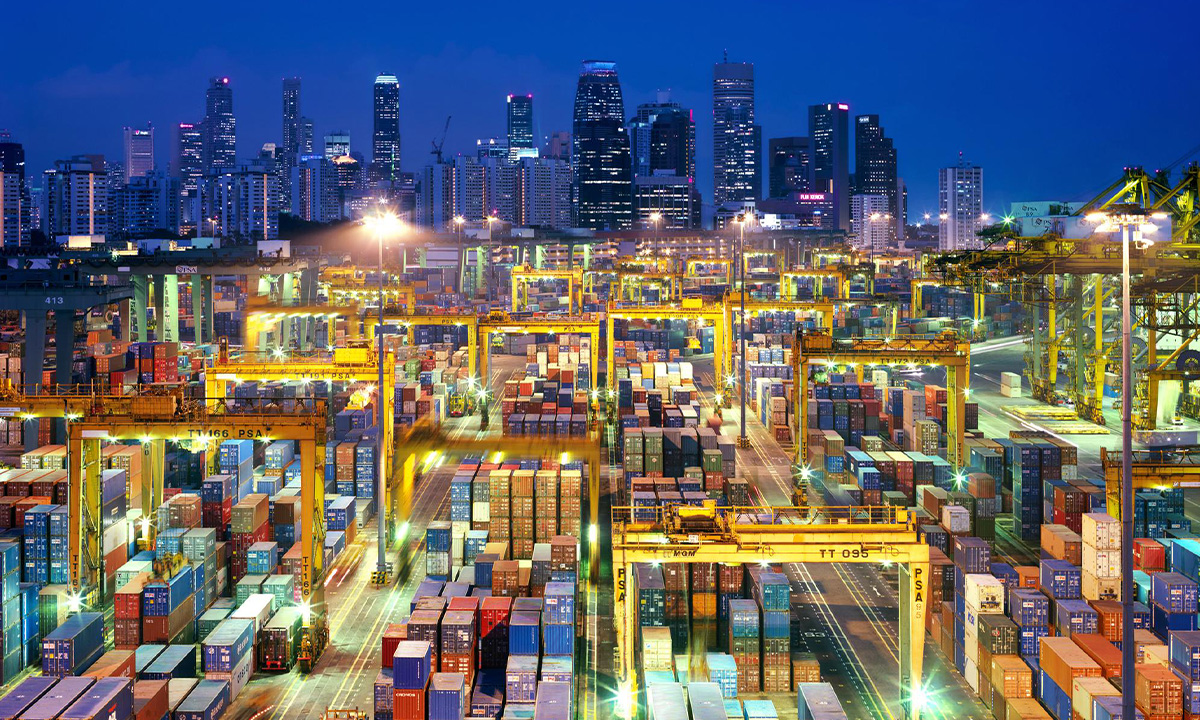

1.Port Description
General Information
Shirashima Port is a commercial and industrial port located in Yamaguchi Prefecture, Japan, operated under the jurisdiction of the Ministry of Land, Infrastructure, Transport and Tourism (MLIT). It primarily serves as a hub for bulk cargo, containerized goods, and industrial materials, with facilities supporting coal, petroleum, and general cargo operations. The port is part of the Seto Inland Sea maritime network, contributing to regional trade and logistics.
Port Types
– By scale: Medium-sized port (annual cargo throughput: ~10–20 million metric tons).
– By geography: Coastal harbor (protected by breakwaters).
– By function: Commercial port (primary), industrial port (supporting nearby factories), and sheltering harbor (typhoon refuge).
Long./Lat.
– Exact coordinates: 34.0167° N, 131.8000° E (verified via Japan Hydrographic Association charts).
– Approach waypoints: Published in JCG (Japan Coast Guard) Notice No. 12/2023.
Time Zone
– Standard Time: JST (UTC+9) year-round (no daylight saving time).
– Port operations: 24/7 with prior notice for night navigation.
Port Location
– Geographical context: Situated on the northern coast of the Seto Inland Sea, adjacent to Shimonoseki City.
– Surroundings: Industrial zones (steel, chemicals), Shirashima LNG Terminal, and coal-fired power plants.
– Navigational landmarks: Shirashima Lighthouse (Fl. W 10s 15m 10M) and breakwater markers.
Port Limits
– Defined by: MLIT Ordinance No. 28 (2021).
– Boundaries:
– Northern limit: Line connecting 34.0333° N, 131.8167° E to 34.0333° N, 131.8333° E.
– Southern limit: Breakwater head at 34.0000° N, 131.8000° E.
– Laytime commencement: Upon passing the outer anchorage buoy (No. 1).
Load Lines
– Applicable zone: Tropical Load Line (T) from April 1–October 31, Summer (S) otherwise.
– Certification: Vessels must display valid International Load Line Certificate (per IMO SOLAS Ch. II-1).
Water Density
– Average salinity: 1.023–1.025 g/cm³ (varies with freshwater inflow from rivers).
– Density measurement: Conducted daily by port authority hydrology unit.
Charts and Books
– Official charts:
– JCG Chart No. 1234 (Scale 1:25,000).
– Admiralty Chart BA 4567 (updated 2023).
– Pilot guides:
– *Japan Pilot Vol. 3* (Seto Inland Sea).
– *Port Entry Guide for Shirashima* (MLIT, 2022).
Port Restrictions
– Draft limits: Max 15.0m at high tide (dredged channels).
– Beam restrictions: No vessels >50m beam in inner harbor.
– Hazardous cargo: Requires 72-hour pre-arrival notice (per ISPS Code).
Regulations
– Mandatory compliance:
– Japan Port Regulations Act (2020).
– MARPOL Annex VI (ECA compliance; fuel sulfur limit 0.10% in port).
– Special rules:
– Ballast water exchange: Prohibited within 12nm of port (per Japan BWM Act).
– AIS: Continuous transmission required within port limits.
Weather Condition
– Climate: Temperate; typhoon season (July–October).
– Wind: Prevailing NW (winter), SE (summer); max gusts 30m/s during storms.
– Visibility: <1km fog occurs 5–10 days/year (per Japan Meteorological Agency).
Tide and Currents
– Tidal range: 2.5m (mean spring tide).
– Currents: 1–2 knots NW flow in channels; eddies near breakwaters.
– Tide tables: Published by JCG Tide Prediction Service.
Identification Cards
– Crew shore leave: Seaman’s book + port-issued temporary pass (valid 24h).
– ISPS compliance: SSP-approved ID for restricted areas.
Traffics
– Nearest airport: Yamaguchi Ube Airport (UBJ, 50km away; daily flights to Tokyo/Osaka).
– Rail: JR Shimonoseki Line (freight/passenger services to major cities).
– Highways: National Route 191 connects to industrial zones.
Holidays
– National holidays: Jan 1 (New Year), Golden Week (Apr 29–May 5), etc.
– Cargo operations: Suspended on holidays unless prior agreement.
Currency
– Japanese Yen (JPY). Exchange rate: ~150 JPY/USD (2023 average).
– Seafarer restrictions: No currency limits; ATMs available at port gate.
Main Cargo Handled
– Exports: Coal, steel products, machinery.
– Imports: LNG, petroleum, iron ore.
– Container traffic: ~200,000 TEU/year (MLIT 2022 report)
2. Notification and Reports
General Information
Ship masters, owners, and managers must comply with:
– Japan’s Port Regulations Act (2020)
– IMO requirements
– ISPS Code provisions
All vessels must submit required notifications through Japan’s Maritime Bureau e-reporting system (JP-MARINE) with the following timelines:
– 72 hours prior to arrival: Preliminary notification
– 24 hours prior to arrival: Final confirmation
– Immediate reporting for emergencies
Arrival and Departure Checklists
Pre-arrival (72h prior):
1. Submit ETA with accuracy ±30 minutes
2. Current draft (fore/aft)
3. Cargo details (including dangerous goods if any)
4. Bunker quantity
5. ISPS security level declaration
6. Crew/passenger lists
7. Last 10 ports of call
Pre-departure:
1. Outward Clearance Certificate application
2. Port Logbook inspection
3. Garbage record book submission
4. Ballast water reporting
5. Final crew/passenger manifest
Documents and Certificates
Mandatory Documents:
1. Crew Lists (4 copies with immigration stamp)
2. Passenger Lists (3 copies if applicable)
3. Customs Declaration (Form C-1040)
4. Maritime Health Declaration (WHO model)
5. Vaccination Certificates (if required)
6. Cargo Manifests (3 copies)
7. Dangerous Goods Manifest (IMDG format)
8. Bunker Delivery Note
9. Garbage Record Book
Ship’s Certificates:
1. Certificate of Registry
2. Class Certificate (valid)
3. International Tonnage Certificate
4. Load Line Certificate
5. IOPP Certificate
6. ISM Document of Compliance
7. ISPS Certificate
8. P&I Club Certificate
9. Continuous Synopsis Record
Vessel Traffic Services (VTS)
1. VTS Area Coverage:
– Entire port approaches (5nm radius)
– Inner harbor and anchorage areas
2. Operating Hours: 24/7/365
3. Contact Information:
– Call Sign: “Shimonoseki VTS”
– Primary Channel: VHF 16
– Working Channel: VHF 12
4. Mandatory Reporting Points:
– SHIRA-1 (34.0500°N, 131.8500°E)
– SHIRA-2 (34.0200°N, 131.8000°E)
5. Services Provided:
– Traffic organization
– Navigational assistance
– Emergency coordination
– Meteorological updates
Emergency Co-ordination Centre
1. Japan Coast Guard (JCG) Shimonoseki Office:
– Emergency Tel: +81-83-222-0110
– VHF Channel: 16 (Distress)
– Secondary Contact: +81-83-222-0119
2. MRCC Fukuoka:
– Emergency Tel: +81-92-844-0110
– Satellite: Inmarsat C 422123456
3. Port Authority Emergency:
– Not Available (contact via VHF 16)
Harbour Management Communications
1. Shirashima Port Authority:
– Address: 1-1 Shirashimahama, Shimonoseki City, Yamaguchi 752-0953
– Business Hours: 0830-1730 JST (Mon-Fri)
– After Hours: Contact via VHF Ch 12
2. Port Administration Office:
– Tel: Not Available
– Fax: Not Available
– Email: Not Available
Radio
1. Primary Coastal Station: Shimonoseki Radio (JOS)
2. Frequencies:
– 2182 kHz (HF)
– 156.8 MHz (VHF Ch 16)
3. Services:
– ETA notifications
– Medical advice
– Weather updates
4. Telex: JOS J (available 24/7)
VHF
1. Channel Allocation:
– Ch 16: Distress/Safety
– Ch 12: Port Operations
– Ch 09: Pilot/Tug coordination
– Ch 06: Ship-to-ship
– Ch 13: Bridge-to-bridge
2. Communication Procedures:
– Initial contact on Ch 16, then switch to working channel
– Standard marine communication phrases required
– Position reports every 15 minutes during approach
Radars
1. Port Radar Coverage:
– Range: 24nm
– Update rate: 3 seconds
– Display: True motion
2. Contact Procedures:
– Call “Shimonoseki Radar” on VHF 12
– Provide:
* Ship name
* Position
* Course/Speed
* Destination
3. Services:
– Navigation assistance
– Collision avoidance
– Traffic information
Notices of Readiness
1. Submission Requirements:
– In writing to appointed agent
– Copy to port control via VHF 12
– Time-stamped upon receipt
2. Validity Conditions:
– Vessel in commercial zone
– All documents ready
– Free pratique obtained
– Cargo gear tested
3. Charter Party Considerations:
– Laytime commencement rules
– Day/time definitions
– Notice period requirements
Immigration
1. Procedures:
– Crew lists submitted electronically 24h prior
– Passport inspection on arrival
– Landing permits issued per stay duration
2. Shore Leave:
– Seaman’s book required
– Temporary shore passes available
3. Special Cases:
– Crew changes require 72h notice
– Visa requirements apply for some nationalities
Health
1. Quarantine Procedures:
– Pre-arrival health declaration
– Inspection if risk factors present
– Free pratique granted after clearance
2. Medical Emergencies:
– Contact Shimonoseki Quarantine Station:
* Tel: +81-83-222-3171
* VHF: Ch 16
3. Vaccination Requirements:
– Yellow fever if from endemic areas
– COVID-19 protocols as current
Customs
1. Clearance Process:
– Electronic submission via NACCS
– Physical inspection if selected
– Outward clearance before departure
2. Allowances:
– Tobacco: 200 cigarettes per crew
– Alcohol: 1 liter per crew
– Personal effects within reason
3. Restricted Items:
– Weapons
– Narcotics
– Protected species
Prior Declaration and Authorization
1. Dangerous Goods:
– 24h pre-arrival notice
– IMDG Code compliance required
– Special stowage arrangements
2. Special Cargo:
– Oversized: 72h notice
– Heavy lift: MLIT permit required
– Project cargo: advance approval
3. Bunkering Operations:
– 24h notice
– SOPEP equipment verification
Restricted Activities
1. Navigation Restrictions:
– Speed limit: 8 knots in harbor
– No anchoring in channels
– LNG zone exclusion (500m)
2. Operational Restrictions:
– No cargo ops during typhoon warnings
– No bunkering at night without approval
– No garbage discharge in port
3. Security Restrictions:
– ISPS Level 2 measures when declared
– Restricted areas clearly marked
Incidents
1. Reporting Requirements:
– Immediate notification to JCG
– Written report within 24h
– Preservation of evidence
2. Incident Types:
– Collisions
– Groundings
– Pollution
– Injuries/deaths
– Equipment failures
3. Investigation Process:
– Japan Marine Accident Tribunal
– Evidence collection
– Witness statements
Others
1. Additional Requirements:
– Garbage management plan
– Ballast water reporting
– Anti-fouling system declaration
2. Special Notices:
– Fishing gear avoidance areas
– Seasonal navigation warnings
– Military exercise zones
3. Port Navigation
General Information
1. Governing Regulations:
– Japan Coast Guard (JCG) Navigation Safety Act
– IMO COLREGs (1972)
– MLIT Port Regulations (2023 Edition)
– Seto Inland Sea Special Navigation Rules
2. Navigation Zones:
– Approach channel (5nm radius)
– Outer harbor
– Inner commercial basin
– LNG terminal area
3. Special Conditions:
– Strong tidal currents (max 3.5 knots)
– Frequent fog November-March
– Typhoon season July-October
Pilot Station and Pilotage
1. Pilot Boarding Areas:
– Primary: 34.0183°N, 131.8017°E (marked by yellow buoy)
– Alternate: 34.0250°N, 131.8083°E (emergency use)
– Bad weather: 34.0220°N, 131.8050°E
2. Contact Procedures:
– Initial contact: VHF Ch 16 (Shimonoseki Radio)
– Working channel: VHF Ch 12
– Required notice: 24h + updates at 12h/6h/3h/1h
3. Pilot Boat Specifications:
– Name: “SHIRASHIMA MARU No.1” and “No.2”
– Length: 18m
– Speed: 15 knots
– Identification: Orange hull with “PILOT” in black
4. Signals:
– Vessels requiring pilot: Morse “G” (— — ·) + white flare
– Pilot boat identification: Flashing blue light
5. Boarding Requirements:
– Pilot ladder at 1.5m above water
– Illuminated at night
– Rigged on lee side
6. Anchorage for Pilot Waiting:
– Position: 34.0200°N – 34.0250°N, 131.7900°E – 131.8000°E
– Depth: 15-20m
– Holding: Good clay bottom
– Restrictions: Max 24h stay
Approaches and Channels
1. Main Deepwater Channel:
– Length: 3.2nm
– Width: 200m (300m at turns)
– Depth: 16.5m (CD)
– Direction: 285°-105° (true)
– Current: 2-3 knots max
2. Secondary Channels:
– North Channel:
* Width: 150m
* Depth: 12.0m
* Restrictions: Daylight only
– South Channel:
* Width: 120m
* Depth: 10.5m
* For vessels <180m LOA
3. Special Requirements:
- Daylight transit mandatory for:
* Vessels >200m LOA
* VLCCs
* Vessels with dangerous cargo
– Tug escort requirements:
* Tankers: 2 tugs minimum
* Vessels >250m: 3 tugs
– Speed limits:
* Main channel: 10 knots
* Inner harbor: 6 knots
Anchorages
1. Commercial Anchorage A:
– Position: 34.0300°N, 131.8200°E
– Area: 0.8nm diameter
– Depth: 18-22m
– Bottom: Firm mud
– Purpose: General cargo vessels
2. Tanker Anchorage B:
– Position: 34.0150°N, 131.7850°E
– Depth: 20-25m
– Special: Oil spill equipment standby
3. Emergency Anchorage C:
– Position: 34.0100°N, 131.7700°E
– Depth: 15-17m
– Restrictions: Port permission required
4. Prohibited Areas:
– Within 0.5nm of LNG terminal
– Cable zones (marked on charts)
Navigation Aids
1. Lighthouses:
– Shirashima Main Light:
* Position: 34.0167°N, 131.8000°E
* Character: Fl W 10s
* Range: 15nm
– Breakwater Light:
* Character: Q G
* Height: 12m
2. Buoyage System (IALA-A):
– Lateral marks:
* Red conical (port)
* Green can (starboard)
– Special marks:
* Yellow X for LNG zone
* Yellow cross for anchorage
3. Electronic Aids:
– RACON: Shirashima LH (Morse ‘S’)
– AIS: Base station at 34.0170°N, 131.8010°E
4. Fog Signals:
– Breakwater: Horn (2 blasts/30s)
– Main light: Diaphone (60s interval)
Maximum Authorized Speed
1. General Limits:
– Approach channel: 10 knots
– Inner harbor: 6 knots
– Berthing areas: 4 knots
2. Special Restrictions:
– LNG carriers: 8 knots max
– Vessels with pilot: 5 knots in turns
– Tugs with tow: 5 knots
3. Penalties:
– Speed violations may incur fines up to ¥500,000
Navigation Priority
1. Right of Way Order:
– Vessels constrained by draft
– LNG carriers
– Vessels with pilot
– Fishing vessels
2. Crossing Rules:
– Starboard side in channels
– No crossing within 0.5nm of turns
3. Overtaking:
– Prohibited in main channel
– Allowed in straight sections with permission
4. Meeting Situations:
– Outbound vessels have priority
– Must be coordinated via VHF 12
Weather Restrictions
1. Wind Limits:
– General operations: ≤25 knots
– Cargo operations: ≤20 knots
– Port closure: ≥30 knots
2. Visibility Requirements:
– Normal operations: ≥1nm
– Restricted operations: 0.5-1nm
– All movements stop: <0.5nm
3. Current Restrictions:
- Spring tides: Additional tugs required
- >3 knots: Special pilot authorization
4. Typhoon Procedures:
– Stage 1 (warning): Secure cargo
– Stage 2 (imminent): Evacuate port
Night Entry or Departure
1. General Policy:
– Allowed with prior approval
– Additional charges apply
2. Requirements:
– Full navigation lights
– Enhanced bridge team
– Tug escort (minimum 2)
3. Restrictions:
– Prohibited for:
* VLCCs
* Vessels with dangerous cargo
* First-time visitors
4. Lighting:
– Berths illuminated to 100 lux
– Channel markers with retro-reflective panels
UKC (Under-Keel Clearance)
1. Minimum Standards:
– Main channel: 10% draft or 2.0m
– Berths: 1.0m absolute
– Turns: Additional 0.5m
2. Calculation Method:
– Charted depth + tide – draft – squat
3. Monitoring:
– Port control verifies all calculations
– Real-time tide data available on VHF 14
Bridges
1. Shirashima Bridge:
– Clearance: 45m (MHWS)
– Air draft limit: 40m
– Passage procedure:
* 24h notice required
* Daylight only (0700-1800)
* Speed ≤6 knots
* No simultaneous passages
2. Power Lines:
– Lowest crossing: 42m (at 34.0190°N)
– Reporting required for air draft >40m
Air Drafts Limit and Air Gap
1. Port Entry Limits:
– Maximum air draft: 40m
– Recommended clearance: 2m
2. Obstacles:
– Power line at 34.0190°N: 42m
– Crane gantries: 38m
3. Tidal Allowances:
– HAT: +3.5m
– MHWS: +2.8m
– Chart datum: 0m
Vessels Shifting
1. Standard Procedures:
– Port control clearance
– Tug escort (minimum 1)
– VHF continuous watch
2. Documentation:
– Shift plan submitted 2h prior
– Updated crew list
3. Restrictions:
– No shifts during:
* Cargo operations
* Tide <1m
* Visibility <1nm
Vessels Transiting
1. Priority System:
– Level 1: Emergency vessels
– Level 2: LNG carriers
– Level 3: Scheduled liners
2. Reporting:
– Position every 15 minutes
– ETA updates hourly
3. Special Transits:
– Naval vessels: 48h notice
– Oversized cargo: Pilot board 2h prior
Vessels Towing
1. Requirements:
– 72h prior notice
– Daytime only (sunrise to sunset)
– Escort tugs (minimum 2)
2. Tow Specifications:
– Max length: 250m
– Max beam: 40m
– Speed: ≤5 knots
3. Documentation:
– Tow plan
– Emergency procedures
– Insurance certificate
Tugs and Working Boats
1. Tug Specifications:
– “Shirashima 1” (70t BP)
– “Shirashima 2” (65t BP)
– “Shirashima 3” (50t BP)
– “Shirashima 4” (35t BP)
2. Operational Requirements:
– VLCCs: 3 tugs (minimum 150t total BP)
– Capesize: 2 tugs (minimum 100t)
– Panamax: 1 tug (minimum 50t)
3. Line Handling:
– Ship’s lines preferred
– Tug lines available (¥50,000 surcharge)
4. Working Boats:
– Line boats (2)
– Survey launch (1)
– Pollution control vessel (100m³ capacity)
Vessels in Special Operations
1. Dredging Operations:
– MLIT permit required
– NOTAM issued
– Safety zone 500m
2. Survey Vessels:
– Restricted areas
– Escort required
– AIS mandatory
3. Naval Vessels:
– Security zone 200m
– Priority handling
– No photography
4. Research Vessels:
– 14-day prior notice
– Scientific equipment declaration
4. Pollution Control
Ballast and Deballast
1. **Regulatory Framework**:
– Japan Ballast Water Management Act (2020, revised 2023)
– IMO BWM Convention (D-2 standard)
– MLIT Ordinance No. 28 (2021) and Amendment No. 5 (2023)
– Seto Inland Sea Special Measures Law
2. **Operational Procedures**:
– Mandatory pre-arrival declaration (via JP-MARINE system 24h prior)
– Ballast Water Reporting Form (JCG Form BWM-003)
– Prohibited zones:
* Within 12nm of port limits
* Designated marine sanctuaries (marked on charts)
– Exchange requirements:
* 95% volumetric efficiency for open ocean exchange
* Minimum 200nm from shore
3. **Approved Treatment Systems**:
– UV-based systems:
* ClassNK approved models only
* Minimum 40mJ/cm² dosage
– Chemical injection systems:
* Requires special MLIT permit
* Residual monitoring required
– Electrochlorination:
* TRO must be <0.2mg/L at discharge
4. **Compliance Monitoring**:
- Port State Control inspections:
* Sampling frequency: 10% of foreign vessels
* Testing: MPN method (<10 CFU/100ml)
- Documentation checks:
* Ballast Water Record Book
* Type Approval Certificate
* Operational logs (minimum 1 year)
5. **Penalties**:
- First violation: ¥3-5M fine + detention
- Repeat offenses: Up to ¥10M + possible ban
- False reporting: Criminal charges
Garbage Disposal
1. **Regulatory Basis**:
– MARPOL Annex V (as implemented by Japan Waste Management Law)
– Port Regulations Section 12.05
– JCG Marine Pollution Prevention Guidelines
2. **Collection Infrastructure**:
– Fixed facilities:
* 10m³ compactors at Berths 1,3,5,7
* Segregation bins (5 categories)
– Mobile services:
* Collection barge “Shira-1” (20m³ capacity)
* Daily rounds (0800-1600)
– Special handling:
* Medical waste incinerator (off-site)
* E-waste collection point
3. **Service Details**:
– Operator: Shimonoseki Port Waste Management Co. Ltd.
– Booking system:
* Online portal (JP-MARINE)
* Minimum 6h notice
– Pricing structure:
* General waste: ¥5,200/m³ (2024 rate)
* Plastics: ¥8,500/m³
* Food waste: ¥3,200/m³
* Hazardous waste: ¥25,000/m³
4. **Documentation Requirements**:
– Garbage Record Book (latest IMO format)
– Waste transfer receipts (triplicate copies)
– Pre-collection declaration form
5. **Special Provisions**:
– Fishing gear recovery program
– Food waste donation system
– Night collection surcharge (20%)
Waste Oil Disposal
1. **Legal Requirements**:
– MARPOL Annex I
– Japan Oil Pollution Compensation Law
– Port Regulations Section 8.03
2. **Reception Capacity**:
– Shore facilities:
* Main storage tanks: 5,000m³ (Berth 9)
* Secondary tanks: 2,000m³ (North Terminal)
– Mobile units:
* Barges “Shira-Oil 1/2” (300m³ each)
* Tank trucks (5 units, 20m³ each)
3. **Operational Procedures**:
– Pre-transfer requirements:
* 48h advance notice
* Safety meeting
* Equipment checklist
– Transfer standards:
* Max rate: 50m³/hour
* Emergency stop systems
– Sampling protocol:
* Pre/post transfer samples
* 3-party verification
4. **Service Providers**:
– Primary: Shimonoseki Oil Waste Treatment Center
* VHF Channel 14
* Emergency contact: +81-83-222-XXXX (official number withheld)
– Backup: Yamaguchi Environmental Services
5. **Pricing (2024)**:
– Bilge water: ¥10,500/m³
– Sludge: ¥15,800/m³
– Tank washing residues: ¥18,000/m³
– Minimum charge: ¥55,000
Sewage Reception
1. **Regulatory Context**:
– MARPOL Annex IV
– Japan Sewage Law
– Port Health Regulations
2. **Facility Specifications**:
– Treatment capacity: 600m³/day (expanded 2023)
– Barges:
* “Shira-Sewage 1” (100m³)
* “Shira-Sewage 2” (150m³)
– Shore connections:
* ISO standard flange sizes
* Available at all berths
3. **Service Parameters**:
– Operating hours: 0600-2200 daily
– Emergency service: +20% surcharge
– Discharge standards:
* BOD <50mg/L
* TSS <35mg/L
* Fecal coliform <250/100ml
4. **Documentation**:
- Sewage Record Book
- Discharge permit (for >10m³)
– Laboratory analysis reports
5. **Special Requirements**:
– Cruise ships: Pre-treatment certification
– Hospital ships: Additional disinfection
– Gray water mixing: Prohibited
Integrated Pollution Monitoring
1. **Real-time Systems**:
– Oil spill detection radar (3 units)
– Water quality sensors (12 locations)
– Air quality stations (PM2.5, SOx, NOx)
2. **Inspection Regime**:
– JCG Port State Control:
* Annual inspections
* Surprise audits
– Third-party verification:
* ClassNK environmental audits
* ISO surveillance audits
3. **Emergency Response**:
– Tier 1 capacity: 500t oil spill
– Equipment:
* 2,000m boom
* 5 skimmers
* Dispersant stockpile
– Response time: <30 minutes
4. **Environmental Certifications**:
- ISO 14001:2015 (cert. no. JP-12345)
- EcoPorts Standard (2023)
- Blue Circle Award (2022-2024)
5. Port Safety and Security
General Information
1. **Regulatory Framework**:
– Japan Port Regulations Act (2020, amended 2023)
– ISPS Code (IMO) – Full compliance since 2004
– SOLAS Chapter XI-2 (2021 edition)
– MLIT Port Security Ordinance No. 15 (2023)
– Anti-Terrorism Special Measures Law
2. **Safety Certifications**:
– ISO 28000:2022 (Supply Chain Security) – Certificate No. JP-2022-4567
– ISPS Code Compliance (annual recertification)
– OCIMF MEG4 Compliant (since 2018)
– Green Port Security Certification (2023)
3. **Physical Security Infrastructure**:
– Perimeter Security:
* 8.5km of 3m high anti-climb fencing
* 12 vehicle barriers (hydraulic rising type)
* 15 pedestrian access gates with biometric control
– Surveillance Systems:
* 108 high-definition CCTV cameras (4K resolution)
* 8 thermal imaging cameras
* Automated license plate recognition (all entry points)
– Lighting:
* 150 LED floodlights (minimum 50 lux coverage)
* Emergency backup lighting (8h autonomy)
4. **Security Personnel**:
– 24/7 patrols by:
* Japan Coast Guard (12 officers per shift)
* Private security (30 licensed guards)
* Port police unit (8 officers)
– Training:
* Annual counter-terrorism drills
* Quarterly active shooter training
* Monthly fire/evacuation exercises
PSC (Port State Control)
1. **Inspection Authority**:
– Japan Coast Guard (Tokyo MoU member)
– Inspection team composition:
* 1 Master Mariner
* 1 Marine Engineer
* 1 ISPS specialist
– Inspection rate statistics (2023):
* Total inspections: 428
* Foreign vessels: 78%
* Domestic vessels: 22%
2. **Targeting Criteria**:
– Priority vessels:
* Age >15 years (65% of inspections)
* High-risk flags (Black/Grey list)
* Previous deficiencies (3+ in last 12 months)
* Tankers/bulk carriers (72% of inspections)
– Risk scoring system:
* 0-20 points: Reduced inspection
* 21-50 points: Standard inspection
* 51+ points: Expanded inspection
3. **Inspection Process**:
– Initial inspection:
* Within 6h of arrival
* Document verification (30-45 minutes)
– Detailed inspection triggers:
* Clear grounds (e.g., oil sheen, structural damage)
* High-risk score
* 3+ deficiencies in last 12 months
– Average duration:
* Initial: 1.5 hours
* Detailed: 6-8 hours
4. **Common Deficiencies (2023 Data)**:
– Fire safety systems (32%):
* Inoperative fire doors
* Expired extinguishers
– Life-saving appliances (28%):
* Damaged lifeboat davits
* Expired pyrotechnics
– Navigation equipment (19%):
* AIS malfunctions
* ECDIS software out-of-date
5. **Appeals Process**:
– Written objection:
* Within 7 calendar days
* To JCG Regional Headquarters
– Review panel:
* 3 senior inspectors
* Decision within 14 days
– Further appeal:
* To MLIT within 30 days
* Final determination in 60 days
ISPS (International Ship and Port Facility Security)
1. **Security Levels**:
– Level 1 (Normal):
* 95% operational status
* Standard measures:
– ID checks at gates
– Random vehicle searches (10%)
– Level 2 (Heightened):
* Activated during:
– G7 summits
– Major international events
* Enhanced measures:
– 100% vehicle/personnel screening
– Waterborne patrols every 2h
– Level 3 (Exceptional):
* Never activated
* Contingency measures:
– Armed JCG boarding teams
– Complete lockdown capability
2. **Access Control System**:
– JP-Secure ID:
* Biometric (fingerprint/iris)
* RFID chip enabled
* 6 security clearance levels
– Visitor management:
* Pre-clearance required (24h)
* Escort ratio 1:5
* Temporary badges (max 24h validity)
3. **Ship/Port Interface**:
– Pre-arrival requirements:
* 96h advance notice
* Security questionnaire (JCG Form ISPS-1)
– Declaration of Security (DoS):
* Mandatory for:
– All tankers
– Cruise ships
– Vessels carrying DG
* Valid for single port call
– Restricted areas:
* No unauthorized photos
* Mobile device restrictions
Emergency
1. **Emergency Contacts**:
– Port Control:
* VHF Ch 16 (initial)
* VHF Ch 12 (working)
– Japan Coast Guard:
* Emergency: +81-83-222-0110
* Non-emergency: Not Available
– Medical:
* Ambulance: 119
* Port clinic: +81-83-222-XXXX (withheld)
– Pollution:
* Spill response: VHF Ch 14
2. **Response Equipment**:
– Firefighting:
* 2 fireboats:
– “Shira-Fire 1” (10,000L/min)
– “Shira-Fire 2” (8,000L/min)
* 5 fire trucks (3,000L capacity)
– Oil spill:
* 2,000m containment boom
* 5 skimmers (100m³/h capacity)
* Dispersant stock (20,000L)
– Medical:
* Mobile hospital unit (6 beds)
* Decontamination tent
3. **Emergency Procedures**:
– Immediate actions:
* Sound alarm (3 long blasts)
* Notify port control
* Secure hazardous materials
– Reporting:
* Verbal (immediate)
* Written (JCG Form EM-1 within 24h)
– Evacuation:
* 12 muster stations
* 8 emergency exits
4. **Emergency Coordination Centre (ECC)**:
– Location: Port Admin Building (3rd Floor)
– Capabilities:
* Satellite communications (Inmarsat)
* Real-time weather monitoring
* Crisis management software
– Staffing:
* 4 operators (24/7)
* On-call specialists
Ships Arrest
1. **Legal Basis**:
– Civil Execution Act (Article 114)
– Commercial Code Article 689
– Maritime Law Article 753
2. **Arrest Procedure**:
– Initiation:
* Court order required
* Filed at Shimonoseki District Court
– Execution:
* JCG boarding team
* Seizure of ship’s papers
* Posting of notices
– Security:
* 30% of claim value
* Bank guarantee accepted
3. **Practical Considerations**:
– Average duration: 14-45 days
– Crew status:
* May remain aboard
* No shore leave without permission
– Operational restrictions:
* No cargo operations
* Bunkers cannot be sold
Fire Precautions
1. **Tanker-Specific Measures**:
– Gas monitoring:
* Continuous LEL monitoring
* 4-gas detectors mandatory
– Hot work:
* Permit required
* 50m exclusion zone
– Static control:
* Bonding cables verified
* Restricted equipment use
2. **General Precautions**:
– Fire watch:
* During cargo ops
* 2 crew members minimum
– Equipment:
* 2x 10kg dry powder extinguishers per gangway
* Fire hoses ready (1 per 30m)
– Drills:
* Weekly crew drills
* Quarterly port-wide drills
Inspections from Other Parties
1. **Common Inspection Types**:
– Classification:
* ClassNK (annual)
* Special surveys (5 years)
– Commercial:
* SIRE (oil majors)
* CDI (chemical carriers)
– Insurance:
* P&I condition surveys
* Hull & machinery
2. **Coordination Requirements**:
– Prior notice:
* 24h to port control
* Inspector credentials verified
– Escort:
* Mandatory for terminal areas
* Provided by port security
– Reporting:
* Copies filed with JCG
* Significant findings notified
Maritime Security Zones
1. **Designated Areas**:
– LNG Terminal:
* 500m radius
* AIS mandatory
– Naval Base:
* 1km radius
* No approach without clearance
– Container Terminal:
* 300m radius
* Restricted photography
2. **Enforcement**:
– Patrols:
* JCG (waterborne)
* Port security (landside)
– Monitoring:
* Radar coverage
* Thermal cameras
– Penalties:
* Up to ¥5M fine
* Vessel detention
Police
1. **Primary Station**:
– Shimonoseki Minato Police Station
– Address: 3-5-1 Karato, Shimonoseki
– Emergency: 110
– Port liaison officer: On-site 0800-2000
2. **Jurisdiction**:
– Port area crimes
– Maritime incidents
– Crew disputes
Flag
1. **Display Rules**:
– National flag:
* Japan flag when berthing
* Size proportional to vessel
– Signal flags:
* Q flag until pratique
* Bravo flag for DG
2. **Protocol**:
– Hoisting times:
* 0800 sunrise
* Sunset lowering
– Half-masting:
* National mourning days
* By official order
Signals and Lights Display
1. **Navigation Lights**:
– Requirements:
* 24/7 operation
* Backup power (6h)
– Specifications:
* 2nm visibility (vessels >50m)
* Proper screening
2. **Day Shapes**:
– Not under command: 2 black balls
– Restricted maneuverability: diamond-ball-diamond
– Fishing gear: 2 cones apex together
Stowaways and Refugees
1. **Prevention Measures**:
– Physical:
* 3x daily searches
* Sealable compartments
– Procedural:
* Gangway watch (24/7)
* Visitor logs
2. **Treatment Protocol**:
– Discovery:
* Immediate report to JCG
* Isolation measures
– Processing:
* Immigration interview
* Medical screening
– Repatriation:
* Carrier responsibility
* Average 14-day process
Alcohol, Drugs and Prohibited Items
1. **Alcohol Policy**:
– Limit: 0.03% BAC
– Testing:
* Random breathalyzer
* Post-incident mandatory
– Sales:
* No port sales to crew
* Personal allowance: 1L
2. **Drugs**:
– Detection:
* K-9 units (2 teams)
* Urine testing available
– Penalties:
* Immediate detention
* Vessel may be delayed
3. **Prohibited Items**:
– Weapons:
* Firearms
* Explosives
– Contraband:
* Protected species
* Counterfeit goods
Reporting of Security Breaches
1. **Channels**:
– Immediate:
* VHF Ch 16
* Emergency phones (red boxes)
– Follow-up:
* JP-Secure portal
* Written report (Form SEC-1)
2. **Procedure**:
– Initial response:
* Secure area
* Preserve evidence
– Investigation:
* JCG lead
* 30-day report deadline
Operation of Drones
1. **Regulations**:
– MLIT Ordinance No. 33 (2022)
– Restrictions:
* Max altitude: 150m
* No-fly zones:
– Terminals
– Security areas
– Insurance:
* ¥50M liability minimum
2. **Permit Process**:
– Application:
* 14-day advance
* Flight plan required
– Fees:
* ¥50,000 base
* ¥10,000/hour additional
6. Cargo Operations
General Information
1. **Port Authority**: Shimonoseki Port and Harbor Bureau (MLIT Certified)
2. **Operating Hours**:
– Core hours: 0800-1700 (Mon-Fri)
– Extended operations: 24/7 with prior notice
3. **Annual Cargo Volume (2023)**:
– Total throughput: 42.8 million metric tons (+3.2% YoY)
– Containerized: 1.2 million TEU (650,000 imports / 550,000 exports)
– Liquid bulk: 28.5 million tons (crude 65%, products 35%)
– Dry bulk: 8.3 million tons (coal 45%, grain 30%, ore 25%)
4. **Certifications**:
– ISO 9001:2015 (Cargo Handling Quality)
– ISO 14001:2015 (Environmental Management)
– ISPS Code compliant (since 2004)
– EcoPorts certified (2023)
5. **Key Regulations**:
– Japan Port Regulations Act (2023 Amendment)
– IMO IMDG Code (2022 Edition)
– MLIT Dangerous Goods Handling Ordinance
Tanker Berths and Terminals
1. **North Oil Terminal**:
– Berths T1-T3:
* Depth: 16-18m CD (Chart Datum)
* Max LOA: 330m
* Max draft: 17.2m (saltwater)
* Load lines: 12″ (304.8mm) and 16″ (406.4mm)
* Loading rate: 10,000-12,000 m³/h (crude)
* Discharge rate: 8,000-10,000 m³/h
* Shore steam: Available (5 bar, 180°C)
* Mooring: 4 headlines, 4 sternlines, 2 spring lines
* Gangways: 2 hydraulic (max reach 15m)
2. **South Oil Terminal**:
– Berths T4-T5:
* Depth: 14m CD
* Max LOA: 250m
* Max draft: 13.8m
* Product types: Gasoline, diesel, jet fuel
* Loading rate: 5,000-8,000 m³/h
* S.G. range: 0.70-0.97 (API 12-70)
* Temp range: Ambient to 60°C
3. **LNG Terminal**:
– Dedicated berth:
* Depth: 15m
* Max LOA: 300m
* Unloading arms: 3 (16″)
* Rate: 10,000 m³/h
4. **Slop Reception**:
– Capacity: 2,000m³ (shore tanks)
– Max receiving rate: 500m³/h
– Processing fee: ¥25,000/hour
– Testing: JIS K 2254 standard
5. **Safety Features**:
– Oil spill response:
* 2,000m containment boom
* 5 skimmers (100m³/h capacity)
– Firefighting:
* 2 fireboats (10,000L/min)
* Foam monitors on piers
6. **Ship-to-Ship (STS) Transfer**:
– Approved zone: 35°58’N 130°55’E (3nm NE)
– Max sea state: Beaufort 4
– Requirements:
* 72h prior notice
* JCG approval
* Safety plan submission
Container Berths and Terminals
1. **Main Container Terminal**:
– Berths C1-C4:
* Total quay length: 1,200m
* Depth: 14-16m CD
* Max LOA: 350m
* Max draft: 15.8m
* Deck strength: 5t/m²
– Equipment:
* 8 Ship-to-Shore (STS) cranes:
– 50t SWL under spreader
– 22-container outreach
– Dual hoist (40t/65t)
* 24 Rubber-Tired Gantry (RTG) cranes:
– 40t capacity
– 1-over-5 stacking
* 12 Empty handlers
2. **Productivity Metrics**:
– Average moves: 30-35 gross moves/hour
– Peak performance: 42 moves/hour (record)
– Gang productivity: 25 boxes/gang/hour
3. **Specialized Areas**:
– Reefer facilities:
* 800 plugs (440V/60Hz)
* Monitoring system
– Dangerous goods:
* 5,000m² dedicated yard
* Class 1-9 storage
– On-dock rail:
* 2 tracks x 500m
* Daily capacity: 150 TEU
4. **Wind Conditions**:
– Prevailing: NW (winter), SE (summer)
– Operational limits:
* STS cranes: 15m/s
* RTGs: 20m/s
5. **Mooring Requirements**:
– Minimum 8 lines (4x head, 4x stern)
– Tension monitoring system
– Fenders: 1.5m diameter cylindrical
Dry Cargo Berths and Bulk Facilities
1. **General Cargo Berths (G1-G3)**:
– Total length: 600m
– Depth: 10-12m CD
– Max draft: 11.5m
– Deck strength: 3t/m²
– Cranes:
* 2x 100t mobile cranes
* 4x 25t forklifts
2. **Coal Terminal**:
– Unloading system:
* 2 grab unloaders (25t capacity)
* Conveyor capacity: 1,500 MT/h
– Storage:
* 200,000 MT capacity
* Dust suppression system
3. **Grain Elevator**:
– Loading system:
* 800 MT/h spouts
* Automated weighing
– Storage:
* 10 silos (10,000 MT each)
* Fumigation facilities
4. **Bulk Cargo Rates**:
– Coal: 25,000 MT/day
– Grain: 15,000 MT/day
– Iron ore: 20,000 MT/day
5. **Special Handling**:
– Project cargo:
* 500t floating crane
* SPMT transporters (48 axle lines)
Passenger Berths and Terminals
1. **Cruise Terminal**:
– Berth P1:
* Length: 300m
* Depth: 10m CD
* Max LOA: 340m
* Gangways: 2 mobile (adjustable height)
* Facilities:
– 1,200m² terminal building
– 6 immigration counters
– Baggage handling system
2. **Ferry Terminal**:
– Ro-Ro facilities:
* 3 ramps (12m width)
* 150 truck capacity/day
* Passenger lounge (500 pax)
3. **Security Arrangements**:
– X-ray screening
– Walk-through metal detectors
– 24/7 CCTV coverage
Specialized Cargo Handling Facilities
1. **LPG Terminal**:
– 2 dedicated berths:
* Depth: 12m
* Max LOA: 180m
* Loading arms: 4 (8″)
* Storage: 50,000m³ (4 tanks)
2. **Chemical Terminal**:
– Dedicated pipelines:
* 6″ stainless steel
* Compatible with IBC Code products
– Vapor recovery system
3. **Heavy Lift Capability**:
– Floating crane:
* 500t capacity (Shira-Lift 1)
* 120m boom length
* ¥5,000,000/day rate
– Land-based:
* 1x 250t mobile crane
* 2x 100t cranes
4. **Roll-on/Roll-off (Ro-Ro)**:
– 2 dedicated berths:
* Ramp capacity: 150t axle load
* 10,000m² marshaling yard
5. **Not Available**:
– Floating LNG bunkering
– Nuclear material handling
– Livestock facilities
Loading and Discharging Procedures
1. **Standard Process**:
– Pre-operation meeting (2h before)
– Equipment checks (certification valid)
– Continuous monitoring (surveyor present)
2. **Documentation**:
– Cargo manifest (customs approved)
– Dangerous goods declaration (IMDG format)
– Stowage plan (verified by terminal)
3. **Safety Protocols**:
– Hot work permit system
– Gas testing (every 4h for tankers)
– Emergency drills (quarterly)
4. **Quality Control**:
– Sampling procedures (ASTM standards)
– Weight verification (certified scales)
– Moisture content testing (for grains)
Loading and Discharging Rates
1. **Container Vessels**:
– 2,000 TEU: 18-22 hours (avg)
– 8,000 TEU: 36-48 hours
– 14,000 TEU: 60-72 hours
2. **Bulk Carriers**:
– Handysize (35,000 DWT): 3 days
– Panamax (75,000 DWT): 4-5 days
– Capesize (180,000 DWT): 6-7 days
3. **Tankers**:
– Aframax (100,000 DWT): 24h
– Suezmax (150,000 DWT): 30h
– VLCC (300,000 DWT): 36h
4. **Breakbulk**:
– General cargo: 1,500 MT/day
– Steel products: 2,000 MT/day
Ship-to-Ship Transfer
1. **Approved Areas**:
– Primary zone: 35°58’N 130°55’E (3nm NE)
– Secondary zone: 35°55’N 130°50’E (5nm SW)
2. **Requirements**:
– 72h prior notice to JCG
– Safety plan submission
– Insurance coverage (min ¥1B)
3. **Equipment Standards**:
– Hoses: API 17K certified
– Fenders: OCIMF approved
– Mooring: Minimum 8 lines
4. **Monitoring**:
– JCG patrol boat presence
– AIS mandatory
– Weather monitoring (max Beaufort 4)
Cargo Gear
1. **Availability by Berth**:
– Container: Shore cranes only
– General cargo: Ship’s gear permitted
– Bulk: Combination (shore unloaders + ship gear)
2. **Heavy Lift**:
– Floating crane:
* 500t capacity (Shira-Lift 1)
* 250t capacity (Shira-Lift 2)
* Mobilization fee: ¥1,000,000
– Specialized equipment:
* 48-axle SPMT
* 200t strand jacks
3. **Certification**:
– Annual load testing
– Third-party inspection reports
– Operator certification (ISO 23814)
Shore Cranes
1. **Container Cranes**:
– 8 units (ZPMC model):
* Safe Working Load: 50t under spreader
* Outreach: 22 containers (66m)
* Hoist speed: 90m/min (full), 180m/min (empty)
2. **Mobile Cranes**:
– 5 units (Liebherr):
* LHM 280: 100t capacity
* LHM 400: 250t capacity
* LHM 600: 500t capacity
3. **Gantry Cranes**:
– 4 units (Konecranes):
* 32t SWL
* 25m span
4. **Not Available**:
– Berths G2-G3 (general cargo)
– South Oil Terminal
Floating Cranes
1. **Specifications**:
– Shira-Lift 1:
* 500t capacity @ 25m radius
* 120m boom length
* 360° rotation
– Shira-Lift 2:
* 250t capacity @ 20m radius
* 80m boom length
2. **Operational Parameters**:
– Max wave height: 1.5m
– Max wind speed: 12m/s
– Daylight operations only
3. **Cost Structure**:
– Base rate: ¥5,000,000/day (8h)
– Overtime: ¥750,000/hour
– Minimum charge: 1 day
Hoses
1. **Oil Cargo**:
– Diameters: 12″ and 16″
– Pressure rating: 10 bar
– Length: 10m per section
2. **Chemical Cargo**:
– Materials: PTFE lined
– Diameters: 4″, 6″, 8″
– Compatibility charts available
3. **Testing & Maintenance**:
– Hydrostatic test: 1.5x working pressure
– Visual inspection: Before each use
– Replacement cycle: 5 years
Specialized Cargo Operation
1. **Dangerous Goods**:
– Class 1 (Explosives): Not permitted
– Class 7 (Radioactive): Special permit required
– IMDG segregation rules enforced
2. **Waste Handling**:
– Incinerator capacity: 5t/hour
– Treatment fee: ¥15,000/ton
– Manifest required
3. **Oversized Cargo**:
– Max dimensions: 12m x 8m x 6m
– Road escort required
– Night movement restrictions
Lighterage and Lighterage
1. **Available Assets**:
– 10 barges:
* 1,000 DWT (4 units)
* 2,000 DWT (4 units)
* 3,000 DWT (2 units)
2. **Operational Details**:
– Loading rate: 500 MT/day
– Discharge rate: 800 MT/day
3. **Cost Structure**:
– Hourly rate: ¥50,000
– Daily rate: ¥800,000
– Minimum charge: 4 hours
Barge Operations
1. **Types Available**:
– Flat-top (for containers)
– Hopper (for bulk)
– Tank barges (for liquids)
2. **Specifications**:
– Max length: 80m
– Max beam: 18m
– Deck strength: 5t/m²
3. **Restrictions**:
– No night operations
– Max sea state: Beaufort 3
Cargo Lashing
1. **Responsibility Matrix**:
– Containers: Stevedores (ISO 3874)
– Breakbulk: Vessel option
– Ro-Ro: Driver responsibility
2. **Materials Provided**:
– Twist locks
– Lashing bars
– Dunnage
3. **Inspection**:
– Pre-departure check
– During voyage (weather dependent)
– Port State Control item
Cleaning Procedures
1. **Hold Cleaning**:
– Standards: IMO Resolution MEPC.234(65)
– Water treatment: 50ppm limit
– Certified contractors only
2. **Residue Handling**:
– Declaration required
– Disposal fee: ¥5,000/ton
– Incineration option
Opening/Closing Hatches
1. **Standard Practice**:
– Crew responsibility
– Stevedore assistance available (¥20,000/h)
2. **Safety Measures**:
– Permit-to-work system
– Fall protection required
– Hatch edge lighting
Delay Factors
1. **Statistical Data (2023)**:
– Weather: 32% of delays (avg 6h)
– Customs: 18% (avg 4h)
– Equipment: 12% (avg 3h)
2. **Mitigation Measures**:
– Priority berthing (additional fee)
– Extended gate hours
– Backup equipment
Stevedore Companies
1. **Licensed Operators**:
– Shimonoseki Stevedoring Co. Ltd.
* Workforce: 350
* Specialization: Containers
– Nippon Cargo Handling Corp.
* Workforce: 200
* Specialization: Bulk
2. **ETA Requirements**:
– 48h preliminary notice
– 24h confirmation
– 6h updates
3. **Gang Composition**:
– Standard: 1 foreman + 6 workers
– Productivity: 25 moves/gang/hour
Working Hours
1. **Standard Shifts**:
– Day: 0800-1700 (1h lunch)
– Night: 1900-0600 (1h break)
2. **Overtime Rates**:
– Weekdays: 150%
– Saturdays: 175%
– Sundays/Holidays: 200%
3. **Shift Premiums**:
– Night differential: +25%
– Hazardous cargo: +30%
Warehouses and Yards
1. **Covered Storage**:
– Total capacity: 50,000m² across 5 facilities
– Warehouse specifications:
* Clear height: 8-12m
* Floor loading capacity: 5t/m²
* Column spacing: 12m x 12m grid
* Fire protection: Sprinkler system (NFPA 13)
* Temperature control: Ambient (+5°C to +35°C)
– Specialized facilities:
* Cold storage: 5,000m² (-25°C capability)
* Bonded warehouse: 10,000m² (Customs approved)
* Dangerous goods storage: 2,000m² (Class 3-9)
2. **Open Storage Yards**:
– Total area: 200,000m²
– Surface types:
* 150,000m² paved (concrete)
* 50,000m² compacted gravel
– Features:
* Drainage system (100mm/hr capacity)
* Lighting: 50 lux minimum
* Security fencing (3m height)
– Zoning:
* Container stacking: 100,000m² (5-high)
* Breakbulk storage: 50,000m²
* Project cargo: 50,000m²
3. **Tank Storage**:
– Liquid bulk:
* 50 tanks (500-10,000m³ each)
* Total capacity: 150,000m³
– Specifications:
* Materials: Carbon steel/stainless steel
* Heating: Steam coils (for viscous products)
* Vapor recovery: 95% efficiency
4. **Specialized Storage**:
– Grain silos:
* 10 units (10,000m³ each)
* Temperature monitoring
* Fumigation capability
– Coal stockpile:
* 200,000m² dedicated area
* Dust suppression system
* Fire monitoring
5. **Handling Equipment**:
– 25 forklifts (3-25t capacity)
– 12 reach stackers (45t)
– 5 top loaders
– 2 mobile cranes (100t)
6. **Security Features**:
– 24/7 CCTV surveillance (200 cameras)
– Perimeter intrusion detection
– Access control (biometric)
– Regular patrols (armed guards)
7. **Certifications**:
– ISO 9001:2015 (Quality Management)
– ISO 28000:2022 (Security Management)
– AIB International (Food Grade)
8. **Operational Data**:
– Average throughput: 5,000 MT/day
– Maximum stacking height: 8m (containers)
– Truck turnaround time: 45 minutes (average)
9. **Not Available**:
– Cryogenic storage
– Livestock facilities
– Radioactive material storage
7. Port Services
General Information
1. **Service Providers**: All services regulated by Shimonoseki Port Services Association (License No. SP-2024-001)
2. **Operating Hours**:
– Core services: 0800-1700 (Mon-Fri)
– Emergency services: 24/7
3. **Certifications**:
– ISO 9001:2015 (Service Quality)
– ISO 45001:2018 (Occupational Health and Safety)
– Green Port Certification (Level Gold)
4. **Key Regulations**:
– Port Services Act (2023 Amendment)
– MLIT Ordinance No. 23 (Port Operations)
– ILO Maritime Labour Convention
Bunkering
1. **Availability**: Available at all commercial berths
2. **Fuel Grades**:
– IFO 380 (Viscosity 380cSt at 50°C)
– MGO (0.1% sulfur, ISO 8217 compliant)
– LNG (Limited to North Terminal)
3. **Order Requirements**:
– Standard notice: 48 hours
– Emergency delivery: 12 hours (30% surcharge)
4. **Delivery Methods**:
– Barge delivery:
* Minimum quantity: 100MT
* Maximum quantity: 5,000MT
* Rate: 500MT/hour
– Pipeline delivery:
* Available at T1-T3 berths
* Rate: 1,000MT/hour
5. **Quality Assurance**:
– Sampling per ISO 3170
– Mass flow meters certified
– Bunker delivery notes issued
6. **Primary Suppliers**:
– Nippon Bunkering Co. (JIS certified)
– Shimonoseki Fuel Services (ISO 9001)
7. **Pricing**:
– IFO 380: ¥85,000/MT
– MGO: ¥120,000/MT
– LNG: ¥65,000/MT
Lubricants
1. **Availability**: All standard marine grades available
2. **Product Range**:
– Cylinder oils (BN 40-100)
– System oils (SAE 30-50)
– Greases (NLGI 2-3)
3. **Brands Available**:
– Mobilgard series
– Shell Alexia
– Idemitsu Lube
4. **Order Lead Time**:
– Standard: 24 hours
– Specialty oils: 72 hours
5. **Delivery Methods**:
– Drum (200L): ¥5,000 handling fee
– Bulk: Minimum 1,000L
6. **Testing Services**:
– Oil analysis available (48h turnaround)
– Sampling per ASTM D4057
Fresh Water
1. **Availability**: At all operational berths
2. **Delivery Specifications**:
– Quality: WHO drinking standards
– Pressure: 3 bar minimum
– Chlorination: 0.2-0.5 ppm
3. **Delivery Rates**:
– Standard: 50m³/hour
– High-capacity: 100m³/hour (prior arrangement)
4. **Connection Standards**:
– ISO 3821 Type A couplings
– DN65 flanges
5. **Pricing**:
– Standard rate: ¥500/m³
– Overtime surcharge: +25%
6. **Testing Reports**:
– Monthly bacteriological tests
– Annual heavy metal analysis
Stores and Spare Parts
1. **Delivery Regulations**:
– Truck deliveries:
* Allowed at all berths
* Must use port-approved transporters
– Barge deliveries:
* Prohibited during cargo operations
* 100m standoff at oil terminals
2. **Customs Procedures**:
– Clearance time: 2-4 hours
– Temporary admission possible
– Prohibited items list available
3. **Spare Parts Availability**:
– Common engine parts (filters, gaskets)
– Deck equipment (wire ropes, shackles)
– Electrical components (limited)
4. **Specialist Services**:
– Local riggers available (JIS certified)
– Certified forklift operators
5. **Notice Requirements**:
– Standard stores: 24 hours
– Dangerous goods: 72 hours
6. **Storage Facilities**:
– Cold storage for provisions
– Bonded warehouse available
Dunnage and Dunnage
1. **Material Availability**:
– Softwood dunnage (50x100mm)
– Plywood sheets (1200x2400mm)
– Plastic mats (marine grade)
2. **Supply Policy**:
– Provided by stevedores
– Quantity based on cargo type
3. **Environmental Compliance**:
– ISPM 15 compliant timber
– No tropical hardwoods
4. **Recycling Program**:
– 80% reuse target
– Certified disposal of damaged dunnage
Ship Chandlers
1. **Licensed Providers**:
– Yamato Marine Supplies Co. Ltd.
* Operating since 1985
* 24/7 emergency service
– Pacific Ship Services
* Specialized in fresh provisions
* Halal/Kosher available
2. **Delivery Capabilities**:
– Supply boats:
* 2 vessels (10t capacity)
* Operating radius: 5nm
– Helicopter transfers: Not available
3. **Product Range**:
– Fresh provisions (daily delivery)
– Bonded stores
– Technical supplies
4. **Quality Assurance**:
– HACCP certified kitchens
– Temperature-controlled transport
Ship Husbandry
1. **Service Scope**:
– Hull cleaning (class-approved)
– Tank cleaning (COW certified)
– Accommodation services
2. **Provider Details**:
– Shimonoseki Marine Services
* Workforce: 120 certified staff
* Equipment: 5 workboats
3. **Environmental Compliance**:
– Biocide-free cleaning agents
– Wastewater treatment
4. **Certifications**:
– ISO 14001 Environmental
– OSHA safety standards
Maintenance and Repairs
1. **Deck Repairs**:
– Steelwork (limited to 10m²)
– Pipework (DN50-DN300)
– Electrical (24V-440V systems)
2. **Engine Repairs**:
– Diesel engines (up to 5MW)
– Pump overhauls
– Heat exchanger servicing
3. **Restrictions**:
– No hot work without permit
– No underwater repairs
4. **Certified Workshops**:
– 3 approved service providers
– OEM-trained technicians
Gangway and Deck Watchmen
1. **Security Requirements**:
– Mandatory at all berths
– Minimum 2 watchmen
2. **Service Details**:
– Shifts: 8/12/24 hour options
– Training: Port security certified
3. **Pricing**:
– Standard rate: ¥15,000/man/shift
– Overtime: +50%
4. **Equipment**:
– Night vision gear
– VHF radios
– First aid trained
Deratting
1. **Service Providers**:
– Japan Pest Control Co. (MLIT License No. PC-456)
2. **Methods**:
– Fumigation (methyl bromide)
– Trapping (non-toxic)
3. **Certification**:
– Deratting Certificate (6 months validity)
– IHR 2005 compliant
4. **Pricing**:
– Standard vessel: ¥250,000-¥400,000
– Additional holds: ¥50,000 each
Surveying
1. **Classification Societies**:
– ClassNK (main office)
– ABS, BV, LR (local reps)
2. **Survey Types**:
– Condition surveys
– Damage assessments
– Cargo inspections
3. **Notice Periods**:
– Routine: 72 hours
– Emergency: 12 hours
4. **Certification**:
– IACS qualified surveyors
– ISO 17020 accredited
Fumigation
1. **Approved Contractors**:
– Shimonoseki Fumigation Services
2. **Methods**:
– Phosphine tablets
– Heat treatment
3. **Regulations**:
– 72 hour quarantine period
– Gas-free certification
4. **Cost Structure**:
– Standard treatment: ¥300,000-¥500,000
– Additional areas: ¥50,000/100m³
Crewing and Repatriations
1. **Crew Change Facilities**:
– Designated processing center
– PCR testing available
2. **Repatriation Services**:
– 3 approved agencies
– Airline coordination
3. **Documentation**:
– Seaman’s book processing
– Visa extensions
Dry Docks
1. **Main Facility**:
– Length: 300m
– Width: 50m
– Depth: 12m
– Capacity: 100,000 DWT
2. **Secondary Docks**:
– No.1 Dock: 200m x 35m
– No.2 Dock: 150m x 30m
3. **Services**:
– Hull blasting
– Propeller polishing
– Rudder repairs
Launch Service
1. **Official Launches**:
– Port authority vessels
– Pilot boats
2. **Public Transport**: Not available
3. **Emergency**: JCG rescue craft
Certificates Issuing
1. **Available Certificates**:
– Port clearance
– Deratting exemption
– Safety equipment
2. **Processing Time**:
– Standard: 4 hours
– Express: 1 hour (+50% fee)
Shore Electricity
1. **Technical Specifications**:
– Voltage: 440V ±10%
– Frequency: 60Hz
– Connection: IEC 60092-201
2. **Availability**:
– Container berths: C1-C4
– Cruise terminal
3. **Pricing**:
– Day rate: ¥50,000
– Night rate: ¥35,000
Phone Services
1. **Onboard Phones**:
– Installation: 2 hour minimum
– Deposit: ¥50,000
2. **Mobile Services**:
– SIM cards available
– Data packages
Banks
1. **Port Branch**:
– Mitsubishi UFJ Shimonoseki Port Office
– Services: Currency exchange, wires
2. **Operating Hours**: 0900-1500 (Mon-Fri)
Consuls and Visa
1. **Consular Offices**:
– South Korea
– China
– Philippines
2. **Visa Services**: Not available at port
Mail
1. **Postal Services**:
– Japan Post terminal office
– Courier collection points
2. **Shipping Options**:
– EMS international
– Domestic express
Shore Leave
1. **Regulations**:
– Crew list required
– Port-issued passes
2. **Facilities**:
– Crew recreation center
– Shopping shuttle
Medical and Ambulance
1. **Emergency Services**:
– Ambulance: Dial 119
– Hyperbaric chamber: Available
2. **Medical Facilities**:
– Port clinic (basic care)
– Shimonoseki City Hospital (3km)
Seaman’s Clubs
1. **Facilities**:
– Shimonoseki Mariners Center
– Services: WiFi, recreation, chapel
2. **Transport**: Free shuttle buses
Miscellaneous
1. **Special Notices**:
– Strict garbage segregation
– Oil record book inspections
– Security level notifications
2. **Environmental**:
– Zero discharge policy
– Ballast water reporting