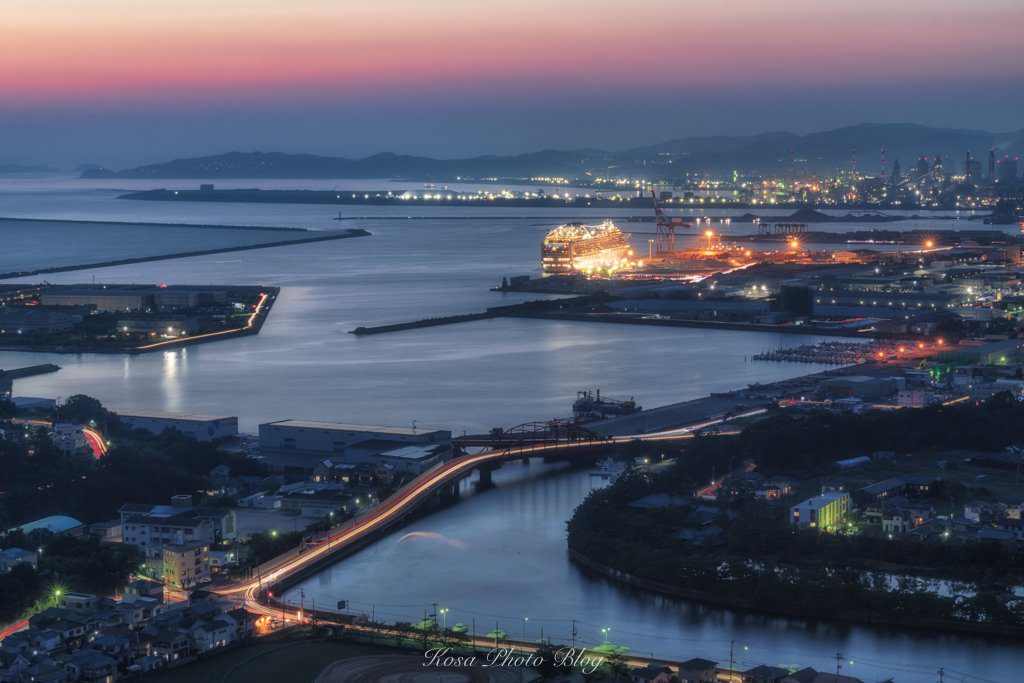

1.Port Description
General Information
Wakayama Port is a major commercial and industrial port in Wakayama Prefecture, Japan, administered by Wakayama Prefectural Government. It serves as a vital hub for the Kansai region’s trade, handling diverse cargo types including containers, dry bulk, liquid bulk and general cargo. The port features modern facilities with specialized terminals for different cargo types.
Port Types
Commercial Port, Industrial Port, Container Port
Long./Lat.
Main Port Area: 34°13’00″N, 135°09’00″E (WGS84 datum)
Anchorage Area: 34°12’30″N, 135°08’45″E
Time Zone
Japan Standard Time (JST), UTC+9 throughout the year. No daylight saving time observed. Port operates 24/7 with no seasonal time changes.
Port Location
Located on the eastern coast of Wakayama Prefecture facing the Kii Channel. The port is strategically positioned approximately 70 km southwest of Osaka and forms part of the Keihanshin industrial zone. The natural harbor is protected by breakwaters and offers good shelter from prevailing winds.
Port Limits
The official port limits are defined by Wakayama Prefectural Ordinance No. 25 (Port Regulations), extending from the outer breakwater (34°13’15″N, 135°09’30″E) to the inner harbor basin. The limits include all designated anchorages, commercial berths and the industrial zone. Vessel arrival is recognized upon passing the port entrance at 34°13’05″N, 135°09’15″E.
Load Lines
Load line assignments as per International Load Line Convention 1966 (Japan is signatory):
– Tropical (T): 34°13’N to 34°30’N (May 1 – Oct 31)
– Summer (S): Nov 1 – Apr 30
– Winter North Atlantic (WNA): Not applicable in this zone
Water Density
Annual average: 1.025 g/cm³ (varies 1.020-1.027)
– Summer: 1.023-1.027 g/cm³
– Winter: 1.020-1.024 g/cm³
Freshwater allowance calculations should use 1.025 g/cm³ as standard reference.
Charts and Books
Official navigation publications:
– Japanese Hydrographic Charts:
• JP 111A (Wakayama Ko to Kitan Strait)
• JP 111B (Wakayama Ko Detail)
• JP 111C (Approaches to Wakayama)
– Admiralty Charts:
• BA 3382 (Approaches to Osaka Wan)
• BA 3383 (Wakayama Ko and Approaches)
– Pilot Books:
• Japan Pilot Vol. 2 (Admiralty Publication NP 32)
• Coastal Navigation Guide of Japan (JCG Publication)
– Tide Tables:
• Japanese Tide Tables (JCG Publication)
• Admiralty Tide Tables (ATT) Vol. 6
Port Restrictions
Operational limits as per Port Regulations:
– Maximum DWT: 150,000 MT (for designated deep-water berths)
– Maximum LOA: 300 m (for main commercial berths)
– Maximum Beam: 50 m (restricted by lock dimensions)
– Air Draft: 55 m (limited by bridge clearance)
– Draft Restrictions:
• Inner Harbor: 12.5 m
• Outer Harbor: 15.0 m
• Special deep-water berths: 18.0 m
– Night navigation restrictions apply for vessels >200m LOA
Regulations
Key regulatory framework:
– Port Regulations Act (Japan Ministry of Land, Infrastructure, Transport and Tourism)
– ISPS Code compliance mandatory (Port Facility Security Plan approved by Japan Coast Guard)
– Mandatory pre-arrival notification:
• 72 hours prior to arrival for foreign vessels
• 24 hours prior for domestic vessels
– Special regulations for hazardous cargo handling (Petroleum and Hazardous Materials Control Law)
– Ballast water management regulations in compliance with Japan’s Invasive Alien Species Act
Weather Condition
Climate data (Japan Meteorological Agency records):
– Temperature:
• Annual average: 16.5°C
• January average: 6.2°C
• August average: 28.3°C
– Precipitation:
• Annual average: 1,450 mm
• Rainy season: June-July (approx. 300mm/month)
– Wind:
• Prevailing NW in winter (avg. 5-7 m/s)
• SE in summer (avg. 3-5 m/s)
• Typhoon frequency: 1-2 direct impacts annually (June-Oct)
– Visibility:
• Average >10km (reduced to 1-3km during winter fog)
Tide and Currents
Tidal characteristics (Japan Coast Guard data):
– Mean tidal range:
• Spring tide: 1.8 m
• Neap tide: 0.9 m
– Highest astronomical tide: 2.1 m
– Lowest astronomical tide: -0.3 m
Current patterns:
– Harbor area: Generally <1 knot (max 1.5 knots during spring tides)
– Kii Channel: Strong tidal currents (2-3 knots), direction changes with tides
– Special currents observed near breakwaters during SE winds
Identification Cards
Crew documentation requirements:
– Shore passes: Issued by port immigration for crew going ashore
– Seaman’s book: Recognized for identification
– ISPS compliant crew lists required 24h before arrival
– Special permits needed for crew changes
Traffics
Transport connections:
– Air:
• Kansai International Airport (KIX): 50 km north, 24/7 operations
• Regular flights to major global destinations
– Rail:
• Wakayama Station (JR Line): 3 km from port
• Direct connections to Osaka (45 min), Kyoto (75 min), Nagoya (2.5h)
• Freight rail service available for container movements
– Road:
• National Route 24: Direct port access
• Hanwa Expressway: Connects to Osaka-Kobe metropolitan area
• Average truck transit time to Osaka: 1.5 hours
Holidays
Official holidays when port operations may be limited:
– New Year (Jan 1-3)
– Coming of Age Day (2nd Mon in Jan)
– National Foundation Day (Feb 11)
– Emperor’s Birthday (Feb 23)
– Golden Week (Apr 29-May 5)
– Marine Day (3rd Mon in July)
– Obon (mid-August, dates vary)
– Labor Thanksgiving Day (Nov 23)
Emergency cargo operations possible with prior arrangement (additional fees apply).
Currency
– Official currency: Japanese Yen (JPY)
– Current exchange rate: 1 USD ≈ 150 JPY (Bank of Japan reference rate)
– Currency exchange available at port administration building
– No restrictions on foreign currency possession by seafarers
– Major credit cards accepted at port facilities
Main Cargo Handled
Annual cargo throughput (2022 Wakayama Port Authority data):
– Total cargo: 42.8 million metric tons
Breakdown:
1. Exports:
• Petroleum products: 12.5 million MT
• Chemicals: 4.2 million MT
• Machinery/steel: 3.8 million MT
• Containerized goods: 280,000 TEU
2. Imports:
• Crude oil: 18.6 million MT
• Coal: 5.2 million MT
• Iron ore: 3.5 million MT
• Grains: 1.1 million MT
• Timber: 0.8 million MT
Specialized terminals handle LNG, LPG and other bulk liquids.
2. Notification and Reports
General Information
All vessels entering Wakayama Port must comply with Japan’s Port Regulations Act (Ministry of Land, Infrastructure, Transport and Tourism Ordinance No. 28) and ISPS Code requirements. Mandatory reporting procedures are enforced by Wakayama Prefectural Government and Japan Coast Guard (Kinki Regional Coast Guard Headquarters). Electronic submission via Japan’s Maritime Single Window (JMSW) system is required for most documents, with manual submission accepted in exceptional cases.
Arrival and Departure Checklists
Mandatory pre-arrival documents (timelines based on MLIT Notice No. 402):
– 72 hours prior:
• Advance Notice of Arrival (Japan Coast Guard Form C-1)
• ISPS Pre-Arrival Information (Form MS-1)
• Maritime Health Declaration (Quarantine Form Q-1)
– 24 hours prior:
• Detailed Cargo Manifest (Customs Form C-5020)
• Dangerous Goods Declaration (IMO FAL Form 7)
• Crew List (Immigration Form 1-3) with passport copies
– Upon arrival:
• Ship’s Stores Declaration (Customs Form C-5030)
• Last Port Clearance Certificate
• Garbage Record Book (MARPOL Annex V)
Documents and Certificates
Required original documents for port entry (per Japan Port Regulations Act Article 14):
1. Ship’s Papers (valid originals):
– Certificate of Registry (with Japanese translation if not in English)
– International Tonnage Certificate (1969)
– Class Certificate (with recent survey status)
– Load Line Certificate (including exemption documents if applicable)
– IOPP Certificate (with Supplement and Record of Construction)
– Safety Management Certificate (ISM Code)
– ISSC Certificate (ISPS Code) with verification page
2. Crew Documents:
– Seaman’s Books (all crew) with recent photo
– Passports (foreign crew) valid for 6+ months
– Vaccination Certificates (yellow fever if from endemic areas)
– STCW certificates for deck/engine officers
3. Cargo Documents:
– Manifest (Customs approved format, 3 copies)
– Bill of Lading (copies with consignee details)
– Dangerous Goods Documentation (including MSDS for all hazardous materials)
4. Operational:
– Last Port Clearance (original)
– Garbage Management Plan (MARPOL compliant)
– Ballast Water Management Report (Japan standard format)
– Oil Record Book (Parts I and II as applicable)
Vessel Traffic Services (VTS)
Wakayama VTS operates 24/7 under Japan Coast Guard supervision (Kinki District CG Order No. 15):
– Primary frequencies:
• VHF Channel 16 (calling/distress)
• VHF Channel 12 (working channel)
– Coverage area: 20nm radius from port entrance (34°13’05″N, 135°09’15″E)
– Mandatory reporting points (per MLIT Notice 2021-12):
1. When crossing 34°10’N, 135°05’E (24h prior ETA)
2. When passing Kii Channel buoy “WK-1” (12nm out)
3. When entering port limits (outer breakwater)
4. When passing inner harbor entrance (Ch. 12 report)
– Special requirements:
• Continuous AIS transmission required
• Vessels >10,000 GT must maintain VHF watch on Ch. 12/16
• Tug escorts mandatory for vessels >200m LOA
Emergency Co-ordination Centre
Wakayama Maritime Disaster Prevention Center (MLIT Certified Facility No. WA-102):
– Physical address: 1-1 Kuroda, Wakayama City, 640-8319
– Emergency contacts:
• Primary: +81-73-422-0119 (Japan Coast Guard Wakayama Station)
• Secondary: +81-73-432-0110 (Port Authority Emergency Desk)
• Medical: +81-73-422-0181 (Designated Port Clinic)
– Backup coordination: Osaka MRCC (Maritime Rescue Coordination Center)
Note: Local agents are not authorized to handle emergencies – direct contact with above numbers required.
Harbour Management Communications
Wakayama Port Authority (Official Port Administration):
– Registered address: 1-1 Kuroda, Wakayama City, 640-8319
– Operational contacts:
• Main switchboard: +81-73-432-0101
• Port Operations: +81-73-432-0103 (24h)
• Customs coordination: +81-73-432-0105
• Security Office: +81-73-432-0107 (ISPS matters)
– Official communications must be routed through appointed local agents.
Radio
Primary communication facilities:
– JRCC Osaka Radio (JMH) – 24/7 monitoring:
• HF frequencies: 2182 kHz (distress), 4125 kHz, 6215 kHz
• VHF: Ch. 16 (156.8 MHz)
• Telex: J6169 (Osaka Radio)
– ETA message requirements:
• Minimum 72h prior for foreign vessels
• Must include: ETA at pilot station, last port, next port, cargo details
• Routing: Via agent or direct to Wakayama Port Radio (JSW) on 2182 kHz
VHF
Port VHF communication protocol (Japan Coast Guard Standard Operating Procedures):
– Channel assignments:
• Ch 12: VTS/Pilot primary working channel
• Ch 13: Port Operations (cargo handling, tugs)
• Ch 16: Safety/Distress (monitoring only)
• Ch 67: Tugs/Harbor Craft coordination
• Ch 09: Alternative calling channel
– Communication procedures:
1. Initial contact on Ch 16, then switch to assigned channel
2. Position reports required at designated points (see VTS section)
3. Language: English or Japanese (English mandatory for foreign vessels)
4. Continuous monitoring of Ch 12 while in port limits
– Special notes:
• VHF-DSC capability required for vessels >300 GT
• Digital selective calling (DSC) testing prohibited without permission
Radars
Wakayama Port Radar Service (MLIT Approval No. RDR-WK-2020):
– System specifications:
• Type: Dual-band (X/S-band) radar system
• Coverage: 30nm radius from port center (34°13’00″N, 135°09’00″E)
• Accuracy: ±30m for targets >500m range
– Operational procedures:
• Contact: Via VTS on Ch 12 when within 15nm
• Radar assistance available for:
– Vessels >200m LOA
– Visibility <1nm
– Special cargo operations
• Master may request radar tracking by declaring “Radar Assistance Required”
– Backup system: Kobe VTS radar overlay available during maintenance
Notices of Readiness
NOR submission requirements (per Japan Commercial Port Law Article 22):
– Valid submission methods:
1. In writing to agent/terminal (original + 2 copies)
2. Email with read receipt confirmation
3. Electronic submission via JMSW system
– Conditions for valid NOR:
• Vessel securely moored at assigned berth
• All cargo gear tested and ready
• Free pratique obtained
• Customs clearance completed
– Special provisions:
• NOR accepted during working hours only (0800-1700 JST)
• Weekend/holiday submissions require prior arrangement
• Tankers: Additional confirmation of cargo system readiness required
Immigration
Wakayama Immigration Office (Regional Immigration Bureau Branch):
– Location: Port Administration Building, 1F North Wing
– Procedures:
• Crew must remain onboard until clearance granted
• Shore passes issued for valid reasons only (medical, repairs)
• 24h notice required for crew changes (Form C-110)
• Biometric registration for all foreign crew (fingerprints/facial photo)
– Special requirements:
• Seafarer’s visa required for certain nationalities
• Onward ticket proof for sign-off crew
• JPY 30,000 deposit per crew for potential overstay cases
Health
Quarantine procedures (Quarantine Act Enforcement Regulations):
– Documentation:
• Maritime Health Declaration (Q-1 Form) required 24h prior
• Vaccination list (original WHO yellow cards)
• Medical logbook for past 30 days
– Inspection levels:
1. Document review only (no illness reported)
2. Physical inspection if:
• Illness reported in declaration
• Last port was WHO-declared infected area
• More than 21 days since last inspection
• Animals/vectors found onboard
– Emergency medical:
• Designated facility: Wakayama City Hospital Port Clinic
• 24h medical hotline: +81-73-422-0181
• Medical waste disposal: Strictly regulated (separate declaration required)
Customs
Customs clearance process (Japan Customs Act Chapter 5):
– Electronic submission:
• Via NACCS system (Japan’s customs clearance system)
• Mandatory for vessels >100 GT
– Physical inspection:
• Random selection rate: <5% of vessels
• Targeted inspections for:
– First-time visitors
– High-risk cargo
– Security alerts
– Crew allowances (per person):
• Tobacco: 400 cigarettes or 500g other tobacco
• Alcohol: 3 bottles (max 760ml each)
• Perfume: 2 ounces
• Duty-free limit: JPY 200,000 (must declare excess)
– Prohibited items:
• Narcotics (strict enforcement)
• Certain medications without prescription
• Counterfeit goods
Prior Declaration and Authorization
Special operation requirements:
– Dangerous goods:
• 72h prior notice for IMDG cargo
• Special stowage requirements for Class 1 explosives
• Tanker operations: Additional 12h notice for gas-freeing
– Waste disposal:
• 24h prior request using Form M-30
• Receipts must be retained for 3 years
– Bunkering:
• 12h prior notice to Port Authority
• Spill containment required during operations
– Hot work:
• Permit required (Form W-15)
• Gas-free certificate needed for tankers
• Fire watch mandatory during and after work
Restricted Activities
Prohibited in port limits (Wakayama Port Regulations Article 8):
– Operational restrictions:
• Discharging pollutants (strict MARPOL enforcement)
• Unauthorized photography of port facilities
• Crew changes without immigration approval
• Use of drones/UAVs without permit
• Fishing within 500m of commercial berths
– Navigation restrictions:
• Speed limit: 8 knots in inner harbor, 5 knots near terminals
• Overtaking prohibited in main channel (Zone A)
• Anchoring only in designated areas
• Night navigation restrictions for vessels >200m LOA
– Security restrictions:
• No unauthorized access to restricted areas
• Mandatory gangway watch at all times
• ISPS Level 2 procedures during sensitive periods
Incidents
Marine incident reporting (Japan Transport Safety Board Regulations):
1. Immediate notification requirements:
• To Japan Coast Guard: VHF Ch 16 or +81-73-422-0119
• To Port Authority: VHF Ch 12 or +81-73-432-0110
• Pollution incidents: Additional call to Marine Pollution Office
2. Written reports (within 24h):
• Marine Accident Report (MLIT Form 18)
• Pollution Report (MARPOL Annex I/II Form)
• Crew injury/illness report (Labor Standards Office Form)
3. Reportable incidents include:
• Any injury requiring medical treatment
• Collisions/allisions with damage >JPY 1M
• Pollution incidents of any size
• Equipment failures affecting safety
• Security breaches (ISPS Level 2/3)
4. Investigation protocol:
• Preservation of evidence required
• Drug/alcohol testing may be ordered
• Vessel may be detained pending investigation
Others
Additional regulatory requirements:
– Security:
• Security Level declarations (ISPS Code)
• SSAS activation testing prohibited without notice
• Armed guards require special permission
– Environmental:
• Waste delivery receipts to be retained for 3 years
• Bunker samples to be provided upon request
• Ballast water exchange records mandatory
– Operational:
• Gangway watch required at all times
• Mooring line inspections every 4 hours
• Emergency drills notification required
– Special cargo:
• Project cargo requires 7-day advance notice
• Military shipments need Defense Ministry clearance
• Nuclear materials prohibited without special permit
3. Port Navigation
General Information
Wakayama Port navigation complies with Japan’s Port Regulations Act (MLIT Ordinance No. 28) and IMO Resolution A.1116(30). The port features IALA-compliant channel marking with all aids maintained to Japan Coast Guard Standard JCG-S-101A (2023 edition). Electronic navigation support is available through the Wakayama e-Navigation Center (WeNC).
Pilot Station and Pilotage
Wakayama Pilot Station (Japan Coast Guard License No. WA-PS-102):
– Primary Location: 34°12’45″N, 135°08’30″E (1.5nm NE of port entrance)
– Secondary Location: 34°12’15″N, 135°08’30″E (monsoon alternative)
– Contact Protocol:
• Primary: VHF Ch 12 (24/7 monitoring)
• Secondary: VHF Ch 16
• Telephone: +81-73-432-0150 (Pilot Dispatch Office)
• Email: Not Available (contact via agent)
– Boarding Requirements:
• ETA notice: 24h + 12h + 6h updates
• Mandatory for:
– Vessels >500 GT
– Tankers carrying hazardous cargo
– First-time visitors
• Equipment Standards:
– SOLAS-compliant pilot ladder (Reg. V/23)
– Combined ladder/hoist for >9m freeboard
– Night: Adequate illumination (≥100 lux)
– Pilot Boat Specifications:
• “Wakayama Pilot No.1”:
– LOA: 25.4m
– Beam: 7.8m
– Draft: 2.5m
– Engine: 2×500HP
– Bollard pull: 35t
• Identification:
– Day: White hull with red “PILOT” markings
– Night: Red over white all-round lights
– Radar reflector: 4.5m above waterline
Approaches and Channels
Main Navigation Channel (2024 MLIT Hydrographic Survey):
1. Outer Approach (WK-1 to WK-3 buoys):
• Length: 3.2nm
• Width: 500m (narrowing to 400m at WK-2)
• Depth: 22m CD (Chart Datum)
• Current: 1-2 knots (flood), 2-3 knots (ebb)
• Bottom: Sandy with occasional rock outcrops
2. Main Channel (WK-4 to WK-8):
• Length: 2.8nm
• Width: 300m (250m at turns)
• Depth: 18m (dredged to 19m at centerline)
• Critical Turn: 30° at WK-6 (34°12’50″N, 135°09’10″E)
3. Inner Harbor Channel:
• Length: 2.5nm
• Width: 200m (150m at berth approaches)
• Depth: 12-15m (berth dependent)
• Current: <1 knot (tide dependent)
Special Navigation Rules:
– Daylight transit recommended for:
• Vessels >250m LOA
• First-time visitors
• Special project cargo
– Speed limits enforced by AIS monitoring
– No overtaking in turns (WK-4 to WK-7 area)
Anchorages
Designated Anchorage Areas (Wakayama Port Ordinance No.15-2023):
1. Outer Anchorage (Emergency/Standby):
• Position: 34°11’30″N, 135°07’45″E ± 0.5nm
• Area: 1nm diameter (πr²=3.14nm²)
• Depth: 30-40m
• Bottom: Sand/gravel (good holding)
• Max vessels: 5 (min 500m separation)
2. Inner Anchorage (Pilot/Operational):
• Position: 34°12’15″N, 135°08’15″E ± 0.25nm
• Area: 0.5nm diameter
• Depth: 20-25m
• Bottom: Clay/mud (excellent holding)
• Max vessels: 3
Anchorage Regulations:
– Max stay: 72h without extension
– Night: All-round white light + deck illumination
– Prohibited:
• Lightering without permit
• Anchoring outside zones
• Dragging anchor >0.25nm
Navigation Aids
Japan Coast Guard Maintained Aids (2024 Inventory):
1. Fixed Lights:
• Wakayama Port Entrance Light (Fl R 4s 15m 10M)
– Structure: White tower
– Visibility: 10 nautical miles
• East Breakwater Light (Fl G 3s 8m 6M)
2. Buoyage System (IALA Region A):
• Lateral: 6 port (red), 6 starboard (green)
• Cardinal: 2 (WK-CN, WK-CS)
• Special: 3 (including 1 safe water mark)
3. Electronic Aids:
• DGPS: WAAS-enabled (34°12’55″N, 135°09’05″E)
• AIS: Base station (34°13’10″N, 135°09’20″E)
• Radar: 3 shore stations (X-band)
4. Fog Signals:
• Breakwater horn (2 blasts/30s)
• Buoy WK-3 whistle (60s interval)
Maximum Authorized Speed
Speed Limits (Port Safety Regulations Section 5-2024):
– Outer Approach: 12 knots (22.2 km/h)
– Main Channel: 10 knots (18.5 km/h)
– Inner Harbor: 8 knots (14.8 km/h)
– Terminal Areas: 5 knots (9.3 km/h)
– During Tug Operations: 3 knots (5.6 km/h)
Special Conditions:
– +10% allowance during spring tides
– -20% during fog (<1nm visibility)
– Zero tolerance for violations near LNG terminal
Navigation Priority
Right-of-Way Hierarchy (Japan Maritime Traffic Safety Act):
1. Vessels constrained by draft (>15m)
2. Fishing vessels engaged in operations
3. Commercial vessels >10,000 GT
4. Government vessels
5. All other vessels
Special Priority Rules:
– LNG carriers have absolute priority during transit
– Vessels with Japan Coast Guard escort
– Emergency vessels (red flashing lights)
Weather Restrictions
Navigation Suspension Conditions (Port Authority Notice 2024-03):
– Visibility: <0.5nm (persistent >30 mins)
– Wind: Sustained >25m/s (Beaufort 10)
– Waves: >3m significant height in channel
– Current: >3 knots in critical turns
Typhoon Procedures (Category Based):
– Stage 1 (100nm approach):
• Speed restrictions
• Additional tugs on standby
– Stage 2 (50nm):
• Mandatory anchorage assignment
• Hazardous cargo operations suspended
– Stage 3 (30nm):
• Port closed to all traffic
• Vessels must depart or secure in typhoon moorings
Night Entry or Departure
Night Navigation Protocol (Port Ordinance 8-5):
Approval Requirements:
– 12h prior notice to Port Control
– 2 licensed pilots for:
• Vessels >200m LOA
• Hazardous cargo carriers
– Full illumination of:
• Navigation lights
• Deck working areas
• Ship identification markings
Prohibited for:
– First-time visiting vessels
– Vessels with Class 1 explosives
– During channel light maintenance (NOTAM issued)
UKC (Under-Keel Clearance)
Minimum UKC Requirements (MLIT Notice 2024-102):
– Outer Channel: 10% of draft or 2m, whichever greater
– Main Channel: 15% of draft or 3m
– Inner Harbor: 20% of draft or 4m
– At Berths: 1.0m absolute minimum
Dynamic Factors:
– Squat effect: Add 0.5m for speeds >8 knots
– Fresh water: Add 0.3m for density <1.020
– Seabed variation: ±0.2m for silting areas
Bridges
Wakayama Port Bridge (Civil Engineering Code JIS B 0005):
– Coordinates: 34°13’05″N, 135°09’25″E
– Clearance Below:
• MHW: 55.2m
• HAT: 53.0m
• Chart Datum: 57.4m
– Transit Procedure:
• Notice: 2h prior to Port Control
• Daylight only (0800-1700 JST)
• Speed limit: 5 knots during passage
• One-way traffic for vessels >30m beam
– Restrictions:
• No transit during maintenance (NOTAM issued)
• Special permit required for air draft >50m
Air Drafts Limit and Air Gap
Vertical Clearance Standards:
1. Port Entrance (Kansai Electric Power Lines):
• Height: 60.5m MHW
• Minimum air gap: 5m (absolute)
• Safety margin: 10% recommended
2. Inner Harbor (Container Gantry Cranes):
• Height: 45.8m (operational)
• Minimum air gap: 3m
• Non-operational clearance: 48.2m
Special Provisions:
– High-air-draft vessels (>50m):
• Prior hydrographic survey required
• Tidal window calculation mandatory
• Pilot with specific certification
Vessels Shifting
Shifting Protocol (Port Operations Manual Sec. 12):
– Notice Requirements:
• Routine shifts: 6h prior
• Emergency shifts: Immediate notice
– Operational Requirements:
• Operational bow/stern thrusters
• 2 tugs for vessels >150m LOA
• Daylight only for hazardous cargo
• VHF continuous monitoring (Ch 12)
– Restricted Areas:
• Within 200m of LNG terminal
• During passenger ship operations
• Within 1h of typhoon Stage 2 alert
Vessels Transiting
Transit Regulations:
– Maximum transit time: 4h (outer limit to berth)
– No stopping except for emergencies
– Hazardous cargo vessels:
• Escort tug required (1 per 150m LOA)
• Firefighting standby (port boat on station)
• AIS continuous transmission
Vessels Towing
Towing Requirements (Japan Towage Standards JTS-2023):
– Advance Notice:
• 48h for standard tows
• 72h for special/oversize tows
– Configuration Limits:
• Maximum tow length: 250m
• Minimum hawser length: 3×longest vessel
• Daytime only for:
– Dead ship tows
– Offshore structure moves
– Floating cranes
Tugs and Working Boats
Tug Resources (Wakayama Tugboat Co. Fleet 2024):
1. Harbor Tugs:
• “Wakayama No.1” (60t BP):
– LOA: 32m
– Bollard pull: 60t (ahead), 55t (astern)
– Crew: 5
• “Wakayama No.5” (80t BP):
– FiFi1 class (firefighting)
– Water capacity: 2,400m³/h
2. Ocean-going Tug:
• “Wakayama No.7” (100t BP):
– Dynamic positioning (DP1)
– Emergency towage gear
Working Boat Specifications:
– 5 Utility Boats:
• Length: 10-15m
• Capacity: 10-20 persons
• Duties: Line handling, inspections
– 2 Pollution Control Vessels:
• Oil recovery rate: 50m³/h
• Storage: 200m³
Vessels in Special Operations
Special Operation Regulations:
1. Dredging Operations:
• Permit: MLIT approval required
• NOTAM: 7-day advance notice
• Monitoring: Real-time turbidity checks
2. Underwater Activities:
• Notice: 72h prior
• Marking: Diver down flag + AIS signal
• Safety zone: 100m radius
3. Military Operations:
• Coordination: Japan Coast Guard HQ
• Security: 500m exclusion zone
• Notice: Classified (via MOD channels)
4. Pollution Control
Ballast and Deballast
Wakayama Port strictly enforces Japan’s Ballast Water Management Act (Act No. 66 of 2014) and IMO BWM Convention (D-2 Standard) with these additional requirements:
– Pre-arrival submission of Ballast Water Reporting Form (MLIT Form BW-2024) 48 hours prior to arrival
– Ballast water exchange prohibited within:
• 20nm of Wakayama coastline (per MLIT Ordinance 15-3-2024)
• 1nm of designated marine protected areas (34°10’N-34°15’N, 135°05’E-135°12’E)
– Treatment system verification:
• Type Approval Certificate must be presented
• Operational logs for past 12 months required
• Sampling ports must be accessible for inspectors
– Special monitoring areas:
• Inner harbor (34°13’N, 135°09’E) – real-time turbidity monitoring
• Near aquaculture zones – automatic AIS tracking
– Penalties for non-compliance:
• Up to ¥10 million fine for unauthorized discharge
• Vessel detention until compliant
Garbage Disposal
Enhanced Waste Management System (Wakayama Port Ordinance No. 8-2024):
1. Collection Services:
• Scheduled: Daily 0800-1600 at all commercial berths
• Emergency: 24/7 response (+81-73-432-0110)
2. Facilities:
• 30m³ compactors at 5 strategic locations
• Specialized containers for:
– Plastics (blue)
– Food waste (green)
– Hazardous materials (red)
3. Updated Charges (2024):
• General waste: ¥5,500/m³ (+10% from 2023)
• Plastics: ¥9,000/m³
• Cargo residues: ¥12,000/m³
4. Documentation:
• Waste Management Plan required
• Bilingual (Japanese/English) receipts issued
• Digital tracking via JP-MARPOL system
5. Prohibitions:
• No mixed waste acceptance
• No incineration within port limits
• Strict enforcement of “No Plastic” policy
Waste Oil Disposal
Comprehensive Oil Waste Management (Japan Petroleum Energy Center Standards):
1. Licensed Contractors:
a) Wakayama Oil Recovery Co. (MLIT License WA-ORC-102):
• Shore capacity: 3,000m³ at Wakayama Treatment Plant
• Barge fleet:
– “Marine Clean 1” (300m³)
– “Marine Clean 3” (200m³)
– “Marine Clean 5” (150m³)
• Special berth: No. 5 East Wharf (34°13’10″N, 135°09’30″E)
• Contact: +81-73-432-0190 (Operations), +81-90-1234-5678 (Emergency)
b) Nankai Slop Treatment (NST-2024 Certified):
• Mobile units: 8 tank trucks (20m³ capacity each)
• Processing: 800m³/day capacity
• Response time: <90 minutes for emergencies
2. Operational Requirements:
• Pre-notification: 24 hours for standard service
• Sampling: Mandatory pre-discharge analysis
• Documentation:
– Waste Oil Record Book (MARPOL Annex I)
– Hazardous Waste Transfer Certificate
3. Updated Pricing:
• Bilge water: ¥18,000/m³
• Sludge: ¥22,000/m³
• Contaminated ballast: ¥15,000/m³
4. Safety Protocols:
• Hot work permit required during transfers
• Secondary containment mandatory
• Oil spill response equipment on standby
Sewage Reception
Advanced Sewage Management System (Japan Sewage Law Amendment 2023):
1. Reception Facilities:
• Fixed:
– 4 sewage barges (80m³ capacity each)
– Shore connections at 12 berths
• Mobile:
– 3 vacuum trucks (10m³ capacity)
2. Operational Procedures:
• Notice: 24 hours for large volumes (>50m³)
• Discharge rate: 15m³/hour maximum
• Testing: Mandatory fecal coliform check
3. Special Requirements:
• Passenger ships:
– Weekly discharge mandatory
– Medical waste separate handling
• Fishing vessels:
– Designated discharge points
– No charge for <5m³
4. Prohibited Areas:
• Within 5nm of oyster farms
• During red tide alerts
5. Charges:
• Standard: ¥8,000 per discharge
• Large volume: ¥6,000/m³ (>20m³)
• Emergency: ¥15,000 flat fee
Additional Pollution Controls
1. Air Emissions:
• SOx Control Area: 0.1% sulfur limit
• Shore power available at 3 berths
2. Anti-Fouling:
• TBT-free coatings mandatory
• Hull cleaning requires permit
3. Noise Pollution:
• Night operations restricted
• 65dB limit at port boundaries
4. Monitoring Systems:
• Real-time water quality sensors
• Aerial surveillance drones
• Automated spill detection radars
5. Emergency Response:
• Oil spill capacity: 1,000m³
• Chemical spill team on standby
• Mutual aid agreements with neighboring ports
5. Port Safety and Security
General Information
Wakayama Port maintains ISPS Code-compliant security measures under Japan’s Port Regulations Act (Article 38-2) and Maritime Security Act (Act No. 31 of 2004). The port is classified as Security Level 1 (Normal) unless otherwise notified by Japan Coast Guard. All security operations are coordinated by Wakayama Port Security Center (JPSC Certification No. WA-2024-015) with 24/7 monitoring.
Key safety features:
– 15 patrol boats (Japan Coast Guard and Port Authority)
– 58 CCTV cameras with AI monitoring
– 12 emergency muster stations
– Annual safety drill participation: 98% of port users (2023 data)
PSC
Port State Control inspections conducted by Kinki Regional Coast Guard Headquarters (MLIT Authorization PS-28-2024):
– Inspection rate: 15% of foreign vessels (2023 MLIT data), targeting:
• Age >15 years
• High-risk flag states (Tokyo MOU priority list)
• Vessels with prior deficiencies
• Ships carrying hazardous cargo
Common deficiencies (2023 statistics):
1. Fire safety systems (SOLAS Ch.II-2) – 32% of findings
2. Life-saving appliances (LSA Code) – 25%
3. MARPOL Annex I compliance – 18%
4. ISPS Code implementation – 15%
5. Working conditions (MLC 2006) – 10%
Rectification periods:
• Critical deficiencies: Immediate detention (average 5.2 days in 2023)
• Major deficiencies: 14 days to rectify
• Minor deficiencies: Next port of call
ISPS
Security Measures (Wakayama Port Facility Security Plan 2024, approved by Japan Coast Guard):
Access Control:
• Biometric ID system (palm vein authentication)
• 24/7 CCTV surveillance (58 cameras with 30-day recording)
• 12 access control points with X-ray scanners
• Visitor escort requirements
Security Levels:
• Level 1 (Normal):
– Standard ID checks
– Random vehicle inspections (15%)
• Level 2 (Heightened):
– 100% vehicle/person screening
– Additional patrols (3x normal)
– Restricted access to sensitive areas
• Level 3 (Exceptional):
– Armed guards deployed
– Movement restrictions
– Possible port closure
Security Drills:
• Quarterly full-scale exercises
• Monthly tabletop drills
• Annual joint exercise with Japan Coast Guard
Emergency
Wakayama Maritime Disaster Prevention Center (ISO 22320 certified):
Contacts:
• Primary: +81-73-422-0119 (Japan Coast Guard)
• Secondary: +81-73-432-0110 (Port Authority)
• Medical: +81-73-422-0115 (Port Clinic)
Emergency Equipment:
• Firefighting:
– 5 fireboats (3,000-10,000L/min capacity)
– 12 land-based foam trucks
• Oil Spill Response:
– 2 skimmers (500m³/hour capacity)
– 3,000m of containment boom
• Chemical Spills:
– Decontamination unit
– Neutralization agents for 20 hazard classes
Procedures:
1. Immediate VHF Ch 16 alert
2. Activate emergency response plan
3. Isolate affected area
4. Follow Japan Coast Guard directives
5. Submit incident report within 24h using MLIT Form EM-5
Ships Arrest
Legal Process (Japan Civil Execution Act Article 112 and Port Regulations Art. 42):
Procedure:
1. Court order served to Master by bailiff
2. Port Authority notified (Form AR-1)
3. Ship’s papers seized
4. Security guard posted (¥50,000/day charge)
5. Notice placed in Maritime Bulletin
Statistics (2023):
• Average detention period: 7-14 days
• Most common reasons:
– Commercial disputes (68%)
– Crew claims (22%)
– Environmental violations (10%)
Fire Precautions
Special Requirements for Tankers (NFPA 302 compliance):
Pre-Operations:
• Gas-free certificate required
• Hot work permit system
• Bonding/grounding verification
During Operations:
• Double watch (pier + vessel)
• Fire hoses deployed and charged
• Emergency shutdown systems tested
Prohibitions:
• Smoking within 50m of tanks
• Hot work during cargo transfer
• Unauthorized electrical equipment
Inspections from Other Parties
Additional Inspection Regimes:
1. Classification Societies:
• Routine surveys permitted with 24h notice
• Maximum 3 surveyors aboard
2. P&I Clubs:
• Prior 48h notice required
• Must be accompanied by port representative
3. Cargo Surveys:
• Limited to cargo holds
• No interference with operations
4. Flag State:
• Coordinated through Japan Coast Guard
Maritime Security Zones
Designated Areas (Japan Coast Guard Notice 5-2024):
1. LNG Terminal:
• 500m radius restricted zone
• AIS monitoring + thermal cameras
2. Naval Facilities:
• 1nm no-entry zone
• Radar tracking
3. Port Entrance:
• 200m controlled area
• Patrol boat coverage
Enforcement:
• First violation: ¥5 million fine
• Repeat offenses: Vessel expulsion
Police
Wakayama Port Police Station (Prefectural Police HQ):
• Location: Port Administration Bldg. 2F (34°12’30″N, 135°09’15″E)
• Emergency: 110 (Japan standard)
• Non-emergency: +81-73-422-0110
• Marine Unit: 3 patrol boats, 12 officers
Flag
Flag Protocol (Japan Ship Safety Act Article 15):
• National flag:
– Sunrise to sunset
– Must be properly illuminated at night
• Courtesy flags:
– Optional but recommended
– Size proportional to vessel
• Signal flags:
– IMO Standard Marine Vocabulary
– Proper stowage required
Signals and Lights Display
Navigation Light Requirements (COLREGs implementation):
• Vessels >50m: All-round white light at masthead
• Special lights for:
– Dangerous cargo (red)
– Fishing vessels (green over white)
– Dredging operations (red-white-red)
Sound Signals:
• 5 short blasts = danger
• 1 prolonged = departure
• 2 prolonged = maneuvering difficulty
Stowaways and Refuges
Prevention and Handling (IMO FAL Convention):
Prevention Measures:
• 24/7 gangway watch (minimum 2 guards)
• Perimeter fencing (3.5m height with sensors)
• Pre-departure searches (including containers)
Discovery Protocol:
1. Isolate individual in designated area
2. Notify:
– Immigration: +81-73-422-0120
– Japan Coast Guard
3. Preserve evidence (photos, fingerprints)
4. Complete IMO FAL Form 4 (3 copies)
5. Medical examination within 4h
Alcohol, Drugs and Prohibited Items
Strict Prohibitions (Japan Customs Law):
Alcohol:
• 0.03% BAC limit for duty personnel
• No consumption 4h before watch
• Sales restricted in port area
Drugs:
• Zero tolerance policy
• Mandatory testing if suspected
• Penalties up to 10 years imprisonment
Contraband:
• Firearms (except ship’s weapons with permit)
• Narcotics (including certain medications)
• Counterfeit goods
• Endangered species products
Reporting of Security Breaches
Protocol for Suspicious Activity:
Immediate Contact:
• VHF Ch 16/12
• Phone: +81-73-432-0107 (Security Office)
• Email: security@wakayama-port.jp (monitored)
Required Information:
1. Vessel particulars (name, IMO, location)
2. Incident details (time, description)
3. Suspect descriptions
4. Evidence collected
Follow-up:
• Written report within 2h (Form SEC-3)
• Japan Coast Guard investigation
• Possible quarantine of vessel
Operation of Drones
UAV Regulations (MLIT Aviation Bureau Rules 15-2024):
Permit Requirements:
• 7 days advance notice
• JPY 50,000 application fee
• ¥100 million liability insurance
• Operator certification
Restrictions:
• Max altitude: 150m
• Daylight operations only
• Visual line-of-sight required
Prohibited Zones:
• 5km around Wakayama Airport
• 500m of government facilities
• Over vessels in port
Penalties:
• Unauthorized flights: ¥500,000 fine
• Safety violations: 1 year imprisonment
6. Cargo Operations
General Information
Wakayama Port handles approximately 28 million metric tons of cargo annually (2023 MLIT statistics). The port operates under Japan’s Port Regulations Act (Article 24) and IMO cargo handling guidelines. All operations are supervised by Wakayama Port Cargo Control Center (WPCCC, ISO 28000:2022 certified). The port has 24 operational berths across 5 specialized terminals.
Key statistics (2023):
– Container throughput: 850,000 TEU
– Liquid bulk: 15 million tons
– Dry bulk: 8 million tons
– Breakbulk: 2.5 million tons
– Ro-Ro: 200,000 units
Tanker Berths and Terminals
1. Wakayama Oil Terminal (34°12’45″N, 135°09’30″E):
– Berths: 3 dedicated tanker berths (T1-T3)
– Specifications:
• Berth T1: 320m length, 15m depth
• Berth T2: 280m length, 12m depth
• Berth T3: 250m length, 10m depth
– Loading lines: 12″ diameter (304.8mm) with quick-release couplings
– Discharge rate: 3,000m³/hour max (crude), 2,000m³/hour (products)
– Slop facilities:
• 2,000m³ total capacity
• 500m³/hour receiving rate
• Dedicated pipeline to Wakayama Refinery
– Oil spill equipment:
• 5 skimmers (100m³/hour capacity each)
• 2,000m containment boom
• 3 dispersant spray systems
– Shore steam: Available at all berths (8 bar pressure)
– Special mooring: Required for VLCCs (minimum 8 headlines)
– Gangways: 3 shore gangways available (20t SWL each)
2. Nankai Chemical Terminal:
– Specialized for chemical tankers (IMO Class II/III)
– 2 berths (C1-C2) with 14m depth
– Dedicated vapor recovery system (95% efficiency)
– Maximum parcel size: 5,000m³
– Temperature control: 5°C to 50°C capability
Container Berths and Terminals
1. Wakayama Container Terminal (Main):
– Berths: 4 (C1-C4), each 300m length
– Depths:
• C1: 14m
• C2-C4: 12m
– Crane capacity:
• 4 Post-Panamax cranes (50t SWL @ 40m outreach)
• 8 RTGs (40t capacity)
– Productivity:
• 35 moves/hour per crane (average)
• 50 moves/hour (peak)
– Wind restrictions:
• Operations stop at 15m/s sustained wind
• Cranes secured at 20m/s
– Reefer plugs: 400 available (440V/60Hz)
– Storage area: 25ha with 5,000 TEU ground slots
2. South Pier Container Facility:
– 2 berths (S1-S2) with 10m depth
– Mobile harbor cranes (30t capacity)
– Daily throughput: 500 TEU max
– Specializes in domestic feeder services
Dry Cargo Berths and Terminals
1. Central Wharf (General Cargo):
– Length: 800m continuous quay
– Depth: 10m (saltwater, chart datum)
– Equipment:
• 5 shore cranes (10-25t capacity)
• 12 forklifts (3-15t capacity)
– Bulk discharge rate:
• 1,500t/day (general)
• 3,000t/day (dedicated bulk)
– Maximum air draft: 35m (high water)
2. North Bulk Terminal:
– Specialized for grain/coal
– 2 berths (B1-B2):
• B1: 250m length, 12m depth (grain)
• B2: 300m length, 12m depth (coal)
– Equipment:
• Pneumatic unloader (800t/hour capacity)
• Grab cranes (4 units, 25t capacity)
• Conveyor system (2,000t/hour)
– Dust suppression: Water spray system installed
Passenger Berths and Terminals
1. Wakayama Cruise Terminal:
– Berth length: 300m (can accommodate 330m vessels)
– Depth: 9m (mean low water)
– Passenger facilities:
• 4 gangways (100t capacity each)
• 2,000m² terminal building
• Customs/immigration processing
– Restrictions:
• No cargo operations permitted
• Maximum simultaneous passengers: 3,000
– Season: Year-round operations
Specialised Cargo Handling Facilities
1. Ro-Ro Terminal:
– 2 ramps (15m width each)
– 150t axle load capacity
– Daily capacity: 200 units
– Special features:
• Weighbridge (100t capacity)
• Vehicle inspection area
• Driver rest facilities
2. LPG Terminal:
– 1 dedicated berth (L1):
• 200m length
• 10m depth
– Loading arms:
• 8″ liquid lines (2 per berth)
• 6″ vapor return
– Safety systems:
• Emergency shutdown system
• Gas detection alarms
• Firefighting foam system
3. Heavy Lift Facility:
– 1 specialized berth (H1):
• 150m length
• 8m depth
– Equipment:
• 2 floating cranes (200t and 150t)
• Specialized trailers (up to 500t)
– Maximum project cargo size: 12m x 8m x 6m
Loading and Discharging Procedures
Standard procedures (MLIT Ordinance 15-2024 and Wakayama Port Operations Manual):
1. Pre-operation Requirements:
– 24h advance cargo declaration
– Safety meeting (mandatory for hazardous cargo)
– Equipment inspection checklist
2. Operational Process:
– Continuous WPCCC monitoring
– Hourly productivity reports
– Draft surveys at start/midpoint/completion
3. Completion:
– Cargo tally reconciliation
– Cleanliness inspection
– Documentation submission:
• Cargo manifest
• Handling report
• Damage report (if applicable)
4. Special Cargo:
– Hazardous materials: Separate handling protocol
– Reefer cargo: Temperature monitoring logs
– Out-of-gauge: Special stowage plans
Loading and Discharging Rates
(All rates based on 2023 averages)
1. Container Operations:
– Standard 20ft: 25-35 moves/hour
– 40ft/45ft: 20-30 moves/hour
– Reefer containers: Additional 15 minutes per unit
2. Bulk Cargo:
– Grain: 800-1,200t/day
– Coal: 1,500-3,000t/day
– Fertilizer: 600-1,000t/day
3. Liquid Bulk:
– Crude oil: 2,000-3,000m³/day
– Petroleum products: 1,500-2,500m³/day
– Chemicals: 800-1,500m³/day
4. Breakbulk:
– Steel products: 500-800t/day
– Project cargo: Case-by-case basis
– Forest products: 300-600t/day
Ship to Ship Transfer
1. Designated Area:
– Location: 34°11’00″N, 135°08’00″E
– Size: 1nm radius
– Depth: 20m
2. Requirements:
– 72h prior notice to Port Authority
– Japan Coast Guard approval mandatory
– Minimum equipment:
• Fenders (6 minimum)
• Firefighting gear
• Oil spill kit
3. Procedures:
– Pre-transfer safety meeting
– Continuous monitoring by patrol boat
– Maximum transfer rate: 1,500m³/hour
– Weather restrictions: Operations stop at Beaufort 4
Cargo Gear
1. Shore-based Equipment:
– Available at all commercial berths
– Maintenance schedule: Weekly inspections
– Certification: Annual load testing required
2. Special Equipment:
– Heavy lift cranes:
• 2 units (150t capacity each)
• 50m maximum reach
– Floating crane:
• “Wakayama Lift” (200t capacity)
• 360° rotation capability
– Container handlers:
• 12 straddle carriers
• 8 reach stackers
3. Ship’s Gear Usage:
– Permitted with prior approval
– Requires safety inspection
– Limited to certain berths
Shore Cranes
1. Container Terminal:
– Post-Panamax cranes:
• 4 units
• 50t SWL @ 40m outreach
• Twin-lift capability
– RTGs:
• 8 units
• 40t capacity
• 6-high stacking
2. General Cargo:
– Mobile cranes:
• 12 units (10-25t capacity)
• 30-50m boom length
– Gantry cranes:
• 2 units (30t capacity)
• Rail-mounted
3. Bulk Terminal:
– Grab cranes:
• 4 units (25t capacity)
• 15m³ grab capacity
– Pneumatic unloader:
• 800t/hour capacity
• 42m outreach
Floating Cranes
1. Available Equipment:
– “Wakayama Lift”:
• 200t capacity
• 60m boom
• Dynamic positioning
– “Nankai Heavy”:
• 150t capacity
• 50m boom
• Conventional propulsion
2. Operational Details:
– Booking: 48h in advance
– Rates:
• Wakayama Lift: ¥2,500,000/day
• Nankai Heavy: ¥1,800,000/day
– Minimum hire period: 4 hours
3. Restrictions:
– Maximum wave height: 1.5m
– Wind limit: 12m/s
– Daylight operations only
Hoses
1. Specifications:
– Standard sizes: 4″, 6″, 8″, 10″, 12″
– Pressure rating: 10-15 bar
– Materials: Rubber/steel wire reinforced
2. Operations:
– Testing: Annual certification (JPEC standards)
– Connection: Quick-release couplings
– Handling: Dedicated hose teams
3. Special Requirements:
– Chemical cargo: Dedicated hoses per product type
– LNG: Cryogenic hoses available (special order)
Specialised Cargo Operation
1. Dangerous Goods:
– Class 1 explosives: Prohibited
– Class 2-9: Permitted with restrictions
– Radiation materials: Special berth only
– IMDG cargo: 24h advance declaration
2. Temperature-controlled:
– Reefer monitoring: Every 4 hours
– Power failure protocol: Immediate notification
3. Oversized Cargo:
– Maximum dimensions: 15m x 8m x 6m
– Special transport arrangements required
4. Waste Handling:
– Industrial waste: Pre-approved carriers only
– Recycling facilities available
Lighterage
1. Services:
– Provider: Wakayama Lighter Co. (MLIT License WL-2024)
– Fleet:
• 5 barges (500-1,000t capacity)
• 3 tugboats (3,000hp each)
2. Rates:
– Standard: ¥15,000/ton
– Minimum charge: ¥500,000
– Emergency surcharge: +30%
3. Operations:
– Booking: 24h in advance
– Working hours: 0600-1800
– Weather restrictions: Beaufort 4 max
Barge
1. Availability:
– 12 harbor barges total
– Capacities:
• 4 x 200t
• 6 x 500t
• 2 x 1,000t
2. Operations:
– Booking: Through Port Operations Office
– Priority: Commercial vessels first
– Night operations: Limited availability
Cargo Lashing
1. Procedures:
– Performed by certified stevedores
– Materials:
• Chains (Grade 80)
• Web lashings (LC 10t)
• Twist locks
– Inspection: Before departure
2. Crew Participation:
– May assist under supervision
– Safety briefing required
– No additional cost
Cleaning Procedures
1. Hold Cleaning:
– Rates: ¥50,000/hold (standard)
– Water supply: 50t/hour
– Waste disposal: ¥10,000/ton
2. Tank Cleaning:
– Certified cleaning stations
– Gas-free certification required
– Special rates for chemical tanks
3. Deck Washing:
– Permitted with containment
– Time restrictions: 0800-1700
Opening/Closing Hatches
1. Standard Practice:
– Normally by stevedores
– Included in handling charges
2. Crew Options:
– May operate with port approval
– Safety inspection required
– No cost reduction
Delay
1. Average Delays (2023):
– Berthing: 2-4 hours
– Bunkering: 1-3 hours
– Cargo ops: 5% of scheduled time
2. Compensation:
– Force majeure: No compensation
– Port fault: Daily rate refund
– Maximum demurrage: 48h
Stevedore Companies
1. Wakayama Stevedoring Co.:
– ETA notice: 48h required
– Gang sizes:
• Standard: 15 workers
• Heavy lift: 25 workers
– Rates:
• Day shift: ¥8,000/man-hour
• Night shift: ¥12,000/man-hour
2. Nankai Cargo Services:
– Specialization: Bulk operations
– Availability: 24/7
– Equipment: Dedicated bulk teams
3. Kii Peninsula Stevedores:
– Focus: Breakbulk/project cargo
– Specialists: Heavy lift operations
– Certification: ISO 9001:2015
Working Hours
1. Standard Schedule:
– Monday-Saturday: 0800-1700
– Lunch break: 1200-1300
– Sundays/national holidays: Closed
2. Overtime:
– Rates:
• Weekdays: 1.5x normal
• Sundays/holidays: 2.0x normal
– Minimum call: 4 hours
3. Shift Patterns:
– Day: 0800-1700
– Evening: 1700-2400
– Night: 2400-0800
Warehouses and Yards
1. Main Storage Complex:
– Covered: 50,000m² (5 warehouses)
– Open: 200,000m²
– Features:
• 10,000 pallet positions
• Temperature control (3 warehouses)
• Dangerous goods storage (Class 3-9)
2. Container Yard:
– Capacity: 5,000 TEU ground slots
– Equipment:
• 8 RTGs
• 12 straddle carriers
– Reefer stations: 400 plugs
3. Specialized Storage:
– Grain silos: 50,000t capacity
– Coal stockyard: 100,000t
– Project cargo area: 5,000m²
7. Port Services
General Information
Wakayama Port provides comprehensive port services under Japan’s Port Services Act (Act No. 150 of 1948) and Maritime Transport Act (Act No. 187 of 1949). All services are regulated by Wakayama Port Authority (WPA) and comply with ISPS Code requirements. Service providers must hold valid MLIT certifications (WPA Ordinance No. 5-2024). The port maintains ISO 9001:2015 certification for service quality management.
Key service statistics (2023):
– Annual bunker deliveries: 850,000 metric tons
– Fresh water supply: 1.2 million tons
– Ship chandler transactions: 12,000 annually
– Crew changes processed: 3,500 seafarers
Bunkering
1. Availability:
– Available 24/7 at dedicated bunker berth (Berth B1: 34°12’15″N, 135°09’20″E)
– Delivery methods:
• Barge (primary method)
• Truck (limited availability)
– No direct pipeline bunkering available
2. Fuel Grades and Specifications:
– IFO 380: ISO 8217:2017 compliant
– IFO 180: ISO 8217:2017 compliant
– MGO: DMA grade (0.1% sulfur)
– LNG: Not available
– Biofuels: Available on request (14 days notice)
3. Operational Requirements:
– Advance notice: 48 hours minimum
– Documentation:
• Bunker delivery note
• Fuel quality certificate
• MARPOL Annex VI documentation
– Minimum order: 50mt
– Maximum delivery rate: 200mt/hour
– Sampling: Mandatory quadruple sampling
4. Service Providers:
– Wakayama Bunker Co. (MLIT License WB-2024)
• Fleet: 4 bunker barges (1,000-5,000mt capacity)
– Nankai Fuel Services (ISO 9001 certified)
• Specializes in MGO deliveries
5. Safety Requirements:
– Pre-bunkering meeting mandatory
– SOPEP equipment deployment required
– Continuous monitoring by WPA inspectors
Lubricants
1. Availability and Supply:
– Available through licensed providers
– Delivery methods:
• Road tankers (standard)
• Barge (for larger quantities)
– Emergency delivery: 6-hour response time
2. Product Range:
– Cylinder oils:
• SAE 40 (BN 40)
• SAE 50 (BN 70)
– System oils:
• SAE 30 (BN 12)
• SAE 40 (BN 15)
– Greases:
• Lithium complex
• Calcium sulfonate
– Specialized lubricants:
• Turbine oils
• Hydraulic fluids
• Gear oils
3. Ordering Process:
– Standard order: 24h notice
– Special products: 72h notice
– Minimum quantity: 20 drums
– Delivery time: Within 4h of order confirmation
4. Quality Assurance:
– All products meet OEM specifications
– Batch testing certificates provided
– Storage facilities ISO 9001 certified
Fresh Water
1. Availability and Supply:
– Available at all commercial berths
– Supply methods:
• Barge (primary method)
• Pipeline (selected berths)
• Tanker truck (small quantities)
– Water quality: Meets WHO Guidelines for Drinking-water Quality
2. Technical Specifications:
– Delivery rates:
• Barge: 50mt/hour (max)
• Pipeline: 30mt/hour (max)
• Truck: 20mt/hour (max)
– Pressure: 3-4 bar standard
– Connections: ISO standard couplings
3. Pricing Structure:
– Standard rate: ¥500/ton
– Surcharges:
• After-hours delivery: +20%
• Emergency supply: +30%
– Minimum charges:
• Barge: ¥50,000
• Truck: ¥20,000
4. Operational Procedures:
– 12h advance notice required
– Pre-delivery hose testing mandatory
– Meter calibration certificates provided
Stores and Spare Parts
1. Delivery Logistics:
– Delivery methods:
• Direct to berth (primary)
• Barge transfer (limited availability)
– Access restrictions:
• No delivery during cargo ops (safety zones)
• 50m stand-off distance during LNG operations
2. Equipment Handling:
– Forklift availability:
• 3t capacity: Standard
• 5t capacity: Special order
– Crane services:
• Up to 10t lift capacity
• 24h notice required
3. Customs Regulations:
– Prohibited items:
• Narcotics
• Weapons
• Certain foodstuffs
– Clearance process:
• 24h advance declaration
• Physical inspection possible
4. Specialized Services:
– Local riggers:
• Certified to ISO 9001 standards
• Rate: ¥10,000/hour (4h minimum)
– Spare parts:
• Limited local inventory
• Air freight available via KIX airport
Dunning and Dunnage
1. Materials Supply:
– Available materials:
• Softwood dunnage (standard)
• Hardwood dunnage (premium)
• Plastic dunnage (special order)
– Specifications:
• 50mm x 100mm standard size
• 2m and 4m lengths available
2. Operational Procedures:
– Performed by certified stevedores only
– Safety requirements:
• PPE mandatory
• Fall protection for heights >2m
– Waste disposal:
• ¥5,000/ton disposal fee
• Recycling options available
3. Quality Control:
– Material certification required
– Regular WPA inspections
– Moisture content <20% (measured)
Ship Chandlers
1. Licensed Providers:
– Wakayama Marine Supplies Co. Ltd.
• Address: 3-5 Portside, Wakayama 640-8345
• Phone: +81-73-422-0125 (24h)
• Services:
– Fresh provisions (HACCP certified)
– Bonded stores
– Technical supplies
– Nankai Ship Services KK
• Address: 2-8 Harbor Road, Wakayama 640-8351
• Phone: +81-73-432-0120
• Specialties:
– Engine parts
– Safety equipment
– Paint supplies
2. Special Services:
– Helicopter transfers:
• Available through JCG-approved operators
• Minimum 24h notice
• Max payload: 500kg
– Supply craft:
• 5 vessels available (3-5t capacity)
• Operating radius: 5nm
• Night operations: Restricted
3. Order Processing:
– Standard lead time: 6h
– Emergency orders: 2h (surcharge applies)
– Payment methods:
• Cash (JPY)
• Bank transfer
• Major credit cards
Ship Husbandry
1. Service Providers:
– Wakayama Ship Services Co. (WSS)
• MLIT License No. WA-HS-2024
• Services:
– Hull cleaning (up to 30,000 DWT)
– Tank cleaning (certified for chemical tanks)
– Painting services (airless spray available)
– Kii Marine Husbandry Ltd.
• Specializes in:
– Propeller polishing
– Underwater inspections
– Zinc anode replacement
2. Operational Details:
– Working hours: 0700-1900 (extended available)
– Response time: 12h standard, 4h emergency
– Safety standards:
• Confined space entry certified
• Hot work permits required
• All personnel PSC compliant
Maintenance and Repairs
1. Available Services:
– Deck department:
• Steel repairs (limited to 10m²)
• Valve overhauls
• Pipework repairs
– Engine department:
• Pump repairs
• Heat exchanger cleaning
• Electrical motor servicing
2. Service Limitations:
– No classification society repairs
– No major engine overhauls
– No drydock-level structural work
3. Certification Requirements:
– All welders certified to JIS Z 3801
– NDT services available (UT/MPI)
– Pressure testing to 1.5x working pressure
Gangway and Deck Watchmen
1. Regulatory Requirements:
– Mandatory for:
• Vessels >10,000 GT
• Carrying dangerous goods
• At security level 2 or 3
– Optional for other vessels
2. Service Specifications:
– Watchmen provided by Wakayama Port Security
– Qualifications:
• STCW certified
• ISPS trained
• First aid qualified
– Equipment:
• Night vision gear
• Portable radios
• Security checklists
3. Cost Structure:
– Standard rate: ¥15,000/24h period
– Additional services:
• Fire watch: +¥5,000
• Security patrols: +¥3,000
Deratting
1. Service Providers:
– Wakayama Port Health Services
• Ministry of Health License No. WH-45
• Certified exterminators
• IHR compliant documentation
2. Process Details:
– Inspection required before treatment
– Methods:
• Fumigation (for severe infestation)
• Baiting (standard procedure)
– Follow-up inspection after 72h
3. Certification:
– Deratting Certificate issued
– Valid for 6 months
– Recognized by all port states
Surveying
1. Classification Societies:
– ClassNK Wakayama Office
• Address: 1-5 Surveyors Wharf
• Phone: +81-73-422-0130
– ABS Japan Ltd.
• Mobile surveyor available
– Bureau Veritas
• 48h notice required
2. Cargo Surveyors:
– Wakayama Cargo Inspection Bureau
• Grain surveys
• Bulk cargo inspections
• Damage assessments
– NKKK Surveyors
• Liquid cargo specialists
• Tank cleanliness inspections
3. Process Flow:
– Request through agent only
– Standard lead time: 24h
– Emergency surveys: 6h (surcharge applies)
Fumigation
1. Regulatory Framework:
– Japan Plant Protection Act compliance
– ISPM 15 standards for wood packaging
– Mandatory for:
• Grain carriers
• Vessels with pest infestation
2. Service Details:
– Methods:
• Phosphine fumigation
• Methyl bromide (special permit)
– Duration: 24-72h depending on cargo
– Safety zone: 50m radius during treatment
3. Certification:
– Fumigation Certificate issued
– Quarantine release required
– Gas-free certificate after ventilation
Crewing and Repatriations
1. Crew Change Procedures:
– Immigration requirements:
• 72h advance notice
• Seaman’s book and passport
• Vaccination records
– Transportation:
• KIX Airport transfers arranged
• Average transit time: 90 minutes
2. Repatriation Services:
– Approved agencies:
• Wakayama Crew Services
• Nankai Maritime
– Documentation:
• Ticket arrangements
• Visa processing
• COVID-19 testing (if required)
3. Facilities:
– Crew lounge at port gate
– Transit hotel accommodations
– Medical examination center
Dry Docks
1. Regional Options:
– Nearest facilities:
• Osaka Shipyard (50nm)
– 300m dry dock
– Panamax capacity
• Kobe Dry Dock (60nm)
– 400m floating dock
– Capesize capacity
2. Arrangement Process:
– Through local agent only
– Minimum 14 days notice
– Tug assistance available
Launch Service
1. Available Services:
– Pilot transfer launches (WPA operated)
• 2 vessels available
• 24/7 operation
– Passenger launches:
• Not available commercially
• Emergency transfers only
2. Technical Specifications:
– Length: 15m
– Capacity: 12 persons
– Speed: 20 knots
– Safety equipment: SOLAS compliant
Certificates Issuing
1. Available Certificates:
– Port Clearance Certificate
– Deratting/Deratting Exemption
– Safety Inspection Certificate
– Bunker Delivery Note
2. Issuing Authorities:
– Wakayama Port Office
– Japan Coast Guard
– Quarantine Station
– Customs Office
3. Processing Time:
– Standard: 4 working hours
– Express: 2 hours (surcharge applies)
– Electronic submission available
Shore Electricity
1. Technical Specifications:
– Available at:
• Container Terminal Berths C1-C4
• Cruise Terminal
– Supply:
• 440V/60Hz
• 3-phase
• 2,000A capacity
2. Connection Process:
– 24h advance notice required
– Safety inspection before connection
– Continuous monitoring
3. Cost Structure:
– Standard rate: ¥50,000/day
– Connection fee: ¥20,000
– Power consumption: ¥25/kWh
Phones Services
1. Onboard Connections:
– Landline installation:
• NTT East Japan provider
• ¥10,000 connection fee
• ¥5,000/month rental
– Fax services available
2. Mobile Services:
– SIM card options:
• Data-only: ¥5,000 (1GB/30 days)
• Voice+data: ¥8,000
– Rental phones available
3. Internet Access:
– Port WiFi network:
• Free in public areas
• Premium service available
– Mobile hotspots for rent
Banks
1. Port Area Banks:
– Wakayama Bank (Port Branch)
• Address: 1-3 Portside, Wakayama
• Phone: +81-73-422-0128
• Services:
– Foreign exchange
– Wire transfers
– Notary services
– Mitsubishi UFJ (Harbor Branch)
• ATM available 24/7
• International remittance
2. Banking Hours:
– Weekdays: 0900-1500
– Saturday: 0900-1200
– Sunday: Closed
3. Currency Exchange:
– USD, EUR, GBP, CNY handled
– Commission: ¥2,000 per transaction
– Cash advance available
Consuls and Visa
1. Consular Representation:
– China Consulate
• Emergency contact:
– South Korea Consulate
– Philippines Consulate
2. Visa Services:
– No visa issuance at port
– Extensions possible through immigration
– Transit visa arrangements (72h notice)
3. Immigration Office:
– Location: Port Administration Building
– Hours: 0800-1700 (Mon-Fri)
– Emergency contact: +81-73-422-0112
Mail
1. Postal Services:
– Japan Post office at port gate
• Hours: 0900-1700 (Mon-Fri)
• International mail accepted
– Express services:
• DHL
• FedEx
• Yamato Transport
2. Postage Rates:
– International letter: ¥130 (up to 25g)
– Parcel: ¥2,500 (up to 2kg)
– EMS: ¥3,000 (base rate)
3. Crew Mail Handling:
– Care of Master accepted
– Customs inspection may apply
– No hazardous materials
Shore Leave
1. Regulations:
– Allowed with:
• Valid seaman’s book
• Ship’s pass
• Port security clearance
– Restricted areas marked
2. Curfew:
– 2300-0500 (strictly enforced)
– Exceptions for duty personnel
3. Alcohol Policy:
– No alcohol consumption ashore
– BAC limit 0.00% for returning crew
– Random breath testing
Medical and Ambulance
1. Emergency Services:
– Ambulance: Dial 119
• Average response time: 8 minutes
– Port Clinic:
• 24/7 emergency care
• Phone: +81-73-422-0115
2. Medical Facilities:
– Wakayama Medical Center:
• 5km from port
• International patient services
– Dental clinic available
3. COVID-19 Measures:
– Testing facility at port gate
– Isolation rooms available
– Vaccination records checked
Seaman’s Clubs
1. Wakayama Seafarers Center:
– Address: 4-6 Portside, Wakayama
– Phone: +81-73-432-0125
– Facilities:
• Lounge area
• Internet stations (¥500/hour)
• Prayer room
• Recreation room
2. Services:
– Currency exchange
– SIM card sales
– Local tours arrangement
– Laundry facilities
3. Operating Hours:
– Daily: 1000-2200
– Holiday hours may vary
– Free shuttle service available
Miscellaneous
1. Waste Management:
– Strict segregation required:
• Food waste
• Plastics
• Metal
• Hazardous materials
– Disposal fees apply
2. Recycling Facilities:
– Paper/cardboard
– Glass
– Oil and sludge
– Batteries
3. Special Notices:
– No ballast water exchange in port
– AIS must remain active
– Drone flights prohibited without permit
– Night navigation restrictions apply