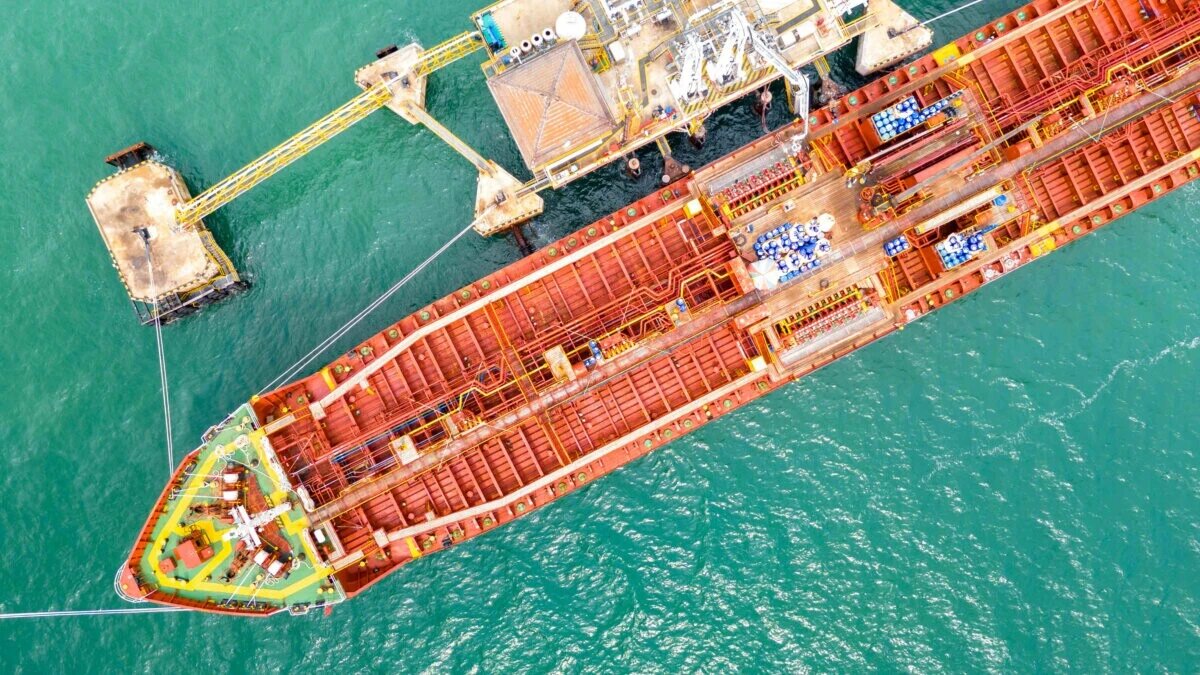
South Korea’s largest shipping company HMM adjusts its future fleet expansion direction. After temporarily shelving plans for new large container ship orders, HMM has placed its first VLCC order with a Chinese shipyard, accelerating its expansion into the energy transportation sector.
According to TradeWinds, HMM recently ordered 4 VLCCs from Hengli Heavy Industry, with a unit price of approximately $125 million, totaling around $500 million (approximately RMB 3.390 billion). An HMM spokesperson confirmed that the company does have plans for 4 VLCCs to be delivered around 2029, but declined to disclose the specific shipyard.
For reference, data from Clarksons shows that the current newbuilding price for a 315,000-320,000 dwt conventionally fueled VLCC is approximately $130.5 million, the highest level since $132 million in March 2009.
The spokesperson stated: “As part of HMM’s mid- to long-term growth strategy, we are actively expanding our bulk and tanker shipping businesses. To achieve this goal, the company is continuously enhancing fleet capacity through various methods, including purchasing second-hand vessels and ordering new ships. We cannot comment on the specific shipyard involved in this transaction. Furthermore, this transaction is a resale contract, not a direct newbuilding order placed with the shipyard.”
Reselling newbuildings under construction is a common operational model for Hengli Heavy Industry. Hengli Group, the parent company of Hengli Heavy Industry, often orders ships at the yard itself and subsequently resells them to clients, offering different delivery time options. Since 2023, Hengli Group has ordered over ten VLCCs at Hengli Heavy Industry. These vessels, capable of delivery between 2026 and 2027 and at lower prices, have been highly favored by overseas shipowners, leading to all of them being resold to overseas owners between 2024 and 2025.
Hengli Heavy Industry is currently the single shipyard with the largest VLCC orderbook globally. According to Clarksons data, Hengli Heavy Industry currently holds orders for as many as 80 VLCCs, exceeding the combined orderbook of the second and third-ranked yards, Dalian Shipbuilding Headquarters (40 vessels) and South Korea’s Hanwha Ocean (36 vessels).
This is HMM’s second newbuilding order at a Chinese shipyard this year and its first time ordering VLCCs from a Chinese shipyard. It is understood that HMM’s owned fleet currently operates 11 VLCCs, all built by HD Korea Shipbuilding & Offshore Engineering and Daewoo Shipbuilding (now Hanwha Ocean). Last year, the company also ordered 2 VLCCs of 300,000 dwt at HD Korea Shipbuilding & Offshore Engineering, scheduled for delivery in 2027.
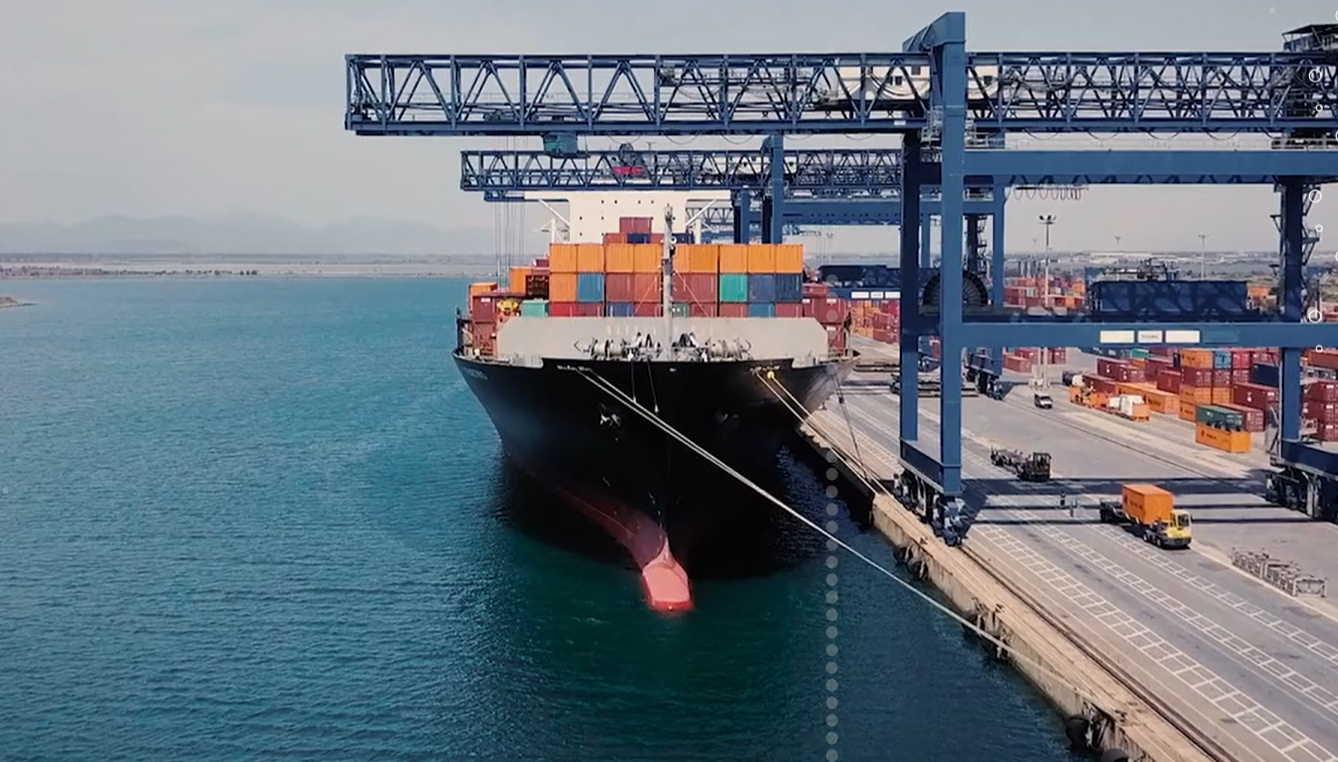
Earlier this year, HMM ordered 5 feeder container ships of 2000 TEU and 7 of 3000 TEU from Huanghai Shipbuilding. This marks HMM’s rare order for container ships at a Chinese shipyard in recent years. It is reported that Chinese shipyards are about 20% cheaper than Korean ones for building small and medium-sized vessels, a significant factor prompting HMM to choose China for these orders.
It is worth noting that the unit price of $125 million for HMM’s batch of VLCCs at Hengli Heavy Industry is also significantly lower than that of Korean shipyards. Not long ago, South Korea’s Pan Ocean ordered 4 VLCCs from Hanwha Ocean at a unit cost of up to $131 million, setting a new high for VLCC construction costs in nearly 15 years, $6 million (approximately RMB 40.6785 million) higher than the unit price of the Hengli Heavy Industry order.
In addition to the orders from Huanghai Shipbuilding and Hengli Heavy Industry, HMM ordered 10 feeder container ships of 2800 TEU from HD Korea Shipbuilding & Offshore Engineering in March this year. However, industry insiders revealed that the company originally planned to order over ten 13,000 TEU dual-fuel LNG-powered container ships in the second half of this year but has now temporarily shelved this container ship newbuilding project.
In February this year, HMM warned that the delivery of a large number of new container ships could lead to market overcapacity amid weak demand growth. In the first quarter of this year, the container shipping market faced pressure due to falling freight rates and rising operating costs caused by the situation in the Middle East. HMM’s operating profit plummeted 56% year-on-year to KRW 270 billion (approximately RMB 1.225 billion).
Meanwhile, HMM is gradually shifting its investment focus from container ships to liquid cargo vessels, evaluating newbuilding projects for Suezmax tankers, MR tankers, VLGCs, and LNG carriers. HMM plans to improve profitability by optimizing VLCC deployment while continuing to secure long-term transportation contracts for strategic cargoes globally.
It is understood that HMM is South Korea’s largest shipping company. Its predecessor was Asia Merchant Marine, founded by the Hyundai Group in 1976. It was renamed Hyundai Merchant Marine in 1983 and HMM in 2020. In recent years, the South Korean government has supported HMM in placing large-scale newbuilding orders to expand its fleet and enhance competitiveness through financial support.
Due to accumulating massive losses during the industry downturn, HMM was taken over by South Korean state-owned institutions. Currently, its largest and second-largest shareholders, Korea Development Bank (KDB) and Korea Ocean Business Corporation (KOBC), hold 35.42% and 35.08% stakes, respectively.
In September 2024, HMM announced its 2030 investment strategy, planning to invest a total of KRW 23.5 trillion (approximately RMB 124.5 billion) by 2030 to enhance the competitiveness of its eco-friendly fleet and expand integrated logistics services. Specifically, KRW 16.6 trillion (approximately RMB 88 billion) will be invested to expand its container ship and bulk carrier fleet. Among this, HMM will invest KRW 11 trillion (approximately RMB 58.3 billion) to expand its container fleet, targeting a fleet size of 130 ships totaling 1.55 million TEU; additionally, it plans to invest KRW 5.6 trillion (approximately RMB 29.7 billion) to expand its tanker and bulk carrier fleet from the current 36 vessels (6.34 million dwt) to 110 vessels (12.56 million dwt).