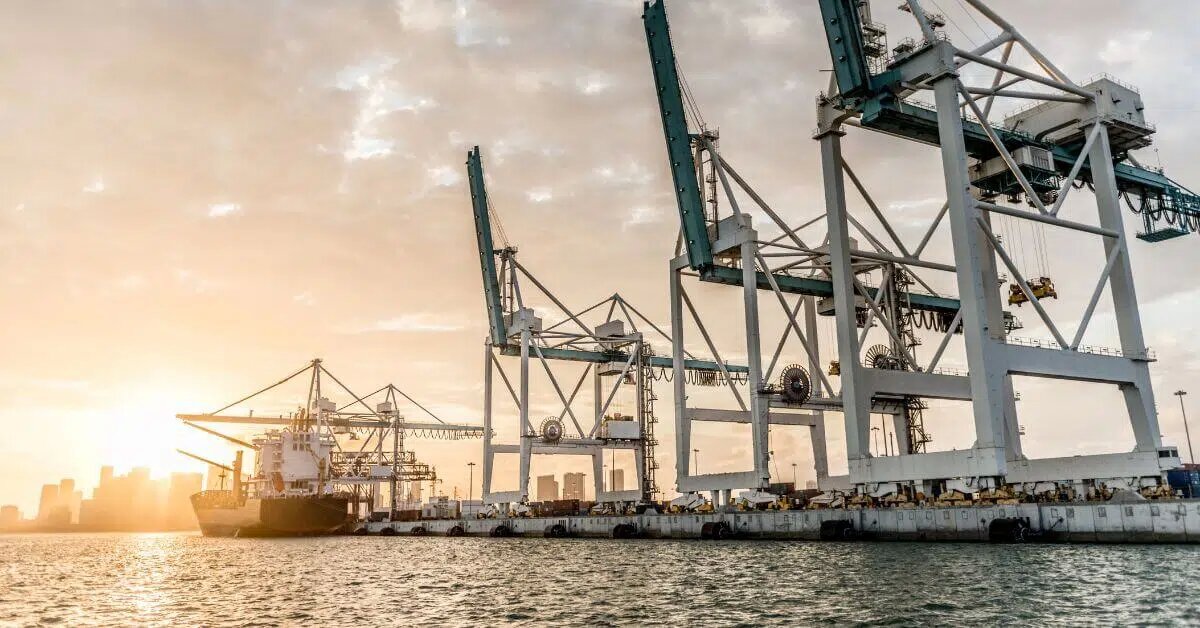
French shipping company CMA CGM recently announced an $800 million investment in Kenya’s Mombasa Port to upgrade two container terminals.
Currently, Mombasa Port is facing sustained growing cargo pressure. Last year, the port handled 2.11 million TEUs, a year-on-year increase of 5.5%. With cargo throughput repeatedly hitting new highs, Mombasa Port is reportedly operating near full capacity. To address this, the Kenyan government has advanced several reforms, including transitioning the port’s operating model to a “landlord model.”
In April this year, Kenya’s National Treasury stated that it had opened up certain assets under the Kenya Ports Authority (KPA) to private investors, including the Mombasa Port Phase II Container Terminal (Berths 20-22) and the Mombasa Port Container Terminal (Berths 23-224). CMA CGM’s investment is expected to be implemented under this framework. The company has pledged to strengthen its logistics and maritime capabilities in East and Central Africa. Mombasa Port serves as a crucial trade gateway for landlocked East African countries such as Rwanda, Uganda, and South Sudan.
While Mombasa Port attracts French investment, Kenya’s new Lamu Port also reached an operational milestone this week—the successful berthing of the “Baltimore Express,” a post-Panamax container ship, which is the largest container vessel ever to dock in East and Central Africa.
The vessel, measuring 369 meters in length, arrived from Oman’s Port of Salalah, is operated by Hapag-Lloyd, and is currently docked at Lamu Port for partial reloading of dangerous cargo. Lamu Port’s cargo throughput experienced explosive growth in 2025, surging from 74,380 tonnes in 2024 to 799,161 tonnes last year, an increase of over 900%. This growth is partly attributed to the port’s increasingly important role as a transshipment hub.
CMA CGM stated that this investment in Mombasa Port follows its recent establishment of a regional office in Africa in Abidjan, Côte d’Ivoire. Over the past few years, CMA CGM has actively participated in multiple port upgrade projects across the African continent. For example, in Nigeria, the company is involved in a 100% electric barge project at the Lekki Deep Sea Port; in Egypt and Morocco, it has also invested in container terminal infrastructure.
Analysts say that as East African trade routes become increasingly busy, the simultaneous upgrades of Kenya’s two major ports will provide more efficient maritime services to landlocked countries in the region and further enhance Kenya’s status as an East African shipping hub.