A group of 14 organisations including ZeroNorth, EuroNav, FedNav, Q88, Ultrabulk Teekay Tanker and Siglar Carbon have proposed evolving noon reports into holistic vessel reports that match data gathering to the optimisation needs of the industry.
The industry working group, called Impact Today, has released a Vessel Reporting and Data Quality white paper explaining the rationale for the change and has also created a framework for further development, which includes a method of standardising data to ensure it is fit for purpose and a definition of terms.
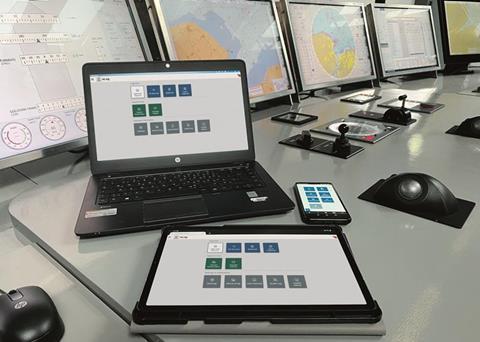
“A number of equipment supplier are seeking to introduce electronic logbooks for the maritime market, such as Raytheon Anschütz (pictured).” “/ /
Source: Raytheon Anschütz
A number of equipment supplier are seeking to introduce electronic logbooks for the maritime market, such as Raytheon Anschütz (pictured).
Impact Today’s mission is to unlock immediate emissions reductions from voyage optimisation, and sees improving data quality from vessel reporting is an obvious and relatively easy challenge for the sector to solve in the near term.
The framework the group has developed includes a method for onboard validation of vessel information spanning two levels; checks to ensure that data fits within reasonable minimums and maximums, and a method of verifying that information makes sense within the scope of normal operations, such as power usage not exceeding power generation.
Noon reports have also historically been time consuming for crews, and it is widely accepted that data quality improvements are needed. Improvements to noon reports as they currently exist via a shared data standard would generate time efficiencies across the supply chain, cutting down the requirement for crews to deliver multiple reports to different stakeholders, say the partners. A shared data standard would also come as an important statement of intent in the maturity and development of shipping’s data landscape, particularly as it relates to multilateral collaboration and partnerships to achieve decarbonisation goals.
Impact Today’s group of shipowners and operators, data specialists, emissions experts and optimisation organisations agreed that much of the data needed for vessel and voyage optimisation is already being gathered within noon reports, therefore the focus is on raising the quality. However, some essential data is missing when it comes to bunker and emissions optimisations and reporting, especially with new CII and EEXI regulations pending and as the industry is accelerating its green transition.
Søren Meyer, CEO of ZeroNorth, said: “Data quality is a critical factor in underpinning voyage, vessel, bunker and emissions optimisations for vessels in the global fleet. To ensure reliable, useful output from digital platforms, it is critical that the data we collectively input is high-quality, standardised, and interoperable.”
The data which is needed to be gathered on a daily basis (from noon reports) is:
The data which is needed to be gathered on a less frequent, event-driven basis is:
To foster adoption, the working group is now collaborating with interested owners, operators and managers to implement the standard within their current processes. This will be accompanied by a period of familiarising crews with how to input and validate data. Results on the trial will be shared publicly to encourage further uptake.
The new white paper on vessel reporting follows Impact Today’s earlier efforts to create a methodology for assessing fuel performance model accuracy within shipping. These models, like the data that is fed into them, are vital to ensuring that any optimisation decisions are based on the reality that a vessel faces while sailing at sea in a range of speeds and conditions. This output of Impact Today’s efforts is described in the group’s Fuel Consumption Model Accuracy Standard white paper.