In the first half of this year, Dalian Shipbuilding Industry Co., Ltd. (DSIC) Tianjin, a subsidiary of China State Shipbuilding Corporation (CSSC), embraced a sense of urgency to “seize the day and race against time.” Operating at full capacity to boost production and efficiency, the company exceeded its mid-year targets, delivering strong results in the first half of the year as a tribute to the 104th anniversary of the founding of the Communist Party of China.
Since the beginning of the year, CSSC Tianjin has thoroughly implemented CSSC’s high-quality development guidelines, aligning with DSIC’s overarching strategy of “strengthening management, improving efficiency, reducing costs, and mitigating risks.” Accelerating production and construction, the company has presented an impressive mid-year report. Not only has it achieved faster progress across all production stages and exceeded material workload targets, but it has also made notable breakthroughs in technological innovation and management optimization. The company has fully met its “dual过半” (half-year) goals, laying a solid foundation for completing the annual production plan with high quality.
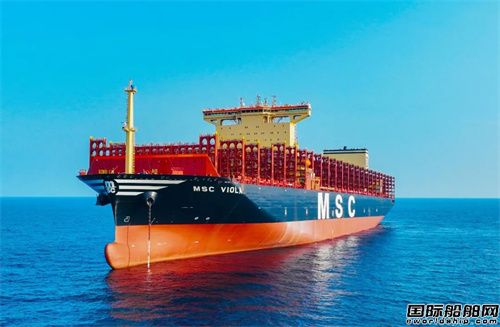
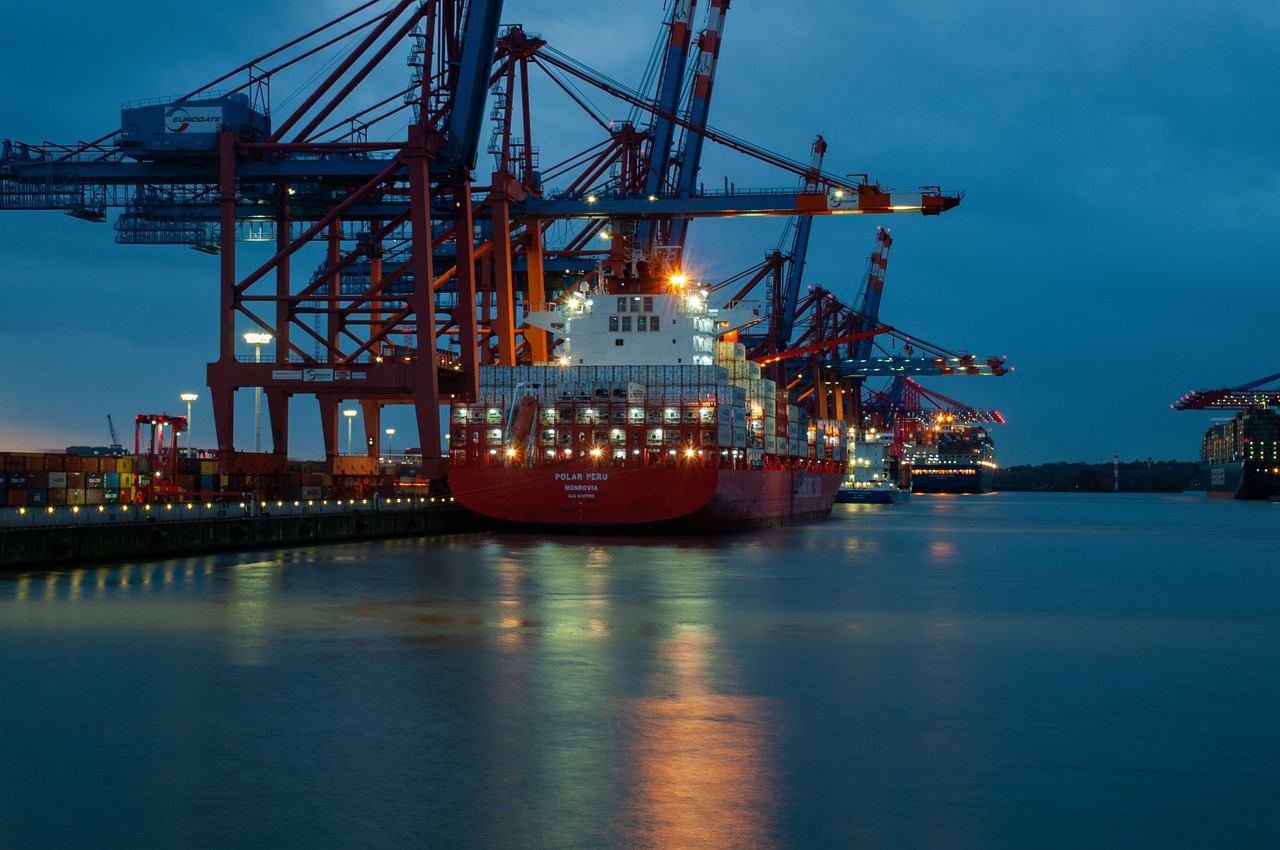
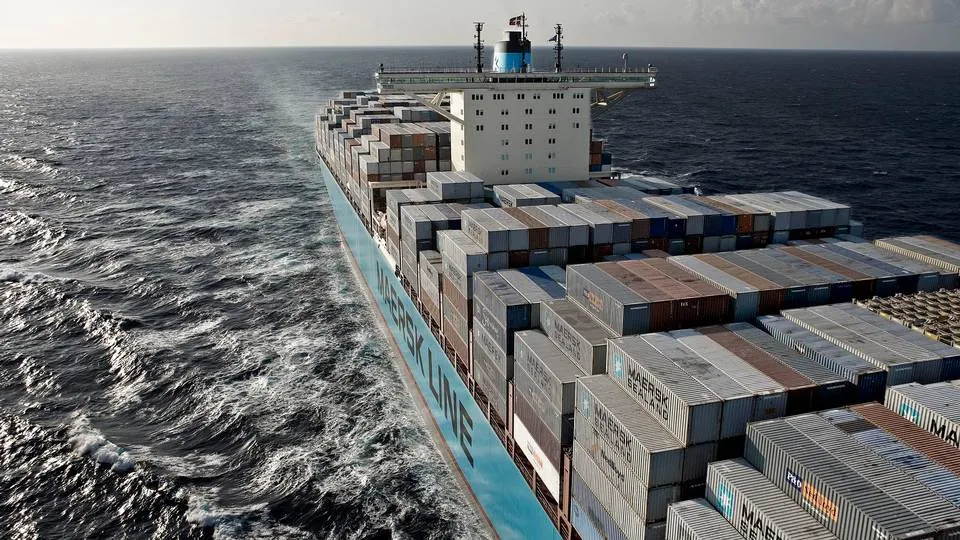
In the first half of the year, CSSC Tianjin delivered three 16,000 TEU LNG dual-fuel container ships, totaling 504,000 deadweight tons, fully unleashing its production and operational vitality. As of the end of June, DSIC Tianjin holds orders for 36 ships (7.8 million deadweight tons), valued at nearly 30 billion yuan, with production schedules extending to 2028.
During this period, the company had planned 26 shipbuilding milestones but completed 31, achieving a 119.2% completion rate. Among these, 19 milestones were completed ahead of schedule, and five milestones originally set for the second half of the year were achieved early, demonstrating strong production execution capabilities.
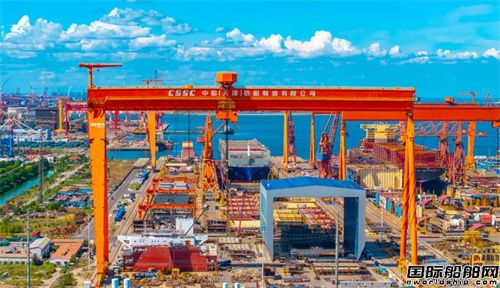
Significant progress was made across all production stages. Steel processing reached 142,500 tons against a target of 121,200 tons (117.6% completion). Small block assembly achieved 1,699 units versus a target of 1,471 (115.5% completion). Segment fabrication, painting, and hoisting completion rates stood at 108.4%, 102.0%, and 103.5%, respectively. Efficient coordination from raw material processing to block construction, painting, and hoisting ensured stable and orderly production.
Several vessels marked major breakthroughs in delivery. The C16K-9, delivered on January 9, was CSSC Tianjin’s first LNG dual-fuel container ship, handed over 172 days ahead of contract. The C16K-12 completed its first combined fuel and gas trial voyage, reducing the key cycle by 62 days compared to the C16K-9. The C16K-13, the first ship jointly built by DSIC’s Assembly Division II and DSIC Tianjin, shortened its key cycle by 34 days compared to the C16K-9, continually setting new benchmarks in shipbuilding speed and technical standards.
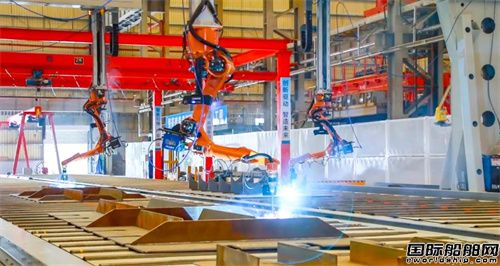
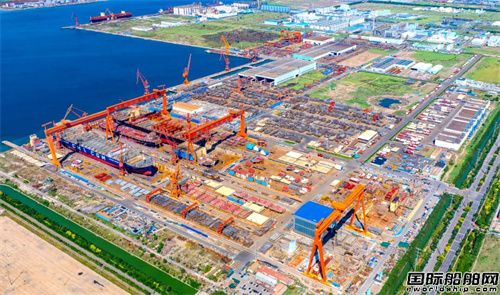
Efficiency improvements yielded notable results. Focusing on optimizing the 800-ton crane, CSSC Tianjin reduced average hook time by 20.3% year-on-year from January to May. The FCB production line doubled its monthly output compared to 2024, while large block assembly and painting saw a 25% increase in peak monthly output. The launch of a smart small-block assembly production line, with a monthly capacity of 4,500 tons (doubling efficiency over other assembly sites), injected new momentum into production.
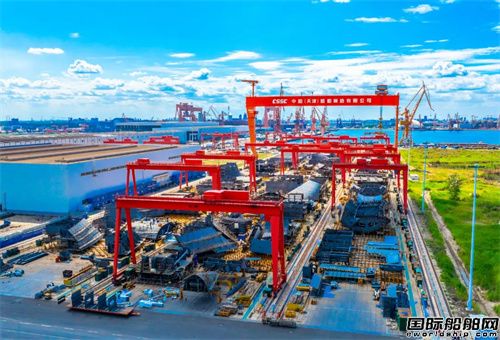
Addressing shortages in outfitting components and piping due to accelerated 2025 production and additional ship orders, CSSC Tianjin took swift, multi-pronged action. Measures included supporting subcontractors through training and technical guidance to enhance their capacity, scientifically allocating outsourced workloads, and assessing subcontractor capabilities precisely. The company also repurposed Xingchuan Heavy Machinery’s site as an outfitting manufacturing base, currently producing 300 tons monthly (projected to reach 1,000 tons at full capacity). Strengthened planning oversight, clear production KPIs, strict tracking, and integrated digital management of piping production improved pallet readiness rates, ensuring robust support for future production.