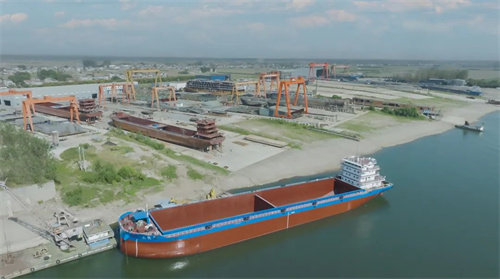
On June 23, at Yichang XinHui Shipbuilding and Repair Co., Ltd., the outlines of massive steel vessels began to take shape as welding sparks scattered like stars. Ten ships were under simultaneous construction.
With the support of the “Two New” policies, the construction of new energy vessels has entered a flourishing phase. To date, XinHui Shipbuilding has built and delivered 15 new energy vessels.
On the shipbuilding platform, two Yangtze River inter-provincial luxury cruise ships customized by the Three Gorges Tourism Group are under active construction. Currently, the hull structures of the two ships are 100% and 57% complete, respectively, and they are expected to launch next year.
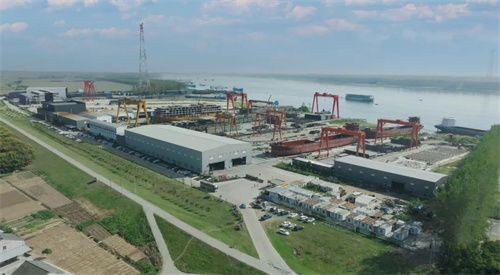
The two luxury cruise ships are designed with an overall length of approximately 150 meters and a beam of 22.6 meters, accommodating up to 720 passengers. These are the largest new energy inter-provincial cruise ships on the Yangtze River. “The ships adopt a ‘fuel + power battery’ hybrid new energy system, achieving over 20% energy savings compared to vessels of the same class,” explained Liu Jun, General Manager of XinHui Shipbuilding.
XinHui Shipbuilding is actively seizing opportunities in the green vessel sector, introducing new energy ships powered by LNG, methanol, hybrid systems, and pure electricity. “Currently, new energy vessel orders account for over 80% of our portfolio. We will continue to focus on new energy ship models and further expand our green vessel order share,” Liu Jun said.
Ship orders are booming, with continuous deliveries. In January, the luxury cruise ship Yangtze Explorer was successfully launched. In April, a 330-foot deck barge was launched, marking XinHui Shipbuilding’s entry into the marine product market. This year, the company has secured six new orders, delivered two vessels, and is currently negotiating overseas business in Southeast Asia, Europe, and the U.S.
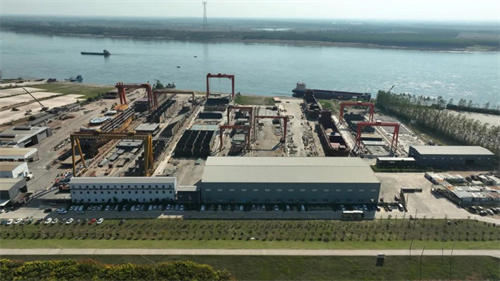
Today, XinHui Shipbuilding has established a full industrial chain, from battery R&D and ship design to manufacturing and delivery. In the CNC workshop, plasma cutters slice through steel plates, and welding robots have replaced manual labor. These intelligent upgrades enhance production efficiency while improving quality.
Amid the thriving shipbuilding industry, challenges remain in leveraging technological innovation to transition from “high order volume” to “high value.” Liu Jun stated that the company will deepen collaborations with research institutions such as Wuhan University of Technology, CSIC 712 Research Institute, and Changjiang Ship Design Institute. Key projects include expanding the PSPC spray workshop and smart workshops, adding intelligent laser cutting lines, automated assembly and welding production lines, IT equipment, and general machinery. These hardware upgrades aim to boost efficiency and quality. “After digital transformation, the shipyard’s overall capacity is expected to increase by 150%, automation by 30%, material utilization by 5%, and labor costs to decrease by 10%.”