The crude oil tanker market is expected to benefit from the long-term positive fundamentals of the oil market. In its latest weekly report, shipbroker Gibson noted that earlier this month, the International Energy Agency (IEA) released its annual report, providing a detailed analysis of the medium- to long-term outlook for the oil market. The 2025 edition of the report maintains last year’s assessment, predicting that global oil demand will peak in 2029, with the 2030 forecast slightly revised upward from 105.4 million barrels per day (mb/d) to 105.5 mb/d. However, the overall growth trend is slowing, and demand is expected to contract after 2030.
Regionally, the Asia-Pacific region, particularly India, will be the primary driver of growth. India’s oil demand is projected to increase by 1 mb/d between 2024 and 2030, with Southeast Asia also showing synchronized growth. Indonesia is expected to see the most significant rise, with an increase of 470,000 b/d, driven mainly by higher demand for petrochemical feedstocks and aviation fuel. In other regions, the IEA forecasts demand growth of 600,000 b/d in South and Central America and 800,000 b/d in Africa. Africa’s growth rate is the strongest globally, benefiting from both population and GDP expansion. The IEA estimates global oil demand will reach 103.8 mb/d this year, up by 800,000 b/d from 2024.
According to Gibson, the most notable change in this year’s report is the downward revision of China’s oil demand growth between 2024 and 2030 by 100,000 b/d, with the 2030 forecast lowered by 1.4 mb/d. This adjustment reflects slower economic growth expectations and accelerated electrification of vehicles. By 2030, global oil demand displaced by electric vehicles is expected to exceed 5 mb/d, with nearly half coming from reduced gasoline demand in China. Meanwhile, demand in OECD countries shows a notable increase, with North America revised upward by 1 mb/d and Europe by 400,000 b/d compared to last year. However, oil demand in these regions is nearing its peak and will gradually slow over the next decade. Contrary to China’s trend, the report has lowered expectations for electric vehicle adoption in Europe and North America, particularly the U.S.
On the supply side, global oil production is projected to rise by 3.4 mb/d between 2024 and 2030, with the Americas leading the growth. U.S. output is expected to increase slightly this year before stabilizing, while Canada, Guyana, Brazil, and Argentina will see more sustained growth. Given continued production increases from non-OPEC+ countries, the IEA predicts OPEC+ oil demand will decline by 1.8 mb/d by 2030, further eroding its market share—a view likely contested within OPEC+.
In the refining sector, global capacity is expected to expand by 2.5 mb/d from 2024 to 2030, primarily in Asia, with China and India each contributing 1 mb/d and the Middle East adding 600,000 b/d. Meanwhile, capacity west of the Suez Canal will see a slight contraction. Global refinery throughput is projected to grow by only 600,000 b/d over the same period, with stark regional disparities: Asia will add 1.3 mb/d, while Europe will decline by 700,000 b/d. Faced with falling demand for automotive fuels, refiners will be forced to adjust crude processing strategies, shifting toward petrochemical feedstocks and increasing investments in biofuel production.
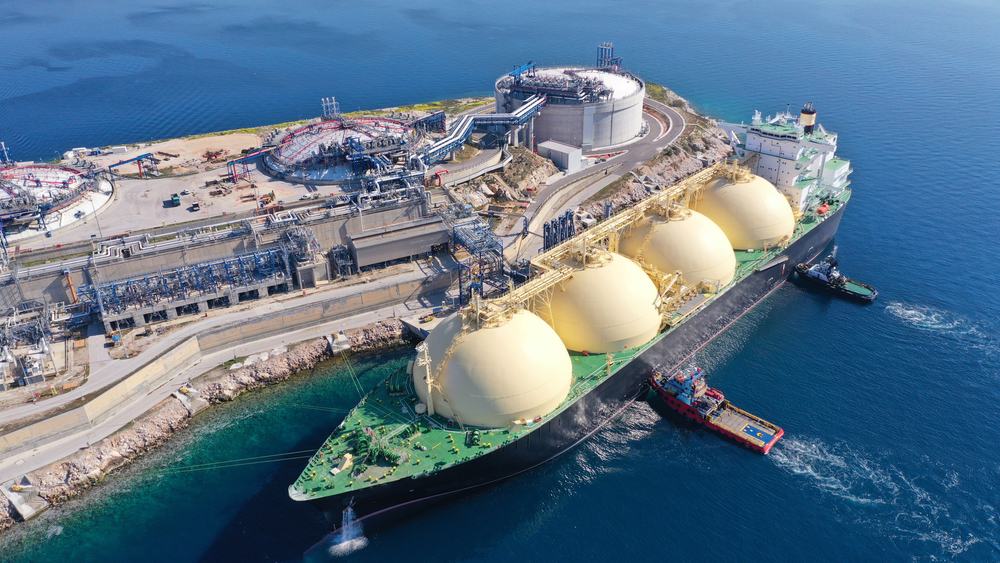
Gibson concludes that while the IEA’s views have faced skepticism in recent years—with other forecasters taking a more optimistic stance, projecting oil demand growth into the next decade—if the IEA’s predictions hold, they will have multiple implications for the tanker market. First, demand growth will primarily come from petrochemical feedstocks and natural gas liquids (NGLs), boosting demand for chemical and gas carriers. Second, some traditional refined fuel demand will shift to biofuels, creating opportunities for specialized tankers.
The crude tanker market is expected to remain stable, with demand growth east of the Suez Canal complementing supply increases from the Americas to the west, supporting long-haul trade throughout the forecast period. However, compared to last year’s projections, slower declines in European demand and weaker growth in Asia will partially offset this effect.
The outlook for product tankers is more challenging. Slowing demand for traditional refined fuels, coupled with new refining capacity concentrated in demand growth hubs, may pressure ton-mile demand for product tankers in the coming years.