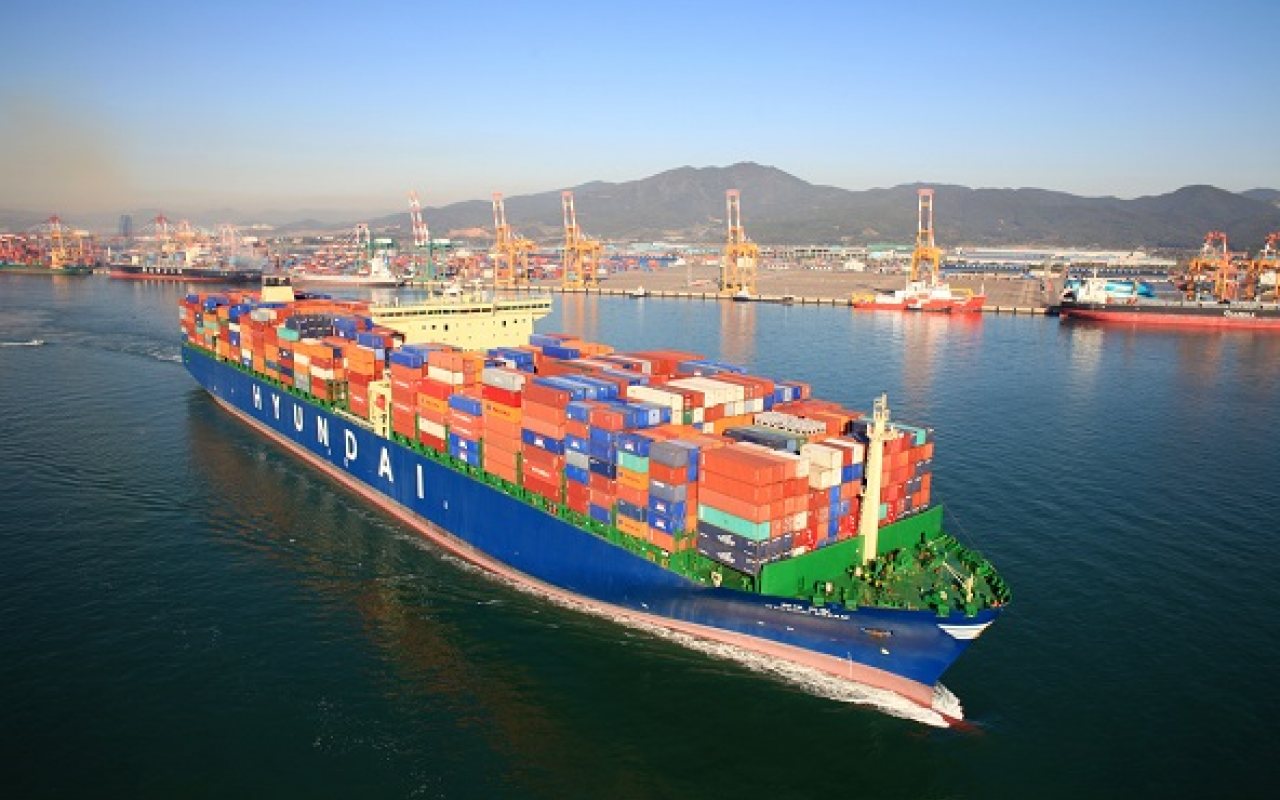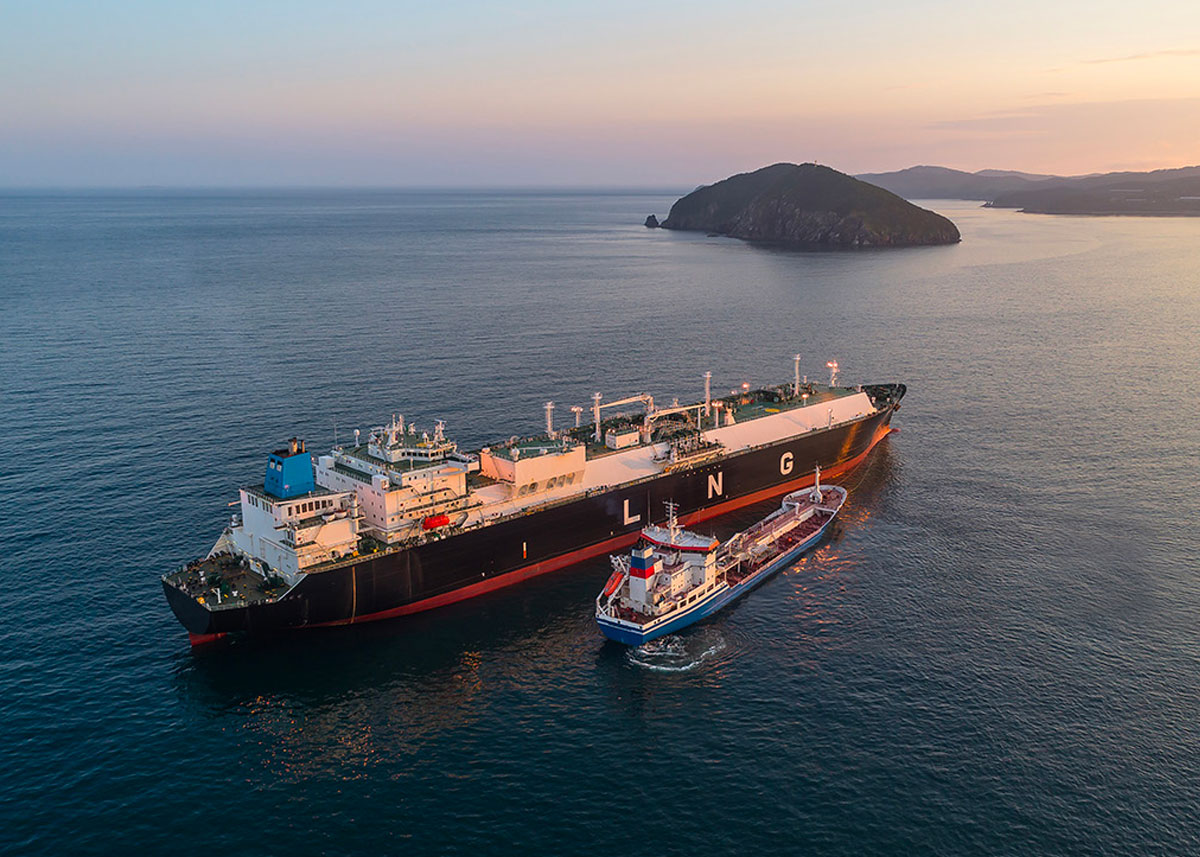
Recently, the vessel “Wuxiang XX,” carrying Class 3 flammable liquids, Class 8 corrosive substances, and Class 9 battery-powered vehicles as maritime dangerous goods, passed its dangerous cargo transport declaration and approval. This batch of hazardous materials was shipped from Nanjing Port via water-to-water transshipment to Shanghai’s Yangshan Port, where it was loaded onto a mainline container vessel for export.
This marks the successful trial expansion of the “Single Document System” and “Single Container System” (hereinafter referred to as the “Single Document System”) for water-to-water transshipment of dangerous goods between Nanjing Port and Shanghai Port. The scope has now broadened from the “New Three Categories” (Class 9 dangerous goods) to include additional hazardous material categories (Classes 3, 6.1, 8, and 9), achieving increased coverage and efficiency.
Recently, the Shanghai Maritime Safety Administration, Jiangsu Maritime Safety Administration, and representatives from relevant enterprises held discussions on expanding the scope and improving the efficiency of the “Single Document System.” They evaluated its performance over the past year and assessed the feasibility of extending its application, formulating a step-by-step implementation plan for the expansion.
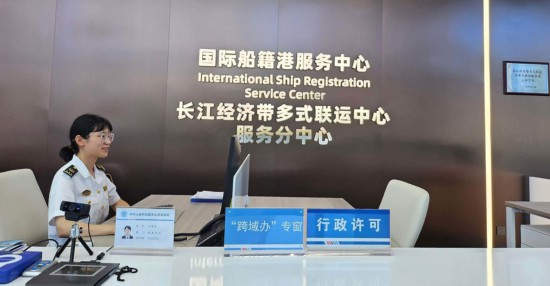
The “Single Document System” and “Single Container System” for water-to-water transshipment of dangerous goods achieve coordinated supervision through operational collaboration and data sharing between the “port of origin” and the “transshipment port,” enabling “approval at the origin port and confirmation at the transshipment port.” This significantly improves declaration efficiency and effectively reduces logistics costs for businesses.
After the expansion, dangerous goods of Classes 3, 6.1, 8, and 9 shipped from Nanjing Port will be included in the “Single Document System” and “Single Container System” for water-to-water transshipment. The volume of cargo containers involved is expected to multiply. Following the trial, the Shanghai Maritime Safety Administration will collaborate with the Jiangsu Maritime Safety Administration to extend the trial results to ports along the Yangtze River trunk line in Jiangsu Province. This initiative aligns with business needs, continuously enhances cargo capacity in the Yangtze River Delta ports, optimizes water-to-water transshipment processes, and further advances the development of multimodal transport under the “Single Document System” and “Single Container System,” accelerating cost reduction, quality improvement, and efficiency gains in transportation and logistics.
Moving forward, the Shanghai Maritime Safety Administration will leverage the newly launched Shanghai node of the Yangtze River Economic Belt Multimodal Transport Distributed Collaborative Service Network to steadily advance the “Single Document System” and “Single Container System” for dangerous goods transshipment in the Yangtze River Delta. The goal is to gradually achieve full coverage of the new declaration model for dangerous goods entering and exiting Shanghai’s Yangshan Port, enabling a comprehensive upgrade in water-to-water transshipment approval processes.