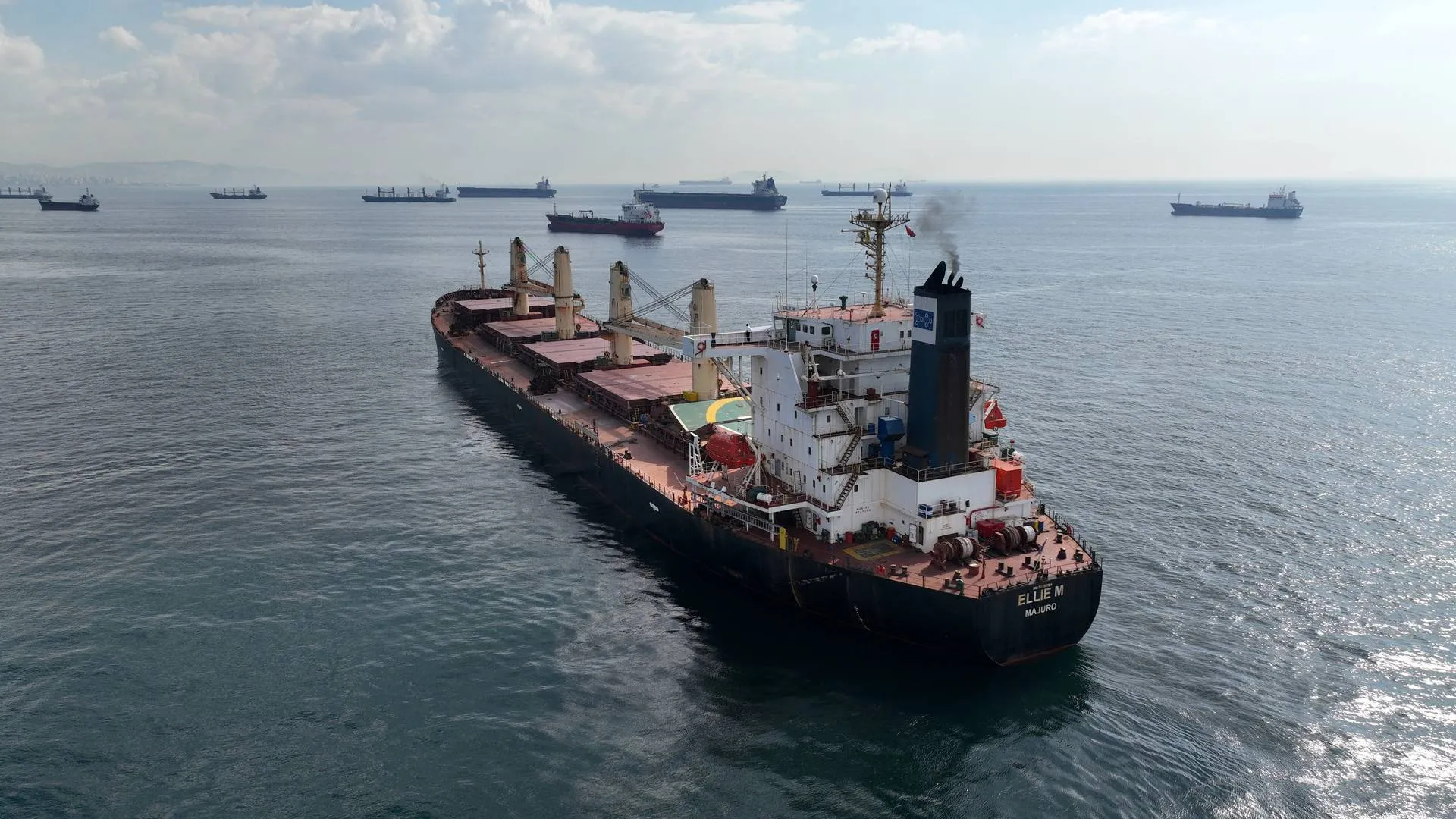
Recently, Japan’s Mitsui O.S.K. Lines (MOL) announced the signing of a Memorandum of Understanding (MOU) with Kinetics Technologies Holdings Limited, a subsidiary of the world’s largest power barge operator Karpowership, to jointly develop a next-generation offshore data center powered by floating power vessels.
The project aims to establish the world’s first offshore data center business model powered by floating power vessels. Under the MOU, the two parties will collaborate on the design, construction, and deployment of cutting-edge data center facilities based on retrofitted ships. MOL will repurpose its secondhand vessels to create offshore data centers, with electricity supplied by Karpowership’s power barges, addressing the surging demand for data processing driven by the rapid adoption of generative AI.
Currently, despite the explosive growth in data center demand due to generative AI, the supply side faces challenges such as power shortages in urban areas, limited land resources, and insufficient cooling water. This integrated “offshore data center + power barge” business model is expected to overcome these bottlenecks and quickly provide the new digital infrastructure essential for future societies.
Following the signing of the MOU, the two companies will jointly advance the conceptual design and technical validation of the integrated offshore data center and power barge. According to the plan, they will complete the retrofit design of the offshore data center within this year and sign MOUs with data center operators and port authorities. In 2026, the conversion of secondhand vessels into offshore data centers will begin, with necessary permits obtained and commercial contracts signed, targeting operational deployment by 2027.
The planned offshore data center will be a 120-meter-long vessel with a width of 21.20 meters, a draft of 8.98 meters, and a gross tonnage of 9,731 tons. The data center capacity will range from 20 to 73 megawatts (expandable via modular structures) and utilize direct water cooling with seawater or river water. Power will be supplied by Karpowership’s power barges (supporting multiple fuels, including LNG), with potential connections to grid systems. The facility will also link to terrestrial internet exchange (IX) hubs and submarine cables.
MOL highlighted four key advantages of offshore data centers over land-based facilities:
1. **Energy Independence**: By pairing with power barges, offshore data centers can operate entirely independently of local grids, enabling immediate deployment even in power-scarce regions.
2. **Land Optimization**: Eliminates the need for large urban land acquisitions and associated high costs.
3. **Faster Deployment**: Converting secondhand vessels into data centers takes about one year, compared to roughly three years for traditional land-based data centers.
4. **Mobility**: Floating data centers can be relocated to different waters as needed and, under certain conditions, continue operations while sailing like conventional ships.
Additionally, repurposing secondhand vessels reduces environmental impact by minimizing the carbon footprint from new material extraction and processing. Existing onboard systems—such as air conditioning, water intake, and power generation—lower construction and operational costs. Seawater cooling further reduces energy consumption for cooling, while the ample space in secondhand vessels (e.g., a 54,000 cubic meter car carrier’s deck area equals one of Japan’s largest land-based data centers) enhances scalability.
MOL emphasized that the project leverages its assets and maritime expertise to deliver digital infrastructure solutions swiftly while prioritizing environmental sustainability. The company will continue expanding its social infrastructure business, centered on shipping, to address evolving societal challenges, including environmental protection, through technology and service innovation.
Karpowership specializes in flexible power solutions, including floating power barges, which provide stable, dedicated electricity tailored to project locations and client needs—whether integrated with onshore grids, solar farms, offshore wind, or other generation methods. As a pioneer in integrated floating power solutions, Karpowership operates over 10,000 MW of capacity across 19 countries with more than 20 years of experience.
Mehmet Katmer, CEO of Kinetics, stated: “This project marks a critical step toward our vision of delivering innovative, efficient, and sustainable infrastructure solutions for current and future energy needs. By combining mobile power generation with floating data infrastructure, we are overcoming key market bottlenecks to enable faster, cleaner, and more flexible digital capacity expansion.”
Tomotaka Iida, Executive Officer of MOL, added: “This MOU represents a significant milestone for MOL in leveraging our maritime assets and expertise to rapidly build digital infrastructure with minimal environmental impact. We will continue diversifying our social infrastructure business, anchored in shipping, to proactively address societal demands, including environmental conservation, through technological and service advancements.”
Kinetics is an energy company dedicated to building cleaner, more flexible energy systems. It focuses on the construction, development, delivery, and leasing of floating LNG assets and renewable energy platforms, including battery energy storage systems (BESS), to meet the evolving needs of utilities and independent power producers.