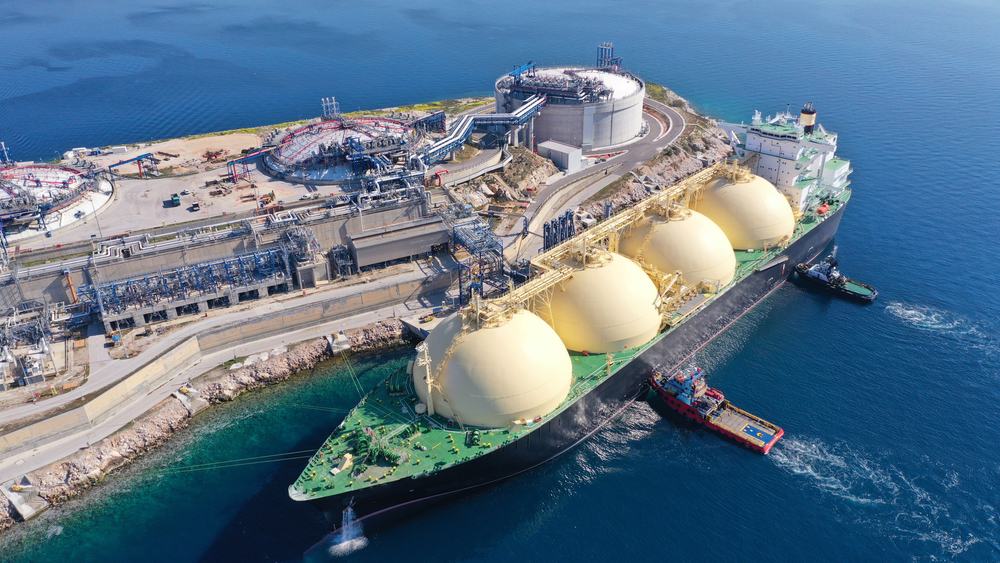
Global leader in marine power and energy solutions, Wärtsilä, recently released a report stating that the comprehensive cost of marine fuels will double over the next decade as the International Maritime Organization (IMO) accelerates the implementation of new carbon emission regulations. The report also outlines the pathway for the shipping industry’s transition to low-carbon fuels.
In April, the IMO voted to adopt two sets of threshold standards for greenhouse gas (GHG) intensity in marine fuels from 2028 to 2035, along with punitive economic measures for ship operators that fail to initiate a low-carbon transition.
Under the new IMO regulations, shipping companies that fail to meet the lower threshold will be required to pay $100 per metric ton of CO₂ equivalent (mtCO₂e) emitted, while those failing to meet the higher threshold will face a charge of $380 per mtCO₂e.
Data from S&P Global Platts’ marine fuel cost calculator shows that in May, the average delivered price of very low sulfur fuel oil (VLSFO), the most common marine fuel in Singapore, was $504.35 per metric ton. Meanwhile, the VLSFO-equivalent price (VLSFOe) of B24 bioblend—comprising 24% used cooking oil methyl ester (UCOME) and 76% VLSFO—stood at $713.84 per metric ton.
According to classification society DNV, 99% of the global operating fleet currently consists of vessels using conventional fuels, with green newbuilds powered by alternative fuels expected to be delivered in the coming years.
**Transition Pathway**
The IMO will further tighten GHG emission standards for marine fuels starting in 2035 to achieve its ultimate goal of net-zero emissions for the shipping industry by 2050. Emerging marine fuels such as biodiesel, bio-LNG, biomethanol, and eMethanol are gaining traction, with widespread availability projected by 2030. However, significant use of renewable ammonia as a marine fuel is not expected until after 2035.
DNV data reveals that among current global newbuild orders, 8% of vessels can use LNG as fuel, 5% have propulsion systems compatible with methanol, 1.8% can operate on LPG, and 0.5% are designed to use ammonia.
**New Technologies**
Wärtsilä is among the first companies to develop engines powered by LNG, LPG, and methanol. In 2024, the company increased its R&D expenditure to €296 million ($349 million), accounting for 4.6% of net sales, with the majority allocated to decarbonization technologies. By 2026, the platform supply vessel (PSV) *Viking Energy*, owned by Eidesvik and leased by Equinor, will be retrofitted with a Wärtsilä marine engine. Once converted, it will become the world’s first ammonia-fueled PSV.
S&P Global Commodity Insights’ annual strategic workbook forecasts that fossil fuels and LNG will account for 56% of global marine fuel consumption by 2050 (down from 98% in 2025).
In May 2025, Wärtsilä began promoting a scrubber system integrated with carbon capture and storage (CCS) technology, achieving a 70% carbon capture rate at a cost ranging between €50–70 per metric ton. Earlier, the system was successfully installed in February on the 21,000-cubic-meter ethylene carrier *Clipper Eris*, owned by Solvang.
Source: S&P Global