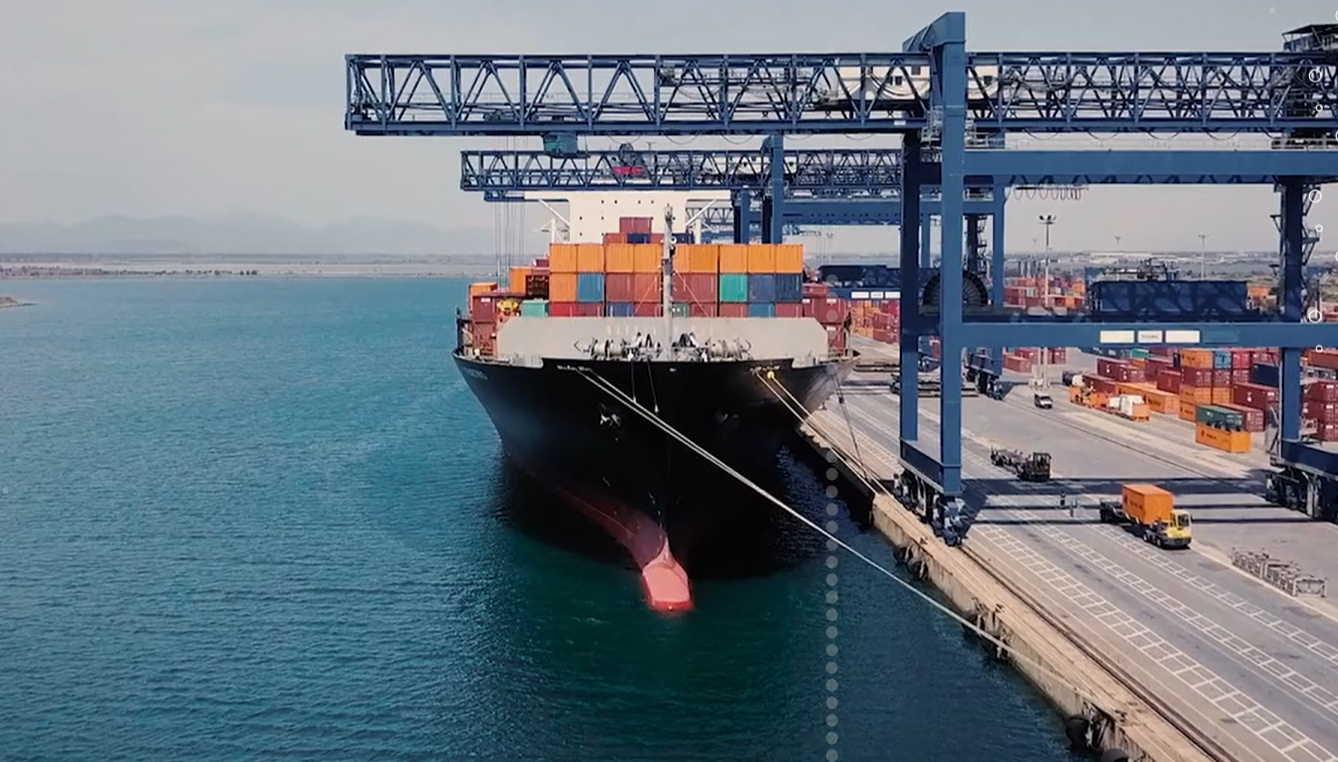
According to foreign media reports, US-listed shipping company Danaos Corp recently stated that the company will not chase the trend to order feeder container ships, and will instead focus on medium-sized container ships and optimizing its Capesize bulk carrier fleet to cope with fluctuations in the global shipping market and demand from emerging markets.
Danaos Chief Commercial Officer Filippos G Prokopakis revealed that the company is adopting a cautious strategy in its investment layout. “While other shipowners are rapidly expanding through large-scale feeder container ship orders, we have chosen a more stable and balanced approach.” He stated that the company has made it clear it will not follow the recent exceptionally hot wave of feeder container ship orders, believing that current shipbuilding costs and market prices do not fully reflect future returns, thus avoiding excessive investment risk in this sector.
Currently, Danaos is focusing on medium-sized container ships ranging from 5,900 to 9,200 TEU. Prokopakis pointed out that this type of vessel holds significant strategic importance in emerging markets in Asia, Africa, Oceania, and Latin America. They are suitable both for deployment by major lessees on secondary routes and as core assets for smaller operators on specific main routes.
In the dry bulk market, Danaos also maintains a stable layout. The company currently owns 10 Capesize bulk carriers, and future investments will concentrate on fleet renewal and quality improvement, with a focus on energy efficiency and environmental compliance. Prokopakis stated, “In the dry bulk market, investment timing determines returns; acquisitions must have the potential to create maximum value for shareholders.”
Discussing market conditions, Prokopakis noted that container freight rates remain at healthy levels, with strong demand in Asia, particularly in China. Simultaneously, he emphasized that geopolitical tensions in key shipping lanes and the impact of climate change on the Panama Canal have further highlighted the value of alternative routes, providing some support for freight rates.
Regarding trade policy, Prokopakis mentioned that the uncertainty surrounding tariffs if Trump returns to the White House could affect Sino-US and other key trade routes. However, it might also prompt companies to seek alternative suppliers or new markets, thereby creating new shipping routes and increasing the importance of secondary ports and trade hubs.
Regarding the recent surge in feeder ship orders, Prokopakis stated that these vessels play a significant role in the global supply chain by connecting large and small ports, meeting the long-term needs of regional trade and logistics flexibility. He also mentioned the recovery in orders for ultra-large container vessels (ULCVs), indicating increased market confidence in main routes and a greater focus on environmental protection, technological innovation, and matching cargo volumes.
On the dry bulk market, Prokopakis pointed out that Capesize rates were depressed in early 2025 due to decreased demand from China and unfavorable weather in Asia, but recent import recovery has driven a rebound in demand. The Capesize market is expected to remain volatile but generally positive in the future, with improving industrial indicators in Asia providing support for the market.