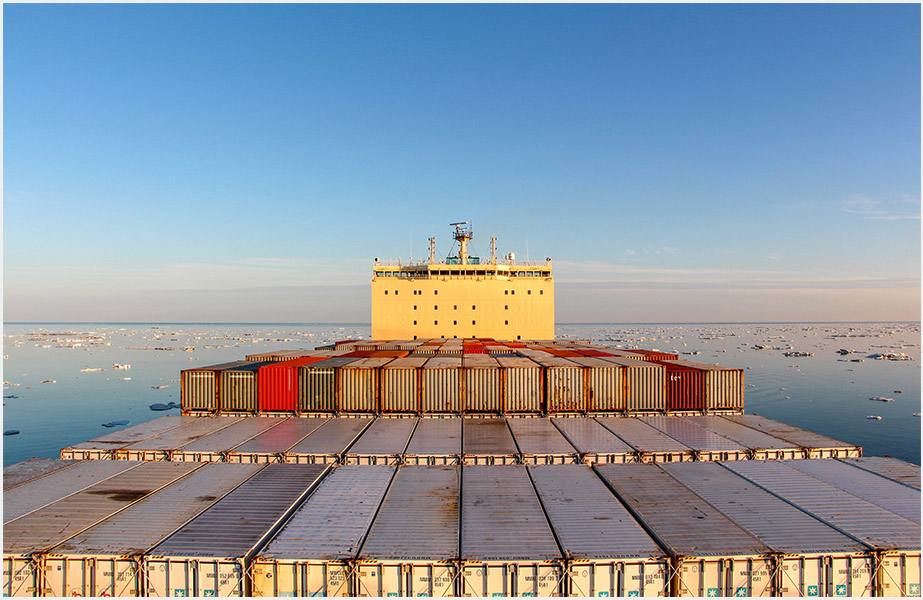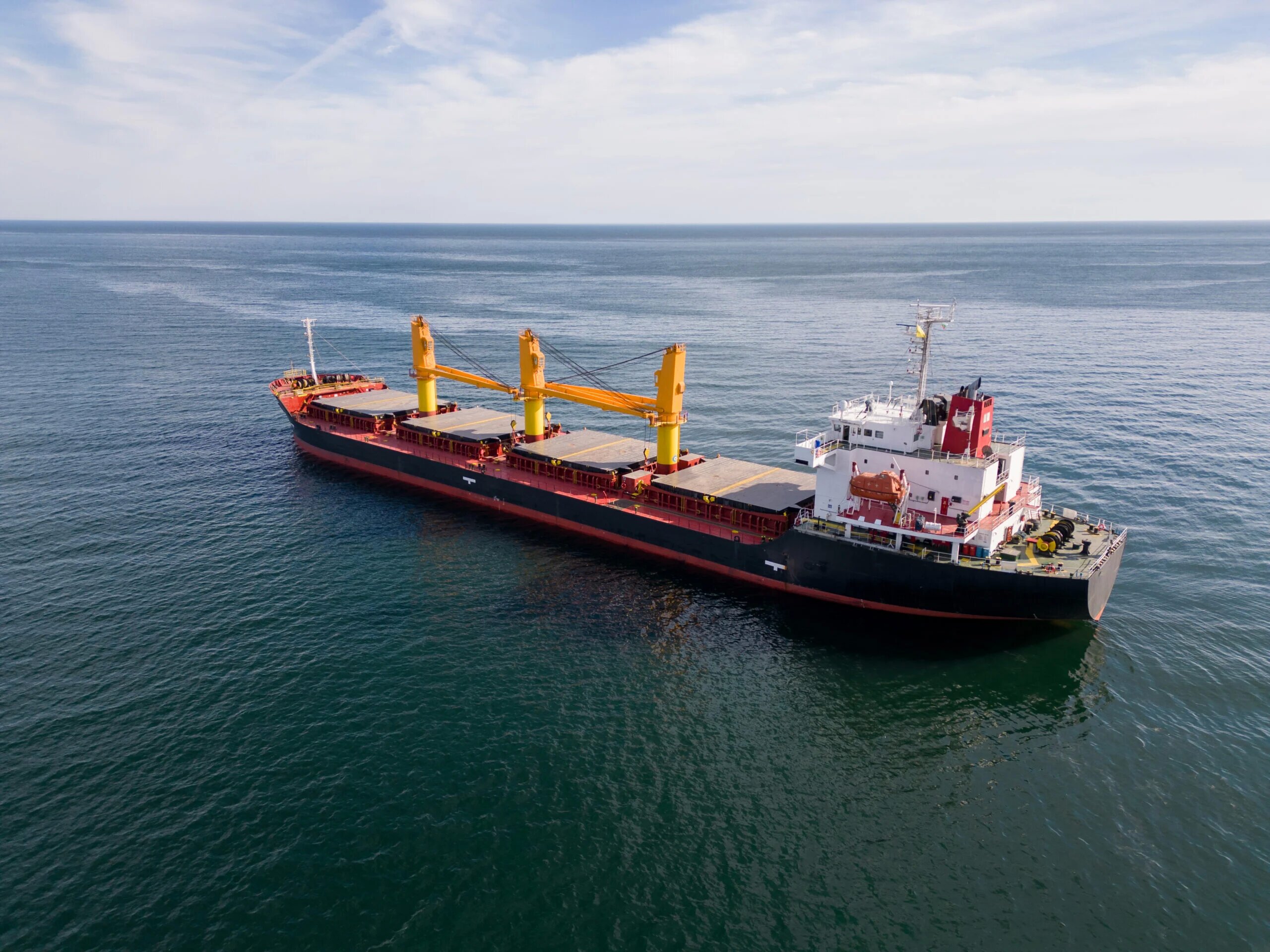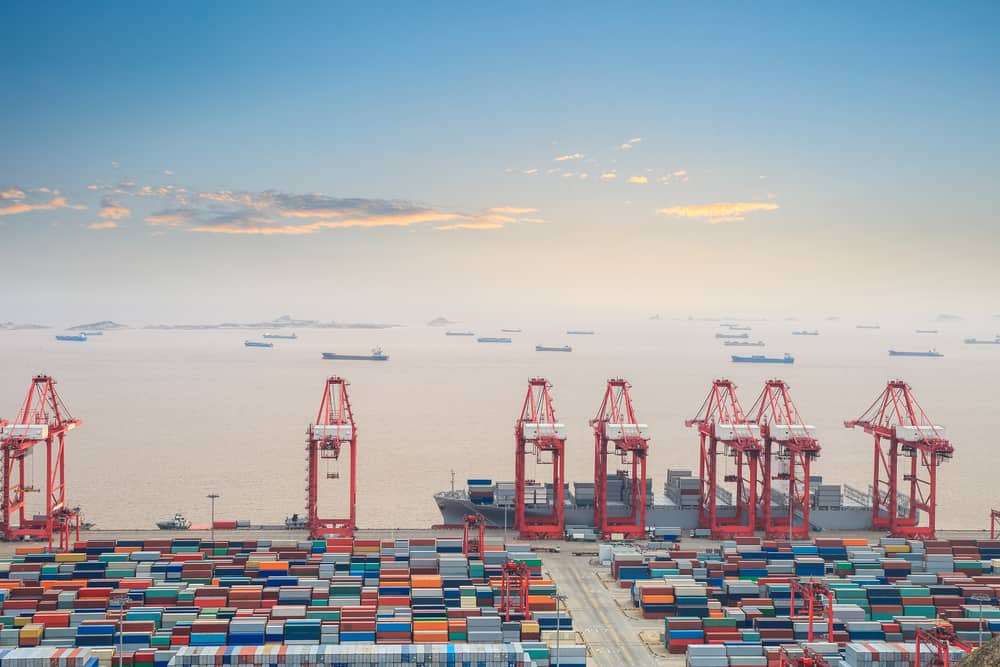
Asian gypsy moth (AGM) is a population of gypsy moth in Asia, which is the main forestry pest in the Russian Far East, Japan, China, South Korea, North Korea, and Mongolia, and they feed on more than 500 species of trees. Adult female AGMs have the ability to fly, and if they spread to North America and other places with ships, they will bring great disasters to North American forests and the environment. Although the prevention of AGM in the United States and Canada has been strict in recent years, monitoring of AGM in the United States and Canada in 2018 showed that a significant number of AGMs were still found in many ports in North America during their active period. In order to curb AGM from ravaging North America to forests, agriculture and natural resources, the United States Department of Agriculture (USDA) and the Canadian Food Quarantine Agency (CFIA) recently issued a joint circular to increase the inspection of AGM invading ships and cargo during the active period of AGM in 2019.
1. The requirements of the US-Canada Joint Declaration for ships
Vessels that have called at risk port areas (including refueling at anchorage) during the AGM risk period in the past 24 months should meet the following requirements before entering North American ports:
1. Before leaving the last risk port, the ship shall be inspected by an accredited quarantine agency and obtain an inspection certificate to prove that no trace of AGM was found in the pre-sailing inspection, and the scanned copy of the certificate should be sent to the port agent of the United States and Canada as soon as possible, and ensure that the agent forwards it to the CBD and CFIA and other relevant departments in the United States and Canada.
2. Ships must conduct self-inspection before arriving at North American ports to completely eliminate any traces of AGM;
3. 96 hours before the vessel’s arrival, the list of ports for the past two years shall be sent to the port agent and ensure that the agent forwards it to the relevant authorities in the United States and Canada.
In addition, the two sovereign countries of the United States and Canada have different requirements for AGM import inspections, so it does not mean that ships do not need to undergo AGM inspections when they first call at US ports and then go to Canadian ports, and vice versa.
| Regulated Areas and Specified Risk Periods | ||
| Country | Port or Prefecture | AGM Flight Period |
| Russian | Far East Kozmino, Nakhodka, Ol’ga, Plastun,
Pos’yet, Russkiy Island, Slavyanka, Vanino, Vladivostok, Vostochny, Zarubino |
July 1 – September 30 |
| People’s Republic of
China |
All ports in northern China, including
all ports north of 31° 15′ |
June 1 – September 30 |
| Republic of Korea | All ports | June 1 – September 30 |
| Japan – Northern | Aomori, Fukushima, Hokkaido,
Iwate, Miyagi |
July 1 – September 30 |
| Japan – Western | Akita, Ishikawa, Niigata, Toyama,
Yamagata |
June 25 – September 15 |
| Japan – Eastern | Aichi, Chiba, Fukui, Ibaraki,
Kanagawa, Mie, Shizuoka, Tokyo |
June 20 – August 20 |
| Japan – Southern | Ehime, Fukuoka, Hiroshima, Hyogo, Kagawa, Kagoshima, Kochi, Kumamoto, Kyoto,
Miyazaki, Nagasaki, Oita, Okayama, Osaka, Saga, Shimane, Tokushima, Tottori, Wakayama, Yamaguchi |
June 1 – August 10 |
| Japan – Far Southern | Okinawa | May 25 – June 30 |
| Approved Certifiers in AGM High-risk Area | |
| Far East Russian ports | Federal Service for Veterinary and Phytosanitary Surveillance of the Russian Federation |
| South Korea | International Plant Quarantine Accreditation Board (IPAB) |
| China | China Certification and Inspection Company, LTD(CCIC) |
| Japan | All Nippon Checkers Corporation (ANCC)
Hokkaido Bouekikunjyo Co., LTD (HBKC) Hokuriku Port Service Co., Ltd. (HPS) Intertek Testing Services (Australia) Pty Limited (Pty Ltd) Japan Cargo Tally Corporation (JCTC) Japan Export Vehicle Inspection Center Co., Ltd. (JEVIC) Japan Grain Inspection Association (JGIA) Kanto Fumigation Co., Ltd (KFCO) Keiyochiku Plant Quarantine Association (KPQA) Kobe Plant Quarantine Association (KOBEPQA) Kyoritsu Sanitary Co., Ltd. (KRS) Muroran & Tomakomai Plant Quarantine Association (MTPQA) NAVREX & Corporation (NRX) Nikkun Co., Ltd (NCL) Nippon Kaiji Kentei Kyokai (NKKK) Okayama-Ken Plant Quarantine Association (OKYPQA) Osaka Plant Quarantine Association (OPQA) Osaka Timber Quarantine Association (OSKTQA) Shin Nihon Kentei Kyokai (SNKK) Techno Kasei Co., Ltd. (TKL) Tokai Plant Quarantine Association (TOKAIPQA) Tokyo Plant Quarantine Association (TPQA) Yokohama Plant Protection Association (YPPA |
2. How to identify Asian gypsy moth
According to the guidelines of the U.S. Department of Agriculture and the Animal and Plant Quarantine Administration on AGM quarantine, AGM has four forms in its life, namely egg, larvae, pupae and adults;
Eggs: Because gypsy moths are phototaxial, female gypsy moths like to lay eggs near light sources, and the eggs are gathered into a piece, in a non-standard flat shape, similar to the size of an adult’s thumb, covered with yellow or tan fluff, which will fade to milky white under long-term direct sunlight, and have a certain adhesion;
Larvae: Early AGM larvae are black caterpillars with long bristles, the larvae are about 5-7 cm long when mature, there are unique figure-eight black markings on the head sac, the body is gray-black, there are five pairs of raised blue-black markings on the back, six pairs of raised red or brownish-red markings, and the body bristles are strongly irritating to human skin;
Pupae: reddish-brown all over, spindle-shaped, 2-3 cm long, with yellow short hairs on the body surface;
Adults: Adult male AGM has grayish-brown wings with black markings and a wingspan of about 4-5 cm; Female AGM is larger than males, with white wings with black markings, and very few colored markings, a wingspan of nearly 9 cm, and a strong flight ability of up to 25 miles.
3. High-risk ships determined by CBD & CFIA
Listed ships will be classified as AGM high-risk ships:
have called at risk ports during the current voyage and during the active AGM period in the past year;
Traces of AGM were reported to have been found on board;
During the active AGM period, the ship did not conduct AGM inspection or obtain an AGM quarantine certificate before leaving the previous risk port;
Even if the ship underwent an AGM inspection before leaving the risk port during the AGM active period, the CBD or CFIA did not receive the AGM inspection certificate from the ship.
4. CBD & CFIA mandatory monitoring of ships
When there is an AGM risk during the vessel’s voyage and the vessel does not hold a valid certificate, AGM inspections will be conducted at all ports in the United States and Canada.
Even if the vessel holds a valid certificate, it will still be determined whether to carry out an AGM inspection depending on the size of the risk.
If AGM is suspected to be on board, inspections will continue at the next port;
If AGM is found or confirmed on the ship, the inspector will disembark with the sample for inspection, and after determination, it will be re-inspected or directly removed from the port depending on the degree of proliferation of AGM found on the ship, unless the ship is unseaworthy or necessary refueling operations are being carried out;
If traces of AGM are still found, the ship will be required to hire a professional insecticidal company to clean the ship, the cleaning operation is required to be outside the territorial waters, the cost is paid by the ship, and the ship is likely to be denied entry into North American ports for two years or even permanently;
Even ships entering Guam, Hawaii, Puerto Rico and the U.S. Virgin Islands may still be subject to AGM spot checks if their subsequent voyages include U.S. mainland ports.
5. CBD & CFIA inspection focus on ships
If CBD & CFIA determines that the ship is a high-risk vessel, boarding inspection is inevitable, and the inspector will carry out a comprehensive inspection of the ship AGM with flashlights, telescopes, reflectors and other tools, and the inspection focus areas are:
any sheltered areas of the deck and living areas;
Any place with crevices and cracks and in holes;
under various canvases;
behind walls and doors;
near the light;
lower edge of hatch enclosure;
and any areas where AGM may be hiding.
6 . The association’s loss prevention suggestions for member ships
During the active period of AGM, the ship berths at the risk port, under the premise of ensuring the safety of port operations, the lighting on the ship should be minimized, the door of the living area should be closed, the crew room should not be turned on or only the bedside lamp should be turned on, and the curtains should be shaded;
The captain should contact the company and the agent should arrange a pre-sailing inspection by an accreditation body as early as possible to avoid delays in the sailing of the ship due to too many vessels applying for inspection;
When applying for a pre-voyage inspection at the port, the captain should assign the crew to accompany the port quarantine personnel to conduct a thorough inspection of the ship, on the one hand, to take care of the personal safety of the quarantine personnel, and on the other hand, to require the crew to conduct a thorough inspection;
Even if the ship obtains the AGM inspection certificate from an approved body before leaving the risk port, it only indicates that no trace of AGM was found on the ship at the time of inspection, but it does not mean that there is really no trace of AGM on the ship. Therefore, the captain should focus on AGM inspection during the voyage;
In addition to the ship’s own structural equipment inspection, the cargo on board should be inspected in as much detail as possible, and it is difficult to inspect deck cargo and containers, especially AGM eggs hidden at the bottom of the container. The AGM inspection list should be made on board to ensure that there are no dead ends in the ship’s self-inspection;
Because the AGM egg has a certain adhesion, the high-pressure fire water can basically not remove the eggs attached to the corners, if it is found that there are eggs attached to the deck or somewhere in the hull, the method of scraping should be used to completely remove them, for the shoveled eggs, must not be placed in the ship trash can, bucket or disposed of, it is best to use an incinerator to burn it to completely cut off future troubles;
The ship should be in a clean and tidy good condition, and all obstacles on the deck (such as oil drums, cushion materials, angle iron, movable ladders, etc.) should be cleaned up in time to keep the deck fresh for easy arrival at North American ports, and quarantine officers should conduct AGM inspections on the ship.
CBD & CFIA inspectors will generally board the ship in the morning and evening periods, at this time the ship deck will turn on the lights, if there is AGM hidden on the ship, they will have phototaxis, then the deck lighting near is the focus of the inspection, and the light is still good at this time, the ship can be inspected through telescopes and reflectors, search for AGM traces, the captain should focus on these two periods, arrange the crew to cooperate with the inspection;
The captain should note that the AGM inspection certificate is different from the ship health and quarantine certificate, and it does not have an exact validity period, such as the AGM certificate obtained by the ship in the risk port on the previous voyage and successfully passed the inspection in North America, and if the ship calls at the risk port again on the next voyage, the ship still needs to apply for AGM inspection and obtain the certificate;
In the past 24 months, the ship has called at the port in the risk area, but the departure was not to the United States and Canada and other sensitive countries, the ship may not have applied for an AGM certificate, and the ship went to the United States and Canada in the later stage.