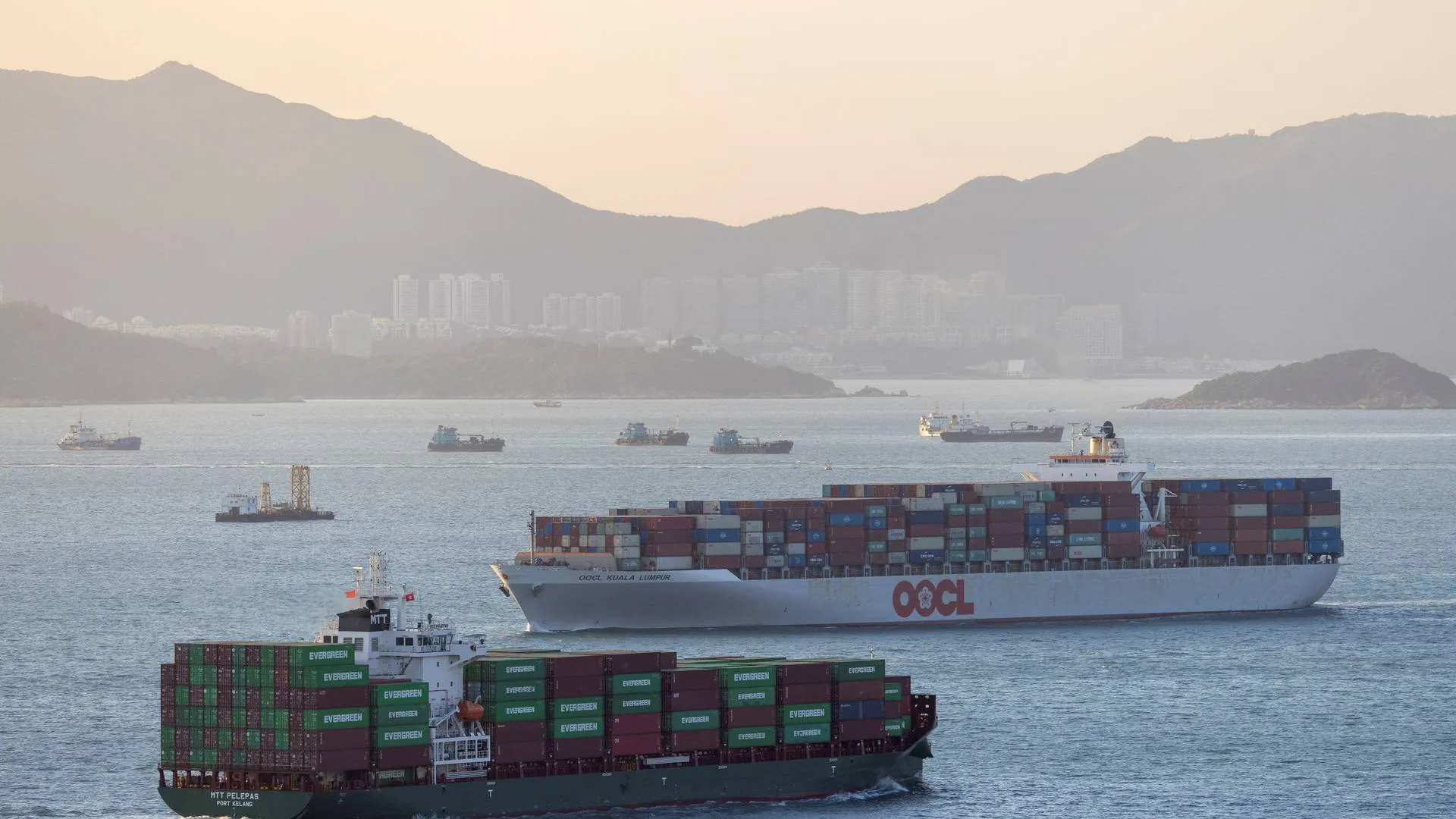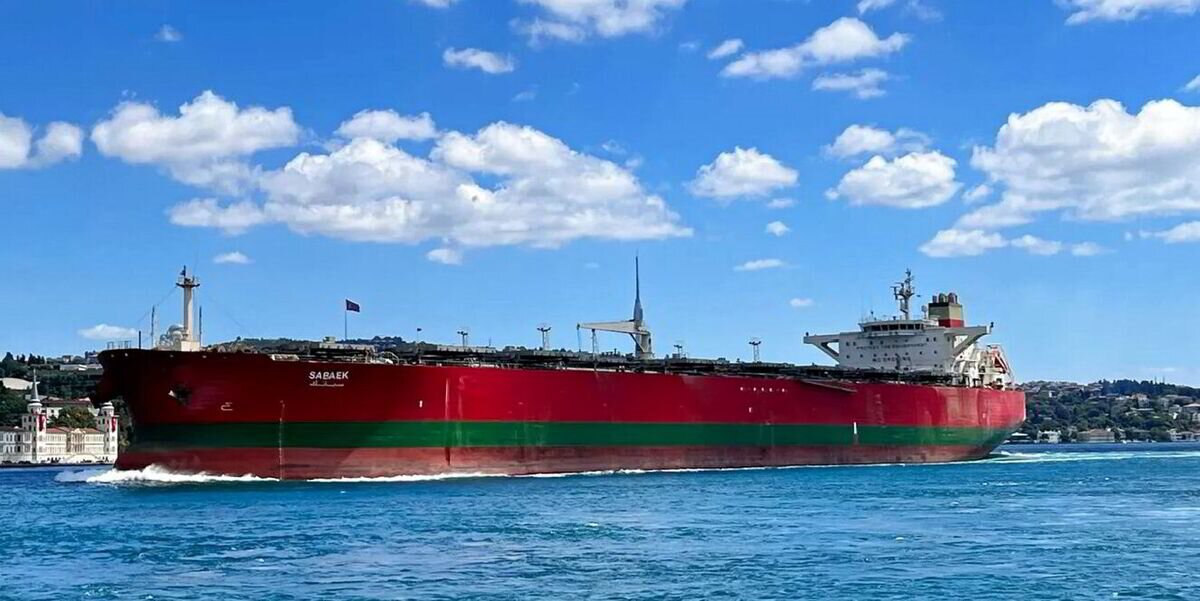
Recently, the global container shipping market has seen a sharp reversal in direction, with freight rates falling back to pre-Red Sea crisis levels.
Affected by multiple factors including a sharp drop in trans-Pacific market demand and the approaching Golden Week, the Shanghai Containerized Freight Index (SCFI) closed at 1198.21 points on September 19, plummeting 14.3% compared to the previous period, marking the largest single-week drop since 2016. The index level has even fallen back to a low point not seen since December 2023. Compared to the high of around 2240 points in early June, it has nearly halved within three months.
Among these, the trans-Pacific routes have become the “hardest-hit area” for the decline. The market freight rate (sea freight and surcharges) from Shanghai Port to the basic ports on the US West Coast route plunged to $/FEU this week, a staggering single-week drop of 31%; the US East Coast route is also not optimistic, with the rate falling to $/FEU, down 22.7% from the previous period. Industry analysis points out that as the previous “pre-tariff rush shipment wave” subsides, the effect of demand overdraft is gradually becoming apparent. Coupled with a weakening US consumer confidence index, the shipping market has lost a key support.
European routes also continued their downward trend. The market freight rate (sea freight and surcharges) from Shanghai Port to the basic ports in Europe fell to $/TEU, down 8.8% month-on-month; the market freight rate from Shanghai Port to the basic ports in the Mediterranean was $/TEU, down 5.8% from the previous period.
Analysts believe that, dragged down by the sluggish European economy, the North European route is under particular pressure. Furthermore, with continuous capacity increases in the Mediterranean, this route may also see an accelerated decline in the future.
Vespucci Maritime analyst Lars Jensen said: “With trade tensions continuing to suppress demand and the Golden Week imminent, shipping companies are in an extremely passive position. Carriers are bound to accelerate the implementation of blank sailings or even seasonal service suspensions, and shippers must be prepared to respond.”
Linerlytica pointed out that although two US West Coast services have been suspended in September, this only involves 1.5% of the total capacity, far from enough to alleviate the supply-demand imbalance.
Regarding other major routes, the Persian Gulf rate fell to $/TEU, a sharp weekly drop of 22.2%; the Australia-New Zealand route recorded $/TEU, down 8.0% month-on-month; the South America route fell back to $/TEU, a significant drop of 17.3%. The Japan route market was relatively stable, with the China-Japan route freight index at 959.29 points, only experiencing a slight decline.
Overall, container freight rates on major global trunk routes have comprehensively entered a downward trend. Analysts generally believe that, with no signs of demand recovery yet visible, the market outlook for the coming weeks remains bleak.