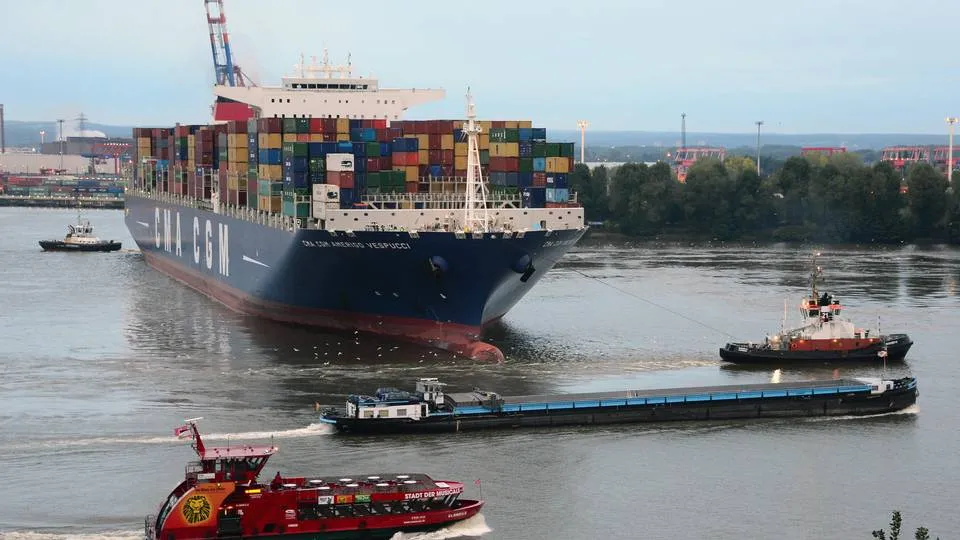
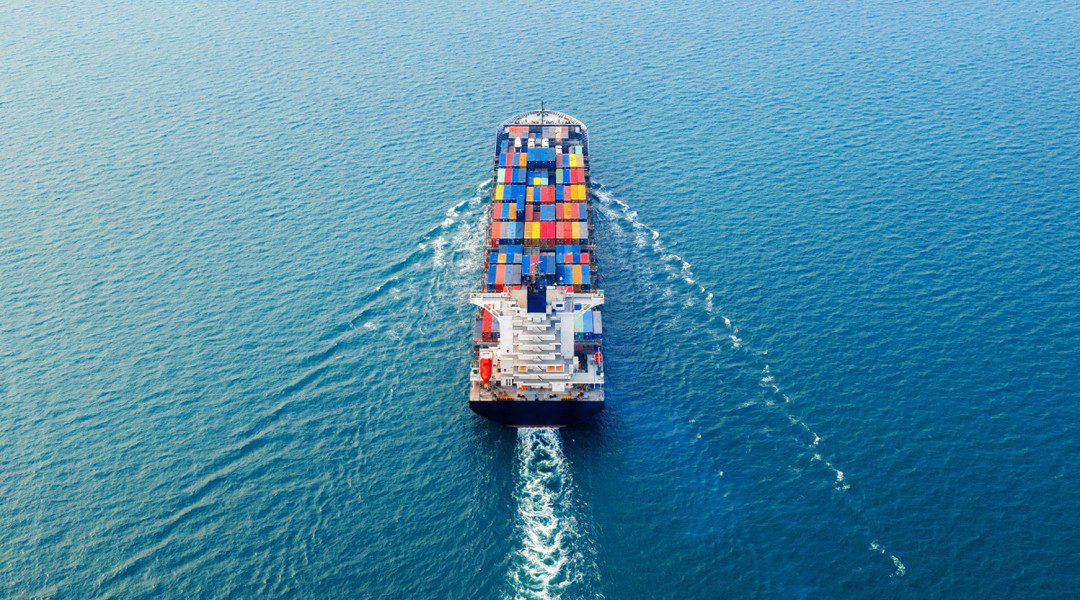
After brewing for a year and a half, the US “Section 301” measures targeting Chinese ships are set to take effect next week. The US Customs and Border Protection (CBP) officially issued announcement CSMS #66427144 on October 3, confirming that starting October 14, additional fees will be levied on Chinese-owned, operated, or built ships entering US ports, as well as all foreign-built vehicle carriers. This move has caused shock within the industry. However, industry insiders analyze that this unilateral US measure will not only fail to help restore the US shipbuilding industry in the short term but will also disrupt global shipping order, with the costs ultimately borne by businesses and consumers.
“Section 301” Measures Enter Implementation Phase
The announcement shows that fees will be charged at $50 per net ton for Chinese-owned or operated vessels; $18 per net ton or $120 per container for Chinese-built vessels, with the higher value applied; and $14 per net ton for non-US built vehicle carriers (Ro-Ro ships).
Market consulting firm EeShipping founder and CEO Zhong Zhechao told the Global Times reporter in an interview on the 9th that this means the US “Section 301” measures on China’s “maritime, logistics, and shipbuilding sector” have moved from the policy level to the substantive implementation stage, and are more enforceable and retroactive compared to the previously announced fee plan.
Public reports show that as early as April 17 last year, the Office of the US Trade Representative launched an investigation against China under “Section 301,” citing the need to restore the competitiveness of the US shipbuilding industry and safeguard national economic security. On April 17 this year, it announced the final measures, deciding that starting October 14, discriminatory port fees would be imposed on maritime services provided by Chinese shipowners and operators, as well as operators using Chinese-built vessels, with a 180-day transition period. Previously, foreign media speculated that CBP might delay the fees, but the release of the first detailed fee rules indicates the US still plans to start collecting these fees on the 14th.
Experts from the China Shipowners’ Association responded on the 9th, stating that the US imposition of discriminatory port fees on Chinese shipping companies and Chinese-built ships is essentially a hegemonic act of placing domestic law above international law. This practice of “pricing by nationality” openly violates the WTO’s non-discrimination principle. The pretext of “revitalizing the US shipbuilding industry” is also invalid because the cost of building commercial ships in the US is 3 to 5 times that in China and South Korea.
US Importers May Bear the Costs
Reuters cited the latest forecast from shipping consultancy Alphaliner, reporting that with the implementation of the US “Section 301” measures, the world’s top ten cargo shipping companies are expected to face a fee burden of up to $3.2 billion in 2026. Alphaliner warned in its report that while nominally aimed at supporting the US shipbuilding industry, this policy is more likely to “disrupt the normal operational order of the global shipping system” in the short term.
According to Nikkei Asia, the Port of Los Angeles, the largest US port, handles hundreds of thousands of containers monthly. The port’s Executive Director, Gene Seroka, said the shipping industry is experiencing “dramatic swings” due to US tariffs, policy volatility, and the impending ship fees. He revealed that since April this year, shipping companies have been pondering “what to do next.” For most companies, the answer is clear: reduce the number of Chinese-built ships operating on US routes and switch to ships built in other countries like South Korea and Japan. “For some companies, adjusting operations is relatively easy; for others, it’s simply not feasible.” Seroka said these companies would either pass the costs on to customers or absorb them themselves.
A North America executive from an Austrian freight forwarding company stated: “If progress [by shipping companies in responding] is slower than expected, these port fees could create long-term cost burdens without achieving the expected goal of enhancing the resilience of the US domestic supply chain.” He expects US importers may ultimately need to bear the “vast majority” of the costs.
China Shipowners’ Association experts said on the 9th that US sanctions will trigger a chain reaction. Global shipping companies will face additional expenses if their fleets include Chinese-built vessels, and this “collective punishment” will push up costs. Future congestion risks at US ports will also transmit globally. Experts also believe that the US port fees will significantly increase the cost of Sino-US maritime trade, estimated to be equivalent to a 4% tariff increase, exacerbating US inflationary pressures. It will also force shipping companies to adjust route networks to avoid cost increases, potentially leading to a chain of negative effects: congestion at major US ports and abandonment of smaller ports, supply chain disruption and delayed infrastructure upgrades, hindered agricultural and energy exports, and loss of port logistics jobs.
Experts: US Shipbuilding Industry’s “Dream Hard to Realize”
Reuters reported a huge gap in shipbuilding capacity between China and the US. In 2024, US shipyards built fewer than 10 commercial vessels, while Chinese shipyards produced over 1000. The latest data from the China Association of the National Shipbuilding Industry shows that in the first half of 2025, China’s ship completions, new orders, and手持 orders, measured in compensated gross tons, accounted for 47.2%, 64%, and 57.6% of the world’s total respectively, maintaining its global lead.
The US maritime investigation against China aims to “restore the US shipbuilding industry.” However, Qiu Shiliang, an analyst at Zhejiang Securities, stated in a report that US shipbuilding costs are expensive, new ship quotes are high, and restarting shipyards on a large scale faces significant difficulties. Zhong Zhechao believes the US shipbuilding industry has fallen to a low point, making it difficult for policies to take effect quickly. However, the directional nature of US policies suppressing China could alter the development trajectory of the global shipbuilding industry’s supply chain, requiring vigilance and adequate preparation.
Prior to the release of these fee details, on September 29, China’s State Council announced a decision to amend the “Regulations of the People’s Republic of China on International Maritime Transportation,” clearly stating that countermeasures will be taken against any country or region that implements or supports discriminatory measures.