In the global seaborne iron ore trade landscape, Australia continues to hold the top position firmly. The latest data shows that over half of the world’s iron ore exports come from Australia, and its dominant position remained unshaken through the first three quarters of 2025.
Shipbroker Banchero Costa pointed out in its latest weekly report that global seaborne iron ore trade continued its growth trend in 2024. According to vessel tracking data from AXS Marine, global iron ore loadings in 2024 increased by 2.3% year-on-year to 1.669 billion tonnes. Entering 2025, the market initially showed weakness, but with the recovery in demand, the total global iron ore exports by the end of September saw a slight increase of 0.3% year-on-year, reaching 1.249 billion tonnes.
Australian Exports Remain Largely Stable
Looking at the major exporting countries, Australia remains the world’s largest supplier. In the first nine months of 2025, Australia’s iron ore exports slightly decreased by 0.1% year-on-year to 690.4 million tonnes. Brazil followed, with exports growing 3.4% year-on-year to 291 million tonnes; Canada grew by 1.4% to 45.5 million tonnes; South Africa performed notably well, with an increase of 7.2% to 42.6 million tonnes. In contrast, India’s exports fell sharply by 33.8% to just 20 million tonnes; Norway saw a rebound, with a year-on-year increase of 28.2% to 15.5 million tonnes.
Banchero Costa noted that Australia’s global market share in the first three quarters of 2025 remained as high as 55.3%, far exceeding that of Brazil (23.3%), Canada (3.6%), and South Africa (3.4%). Australia’s export volume has maintained a stable or slightly increasing trend in recent years: it grew by 4.1% in 2020, slightly decreased by 0.3% in 2021, and has maintained positive growth for the subsequent three consecutive years.
Slight Decline in Chinese Imports
On the demand side, China remains the “ballast stone” of global iron ore trade. The report shows that China’s import volume accounts for 74% of the global total. However, in the first three quarters of 2025, China’s imports decreased by 2.2% year-on-year to 906 million tonnes.
Among other major importing countries, Japan’s imports fell by 3.7% to 66.1 million tonnes, and South Korea’s fell by 3.7% to 51.2 million tonnes; EU imports slightly increased by 2.9%, reaching 55.8 million tonnes; Malaysia grew by 6.6%, and Vietnam grew by 1.4%. Performance in the Middle East was mixed, with Oman’s imports growing by 3%, Saudi Arabia’s falling by 4.2%, and Bahrain’s falling by 8.2%.
Analysis suggests that the slight decline in China is related to production controls in the domestic steel industry, changes in inventory cycles, and weak real estate investment. However, with the recovery in steel demand supported by infrastructure investment, China remains the most crucial buyer in the global iron ore market.
Significant Contribution from Western Australian Ports
Australia’s iron ore exports are mainly concentrated in several large ports in Western Australia.
Among them, Port Hedland remains the world’s largest single iron ore export port, with loadings reaching 412.4 million tonnes in the first three quarters of 2025; followed by Port Walcott with 121.9 million tonnes, and Dampier with 106.7 million tonnes. Other ports such as Onslow, Cape Preston, Geraldton, Whyalla, etc., also continue to contribute stable loading volumes.
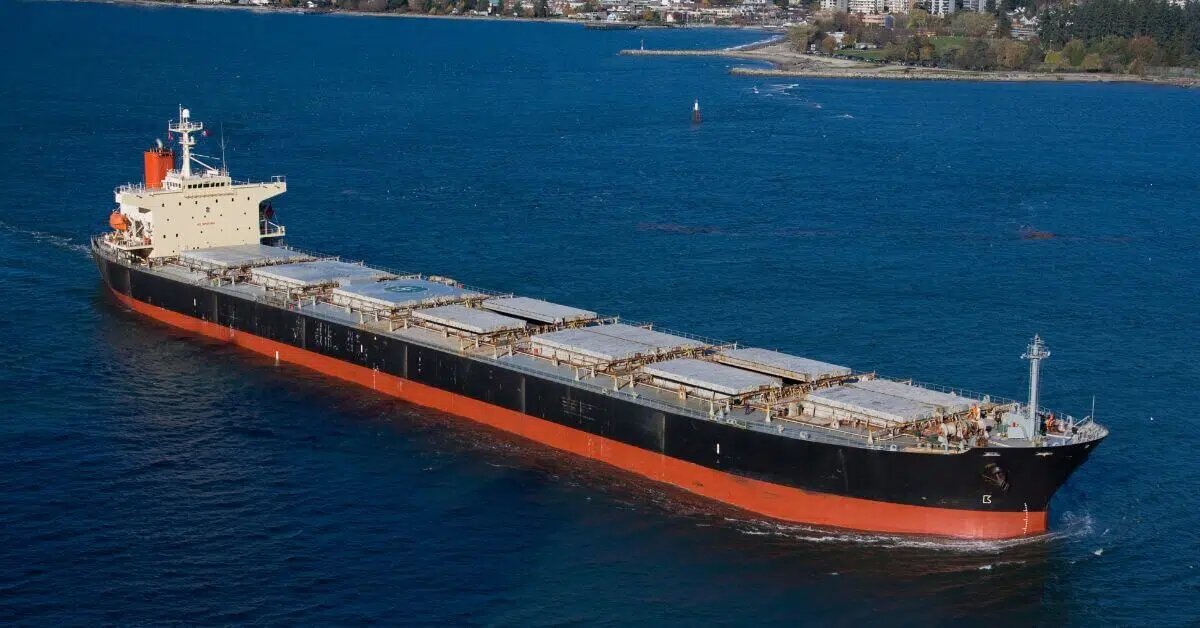
In terms of vessel types, over seventy percent (77.3%) of Australian iron ore is transported via Capesize and Newcastlemax vessels, with VLOCs accounting for 16%, and the remainder primarily consisting of Post-Panamax (4.7%) and Kamsarmax vessels (1.5%).
Stable with Slight Increase in Exports to China
From the perspective of export destinations, Mainland China remains the largest buyer of Australian iron ore, accounting for a high 84.2%. By the end of September, Australian exports to China slightly increased by 0.1% year-on-year, reaching 581.1 million tonnes. South Korea ranked second, accounting for 5.5%, with imports decreasing by 3.3% to 38 million tonnes. Japan’s imports fell by 5.8% to 37.1 million tonnes, and Vietnam’s fell by 6.9%.
Industry insiders point out that the steel industry in Northeast Asia is generally affected by production reduction plans and economic slowdown, leading to continued weak demand for iron ore. Australia, leveraging its cost advantages and long-term supply contracts, still holds an absolute dominant position.
Industry observers caution that subtle changes in the international landscape may emerge in the coming years. With Brazil’s exports steadily recovering and high-grade African mining projects like Simandou in Guinea gradually commencing production, global supply sources are becoming more diversified.
Banchero Costa stated in the report that Australia’s high market share is difficult to challenge in the short term, but medium to long-term competition is building. Against the backdrop of the global steel industry accelerating its decarbonization process and the restructuring of downstream demand, Australian miners may need to accelerate the deployment of high-grade mines and green transportation to consolidate their competitive advantage.