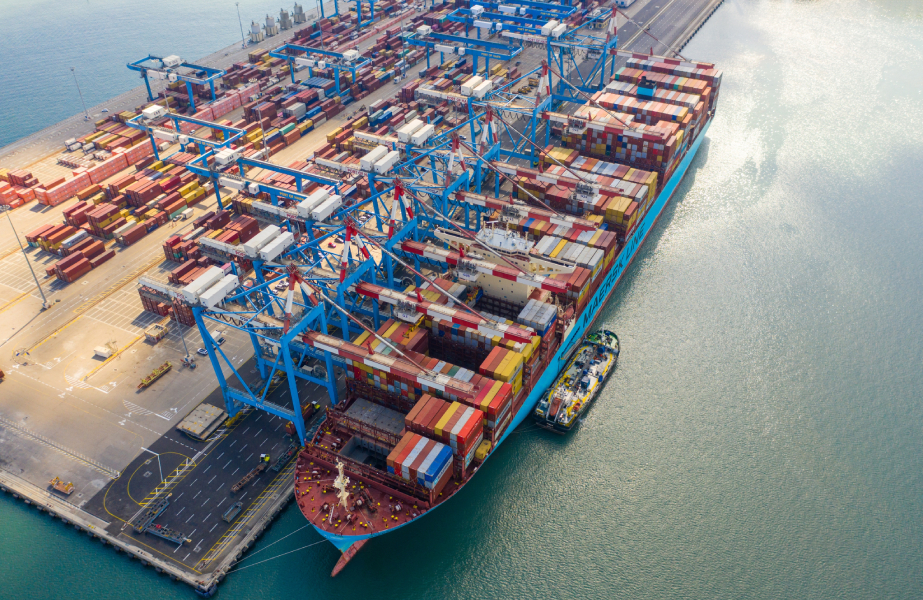
DP World began its operations at the Port of Tartus, following the formal handover by the Syrian General Authority for Land and Sea Ports and has welcomed the new Al Fath harbor tug.
This represents an important milestone within the framework of DP World’s 30-year concession agreement for the Port of Tartus, which includes a planned investment of 800 million dollars, one of the largest international investments in Syria’s logistics sector in recent years.
Fahad Al Banna, general manager of DP World Tartus, stated that “we have embarked on a project to transform the Port of Tartus into a premier maritime gateway. Working closely with the Syrian government and the General Authority for Land and Sea Ports, we are committed to applying DP World’s global expertise to build a modern and digitalized port that boosts trade, generates opportunities, and consolidates Tartus as a key commercial hub in the Eastern Mediterranean.”
Immediate and future development plans
DP World is conducting a comprehensive assessment of the port infrastructure, including equipment, the preparation of the docks and the yard and warehouse facilities. This phase comprises technical and operational studies and design planning to develop a detailed roadmap for the remodeling.
In the short term, the priority will be the dredging of the port access channels, basins and docks to reach the optimal design depths. Together with the rehabilitation and replacement of existing handling equipment, and the incorporation of new specialized assets, these works will enable the port to meet the growing demand for bulk and breakbulk cargo.
DP World will also implement its own digital platforms to enhance operational efficiency and transparency. In parallel, staff training programs and process optimization will be carried out to increase productivity and reduce vessel response times to international standards. As part of this process, DP World prioritizes the highest safety standards in all port operations through comprehensive safety audits and training programs.
In the medium term, the remodeling program will include the modernization of the port infrastructure and superstructure, the expansion of handling and storage capacity and investment in bulk handling systems, as well as in new container and non-container facilities.