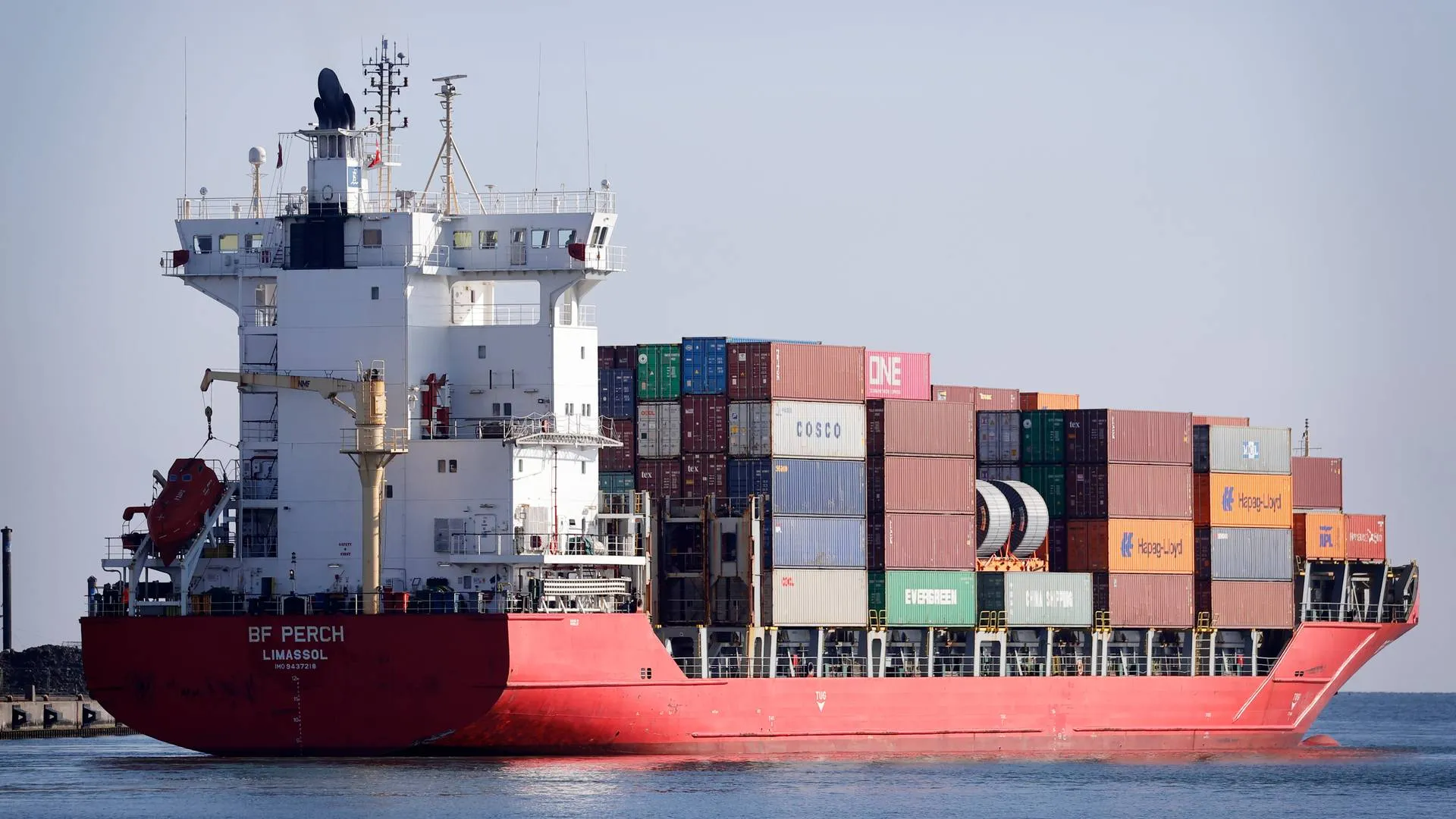
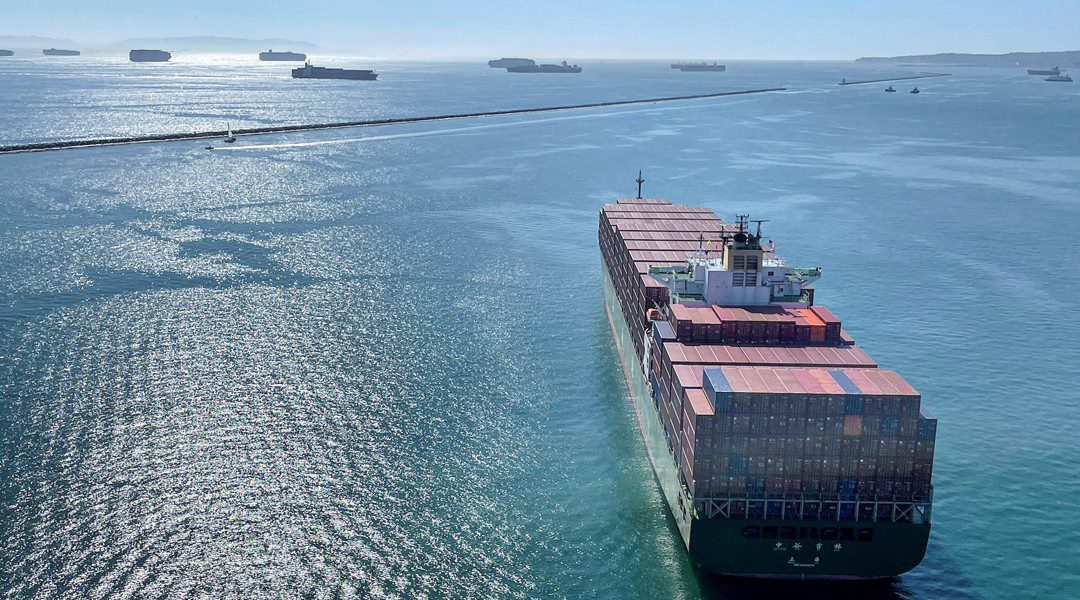
Bill Gallagher, head of the Marshall Islands registry, argues that the recent rise in substandard flags does not mean the current ship registry system is unfit for purpose. However, tighter port state control oversight may be needed.
According to the head of the world’s third-largest open registry; the flag state system remains fit for purpose despite the recent emergence of hundreds of stateless ships.
Bill Gallagher, president of the US-based company that administers the Marshall Islands maritime program, also acknowledged that what he described as a “proliferation of substandard flags” is occurring.
But he said these should be seen as “bad apples” that tarnish the reputation of the high-quality open registries preferred by most owners, and that any issues should be resolved through stricter port state control practices.
The International Maritime Organization’s (IMO) Global Integrated Shipping Information System shows that nearly 470 ships currently claim to fly flags they are not entitled to.
This figure has more than doubled since this time last year and quadrupled since 2023.
Some registries charge owners for flag use without receiving any authorization from the countries they claim to represent. In other cases, ships fly flags without even passing through sham facilities.
In other instances, the registrations are legally valid. But poorer countries lack the resources to meaningfully enforce standards; a situation that can be attractive to unethical owners.
Such practices have recently drawn media attention as they facilitate the activities of the “shadow fleet” of tankers serving oil exports from countries subject to US sanctions like Russia, Iran, and Venezuela.
But the problem is not limited to energy tonnage; there are examples of tugs, supply vessels, general cargo ships, and yachts also flouting international law in this regard.
When asked whether the current flagging mechanism could be described as fit for purpose, Gallagher replied: “That’s a tough question. But yes, I think so.
“I am absolutely against substandard flag states. These outliers damage the reputation of flag states in general. But we will get through this, so the system is fit for purpose.”
However, the solution to such problems can only come with better controls, especially on the tonnage making up the dark fleet.
“Port state control needs to take responsibility. I’m not blaming them, and they may not welcome this task, but they will need to step up to get a bit more control over the situation.
“I can make an analogy with the old days; port state control got very tough on safety issues because incoming ships were substandard.
“This is more of a political issue, but I can definitely see this happening.”
Gallagher also believes that sometimes expressed concerns about corporate veils and transparency in shipping are exaggerated.
This sector is now a capital-intensive sector and financiers always want to know who they are financing.
International Registries Inc (IRI) insisted it is aware of the true identity of all owners using its service, from family companies to large publicly listed players, and stated that none can hide behind a “brass plate company”.
“We cannot make a mistake; we could not allow a single bad actor to get through the fence. It’s that simple.”
Virginia-based IRI was founded in 1948 and initially managed the Liberian registry as an option for shipowners seeking an alternative to national flags.
However, after the civil war broke out in Liberia in 1999, the company transferred control to the Liberian International Ship & Corporate Registry (LISCR) in early 2000 and then focused its operations on managing the Marshall Islands flag.
Both flags are branded as “flags of convenience” by the International Transport Workers’ Federation (ITF). IRI rejects this pejorative label and points to its white list status in the Paris and Tokyo MoUs and its Qualship 21 position with the US Coast Guard.
The Marshall Islands, with a total of 6,083 vessels of 206.6 million gross tonnes (gt) as of late December, is currently third in this field after Panama and Liberia.
These vessels are serviced through a network of 28 offices worldwide and a total of approximately 500 employees.
“If there’s one thing I’m proud of, it’s that we broke the longstanding duopoly of Panama and Liberia and inserted ourselves as another major flag,” Gallagher said.
“I learned this from one of our owners who is a ship operator; they definitely bring in people who understand shipping, they get the best people and they train them there.
“We hire people from the shipping industry: you need them to run a registry. Absolutely. But you can also bring people in from outside if they have enough drive and level of education; you can train them and we see that bearing fruit.”
Although relations between Liberia and the Marshall Islands were famously acrimonious for a long period, Gallagher insists past differences are behind them.
He now has regular, friendly conversations with LISCR co-chairman Adam Cohen, for example.
“That was all a long time ago,” Gallagher said.
“They are now like our other competitors and there is no personal animosity between us,” he said.
Indeed, since 2021, Panama, Liberia, and the Marshall Islands, which flag approximately 60% of the world’s tonnage, have been working together in the International Flag-State Association.
The organization took inspiration from the example of the International Association of Classification Societies (IACS).
“We looked at IACS and thought: If those guys can get along well enough to get things done at a higher level, why can’t we?”
The cooperation extends, for example, to participants agreeing to inform each other about potentially problematic ships leaving each other’s registries.
This measure was in place even before the emergence of the shadow fleet and was initially introduced in response to safety concerns.
The association’s next meeting is planned for early next month, and other flag states are invited to apply for membership.
However, the organization sees the need to operate essentially as a “good guys club” and will not consider requests from flags that are under sanctions or that register shadow fleet tonnage. ‘Bottom-tier’ flag states need not apply.
The growth rate of the Marshall Islands flag has slowed recently, but Gallagher argues this is to be expected when a flag reaches a certain size and emphasizes the trend is still upward.
Steady expansion is expected to continue as IRI makes IT investments and streamlines its processes. Marketing and communications director Laura Sherman leads in these areas.
The company is also strengthening its security unit and has hired former US naval intelligence personnel to oversee its work in this field.
This proved to be the right decision following recent developments in international politics, where shipping in general and flag states in particular have come under intense government scrutiny.
Open registries have historically been accused of being lax in vetting owners who want to use their services. Gallagher stresses that, whatever the past shortcomings, this is now certainly not standard practice.
“The registries now have more personal relationships. When we started this, we didn’t know the guys on Adam’s team on the other side of the table.
“Now our general counsel, Meredith Kirby, is regularly on the phone with Liberia on these matters. You start with a framework and you can build on it.”
IRI, a US company, has a two-way flow of information with the US government, including the State Department and the Treasury Department, which houses the OFAC (Office of Foreign Assets Control) sanctions authority.
“We have long taken trade compliance seriously. We have established a department of people dedicated to vetting every individual who touches a ship we are involved with.”
Shipowners can expect comprehensive compliance checks that go beyond sanctions to also cover issues like the mistreatment of seafarers or human trafficking.
Sherman added: “Some of our European counterparts think our network is too tight and that it slows down the ship approval process.
However, it is this network that makes us as good as we can be.
IRI shifts direction in parallel with daily events in world politics, as in its response to the sanctions imposed on Russia after the 2022 invasion of Ukraine.
IRI’s biggest trump card is the power to dissolve a Marshall Islands company, which legally means immediate compulsory liquidation.
Source: