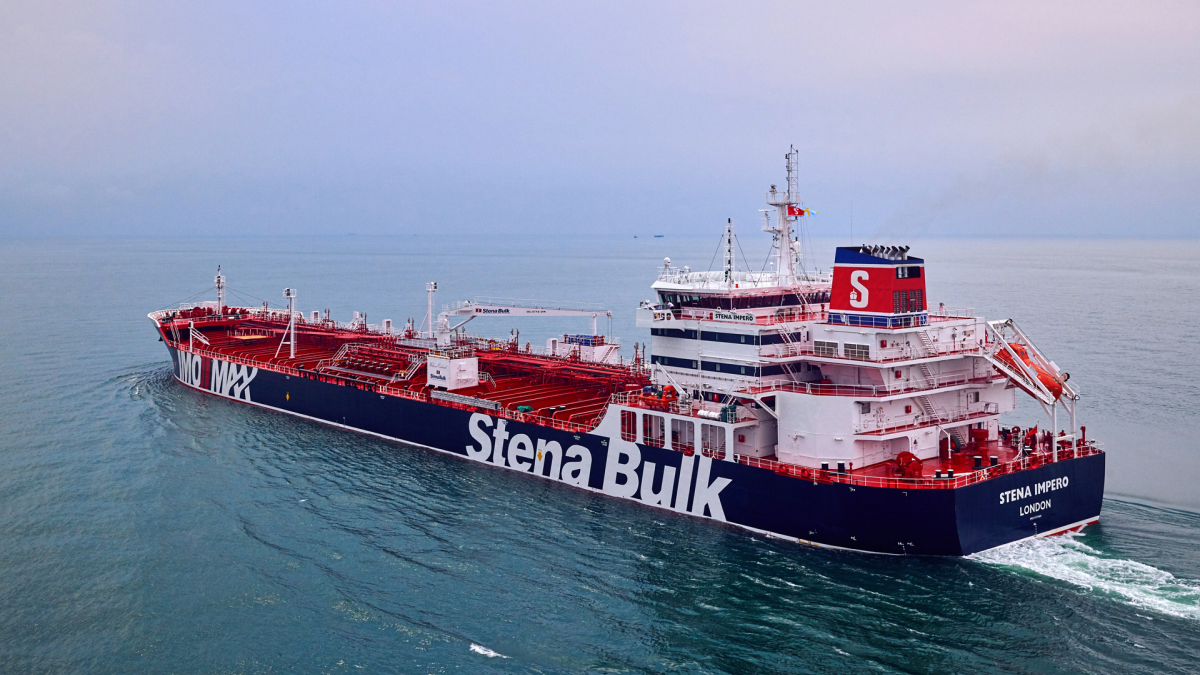
A three-year industry–academia collaboration led by the National University of Singapore’s Centre for Hydrogen Innovations and supported by the Singapore Maritime Institute has been established to develop next-generation ammonia-fuelled marine engines with near-zero emissions.
Ammonia has emerged as a leading candidate among zero-carbon fuels because it produces no carbon dioxide at the point of combustion and is easier to store and transport than hydrogen. However, its adoption has been constrained by technical barriers, including combustion instability, lower thermal efficiency and the risk of releasing unburned ammonia and other pollutants.
The Singapore project centres on an in-cylinder reforming gas recirculation (IRGR) engine concept intended to overcome these limitations. Associate Professor Yang Wenming, principal investigator of the programme, said: ‘Ammonia has been recognised as one of the most promising fuels for achieving near-zero greenhouse gas emissions in marine transportation, but current ammonia engines face significant challenges in efficiency and emissions.’ He added that the IRGR approach is designed to improve combustion performance while ‘sharply reducing unburned ammonia and other pollutants’.
The research will be based in a dedicated laboratory at NUS’s College of Design and Engineering, with engine testing facilities and combustion research capability. Dr Zhou Xinyi, a senior research fellow involved in the programme, noted that the lab will support both fundamental systems work and applied development.
The consortium brings together academic partners including Shanghai Jiao Tong University, Nanyang Technological University and the A*STAR National Metrology Centre, alongside Keppel Energy Nexus. From industry, Japanese marine engine manufacturer Daihatsu and classification society American Bureau of Shipping are expected to provide practical engineering input, safety oversight and future certification pathways for ammonia-fuelled engines.
International cooperation is central to the project’s framing. Professor Li Tie of Shanghai Jiao Tong University warned that meeting the emissions targets will require more than incremental progress. ‘This goal cannot be realised by any single institution or country,’ he said. ‘It requires disruptive technologies and strong international cooperation.’
Professor Lee Poh Seng, head of mechanical engineering at NUS, described the work as ‘a deliberate step into one of the hardest and most consequential engineering challenges in the energy transition’, arguing that decarbonising shipping will depend on technologies that can be ‘validated, scaled and trusted in real-world operations’.