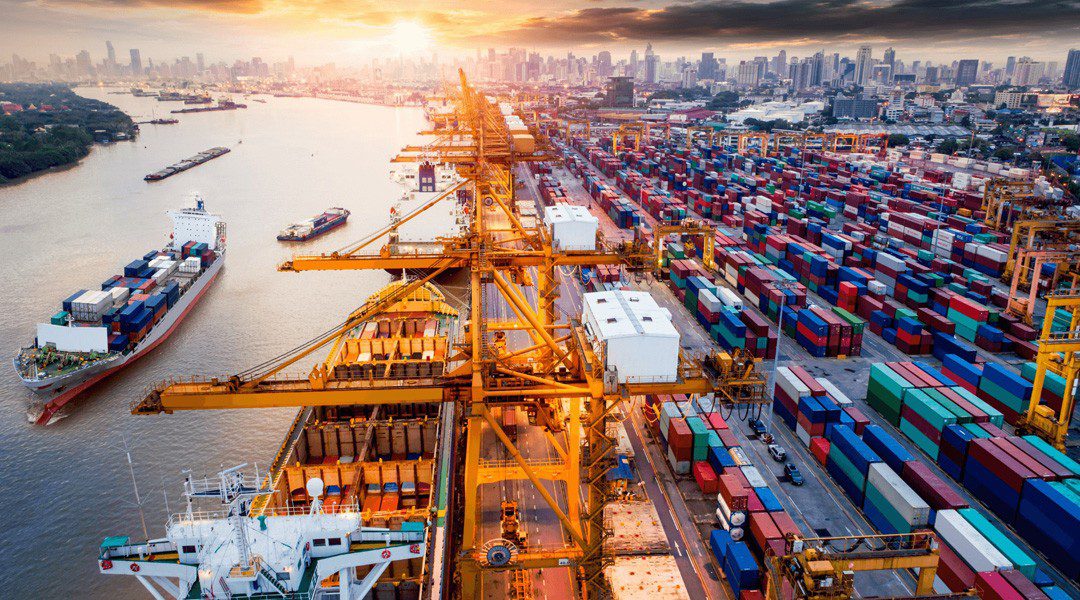
The free trade agreement between Mercosur and the European Union, which provisionally entered into force on May 1, marks a new stage for international trade and opens opportunities for Brazil to expand its presence in the European market, with a gradual reduction of tariffs, a treaty that broadens market access, strengthens competitiveness, and creates new opportunities for imports and exports between Brazil and Europe. In this context, the Port of Itajaí seeks to establish itself as an important link in the connection between Brazil and Europe.
As one of the country’s main entry and exit points for goods, the port plays a strategic role in import and export operations, facilitating the flow of products and contributing to Brazil’s integration into global trade chains.
The terminal already stands out for its handling of cargo destined for the foreign market, especially in the food sector. With the gradual reduction of tariffs provided for in the agreement, the trend points to strengthening these operations, increasing the competitiveness of Brazilian products and opening new business opportunities.
For the superintendent of the Port of Itajaí, Artur Antunes Pereira, the treaty represents a concrete opportunity to expand Brazil’s participation in international trade.
“This new scenario opens important prospects for Brazilian foreign trade and reinforces the strategic role of public ports in the country’s integration with major international markets. The Port of Itajaí is prepared to contribute to this movement, offering operational safety, logistical efficiency, and the capacity to meet the new import and export demands, especially in sectors where Santa Catarina already has strong competitiveness,” underscores the superintendent.
The Port of Itajaí remains prepared to accompany this movement, with the structure and capacity to meet the growing demand of foreign trade, contributing to the economic development of Santa Catarina and the strengthening of the Brazilian presence in the European market.
After more than 25 years of negotiations, the treaty creates one of the largest free trade zones in the world, connecting 31 countries, approximately 720 million people, and a combined Gross Domestic Product (GDP) of approximately USD 22 billion.
The agreement is expected to generate positive impacts in the short term. According to the Brazilian Trade and Investment Promotion Agency (ApexBrasil), the country could increase its exports by up to USD 1 billion during the first year of its implementation. Among the sectors with the greatest growth potential are food and industrial goods, such as honey, grapes, leather, engines, electric generators, and aircraft.
According to estimates from the National Confederation of Industry (CNI), approximately 80% of products exported by Brazil to the European Union will have zero import tariffs in this initial phase, which tends to increase the competitiveness of national products in the European market. At the same time, around 10% of European products already enter the South American market with zero tariffs, which could expand supply and competition in Brazil.
For consumers, the agreement could also translate into lower prices for imported products such as wines, olive oils, cheeses, and chocolates, as well as vehicles, medicines, and agricultural inputs.