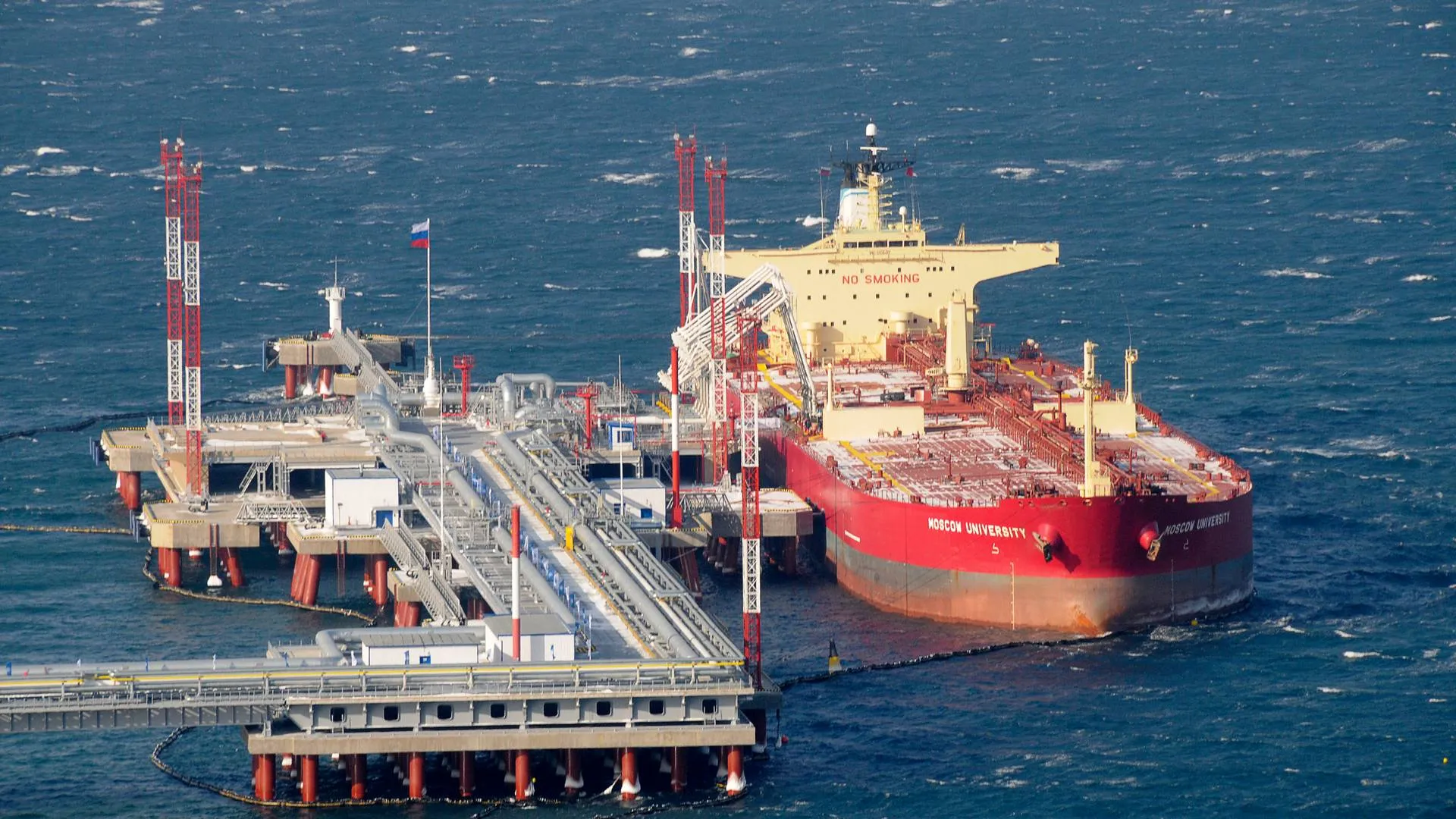
As the situation in the Middle East continues to disrupt the global energy trade chain, a large number of LR2 tankers, originally primarily responsible for transporting refined oil products, are rapidly shifting to the crude oil and fuel oil transport market. The “clean-to-dirty” switch has become one of the most core changes in the current tanker market.
The latest weekly report from shipbroker Gibson Shipbrokers shows that this trend began to emerge in the fourth quarter of 2025, and the recent escalation of the war in the Middle East has further accelerated the market shift.
Gibson pointed out that the war has severely damaged the energy logistics system in the Middle East Gulf region, forcing approximately 2.4 million barrels per day of clean product transport demand out of the market. At the same time, Middle East crude oil exports and refinery processing activities have declined in tandem, causing a large amount of tonnage originally serving the Asian market to withdraw from the Eastern Hemisphere and shift to the Atlantic market in search of alternative cargoes.
In this process, the Western market was the first to experience changes in tonnage structure. Due to the surge in earnings in the dirty tanker market, a large number of LR2 tankers with coated tanks have begun to “turn dirty,” engaging in crude oil and heavy fuel oil transport. Data shows that spot earnings on the TD25 route in April once soared to an average of $153,250 per day (eco vessel), a sharp increase from $85,750 per day in February.
In contrast, while the clean product tanker market also rose, it clearly lagged behind the dirty tanker market. The average daily earnings on the TC15 route via the Cape of Good Hope were approximately $81,750 in April, compared to just $27,000 in February.
Market participants believe that the huge earnings gap has become the core driving force behind the LR2 fleet’s “turn to dirty.” The key variable driving this surge in the dirty tanker market comes from the surge in U.S. crude oil exports.
Gibson stated that against the backdrop of fully open arbitrage windows, the release of U.S. Strategic Petroleum Reserves, and disrupted Middle East supply, U.S. crude oil exports have grown rapidly, significantly boosting demand on the TD25 route. At the same time, the increase in reverse lightering operations by VLCCs has also driven up demand for Aframax tanker feeder services.
Meanwhile, the return of Venezuelan crude oil to the international market has further tightened regional tonnage supply. Data shows that Venezuelan crude exports to the U.S. Gulf Coast reached 485,000 barrels per day in April, a significant increase from 280,000 barrels per day in January.
In addition to the Atlantic market, the Pacific market has also become a new outlet for some shipowners’ tonnage. After discharging Middle Eastern naphtha in Asia, many LR2s, due to insufficient clean product export cargoes in the region, have begun to directly enter the transpacific crude oil transport market. Some vessels are competing for cargoes from Canada’s TMX pipeline exports, and some have even ballasted to Argentina to seize new cargo volumes resulting from the expansion of local export facilities.
However, the market began to cool significantly in late April. Gibson data shows that approximately 52.5% of the coated LR2 fleet is currently engaged in dirty oil transport. At the same time, a large number of Aframax tankers have returned from the Asian market, coupled with the easing of seasonal weather delays, leading to a rapid correction in market freight rates, gradually approaching pre-war levels, although overall earnings remain in historically high ranges.
It is worth noting that the market generally believes that these LR2s that have already “turned dirty” will not quickly return to the clean product transport market in the short term.
Gibson pointed out that even if navigation through the Strait of Hormuz returns to normal in the future, it will still take considerable time for damaged Middle East refineries to restore production capacity, and the recovery of regional product exports may be slower than expected. This means that the market demand for LR2s in clean transport is unlikely to fully recover in the short term.
More importantly, restoring a “dirty” LR2 to clean transport is not a simple switch. Vessels require complex tank cleaning, re-certification, and operational adjustments, which are costly and time-consuming. Therefore, even if the market normalizes, it will take time for the LR2 fleet to flow back into the clean market.
Amidst high market volatility, the situation in the Mediterranean and the Black Sea has also become an important variable affecting the future market. Due to Ukraine’s continued strikes on Russian refining facilities, Russian crude oil and fuel oil export volumes have been declining. Although the EU recently postponed the full implementation of the maritime services ban on Russian crude oil, if policies are tightened again in the future, a large number of tankers compliant with G7 sanctions rules could be forced out of the Russian trade system.
Gibson believes this would lead to a surge in tonnage in traditional markets in the short term, but some vessels might subsequently transfer to the “shadow fleet,” reabsorbing the excess tonnage.
Furthermore, the decline in Mexican crude oil exports could further weaken demand for Aframax tankers. Currently, declining domestic crude oil production in Mexico and increased refinery demand are both compressing export volumes. However, increased production in Venezuela and the potential future resumption of Kurdish crude oil exports via Turkey’s Ceyhan port could partially offset this impact.
What truly concerns the market is the upcoming peak in newbuilding deliveries. Gibson estimates that 83 LR2 and Aframax tankers will be delivered to the global market in 2026, representing the largest expansion of tonnage for these vessel types since 2009.
Under the current market pattern of “weak clean, strong dirty,” if clean product trade demand cannot recover quickly, the huge earnings gap could further incentivize more LR2s to “turn dirty,” thereby creating a stronger impact on the Aframax tanker market and potentially gradually depressing overall freight rate levels in the coming months.
However, Gibson also emphasized that the tanker market has repeatedly demonstrated greater-than-expected resilience over the past few years. Against the backdrop of ongoing geopolitical shifts, energy trade restructuring, and tonnage reallocation, the market still holds potential for further upside surprises.