Since 2026, supported by factors such as recovering freight rates and improved vessel utilization, the secondhand bulk carrier market has continued to strengthen. Recently, the transaction price of a 3-year-old Kamsarmax bulk carrier was comparable to the newbuilding price quoted by Chinese shipyards for the same vessel type, confirming the booming conditions in the bulk carrier market.
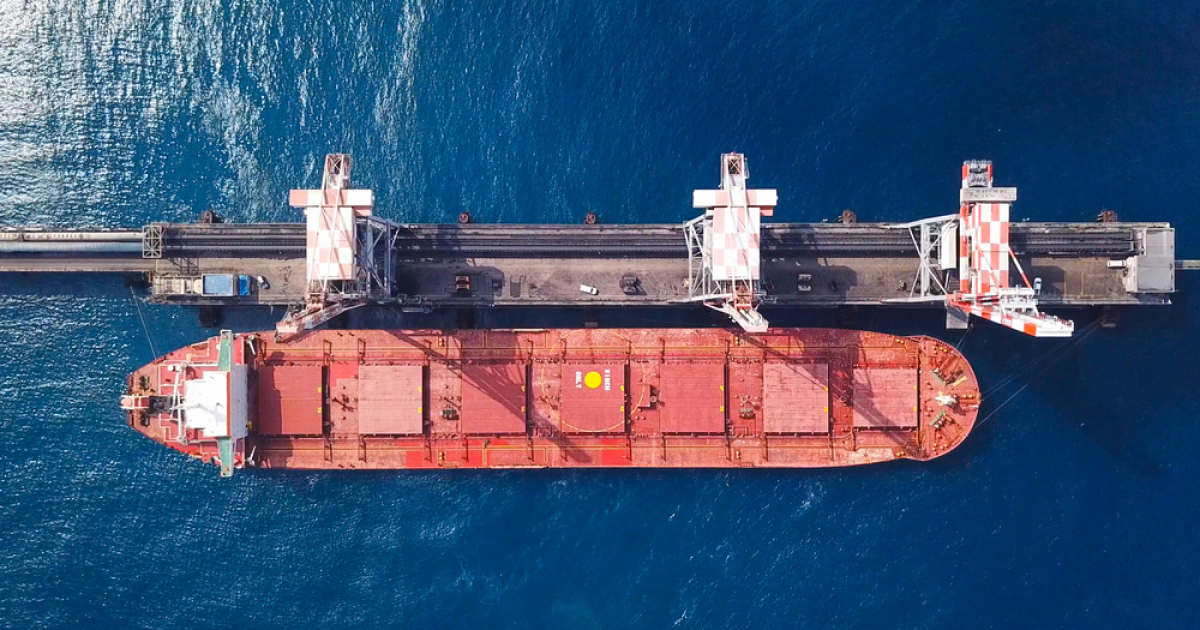
On June 22, Cypriot shipowner Castor Maritime, through its independent wholly-owned subsidiary, signed an agreement with an unrelated third party to acquire one 2023-built eco-type Kamsarmax bulk carrier for $37.5 million, making it the youngest vessel in the shipowner’s fleet.
This bulk carrier has not yet been named, and the transaction is expected to be completed in the second quarter of 2026, subject to customary closing conditions. Castor Maritime plans to fund this acquisition using available cash.
Over the past two years, Castor Maritime has continuously adjusted its fleet structure through multiple container ship and bulk carrier transactions. Upon completion of the latest acquisition, the shipowner’s fleet will increase to 10 vessels, with a total capacity of approximately 700,000 deadweight tons, including 9 bulk carriers and 1 container ship.
Notably, the transaction price of the 3-year-old Kamsarmax bulk carrier acquired by Castor Maritime is comparable to the newbuilding price quoted by Chinese shipyards for the same vessel type. Taking the recent order of four 82,000 dwt Kamsarmax bulk carriers placed at New Hantong Shipbuilding Heavy Industry as an example, shipbrokers estimate the unit price at approximately $37 million.
According to the latest weekly report from shipbroker Xclusiv Shipbrokers, dry bulk asset values have surged as diversified trade growth reshapes the market landscape.
Xclusiv Shipbrokers pointed out that in the first half of 2026, the secondhand dry bulk carrier market strengthened, benefiting from factors such as recovering freight rates, improved vessel utilization, and increased demand for seaborne commodities. Compared to 2025, more robust market fundamentals have boosted buyer confidence, thereby driving up secondhand dry bulk carrier asset values.
Data from Xclusiv Shipbrokers shows that compared to January 2026, asset prices in almost all dry bulk carrier segments have increased, with the most significant gains seen in large bulk carriers.
From January to June 2026, the price of a 5-year-old Capesize bulk carrier rose from $65 million to $72 million, an increase of approximately 10.7%; the price of a 10-year-old Capesize bulk carrier rose from $50 million to $56.5 million, an increase of 13%; and the price of a 15-year-old vessel rose by over 20%, reaching $36.5 million.
During the same period, the Panamax and Kamsarmax bulk carrier segments also performed strongly. The price of a 5-year-old Kamsarmax bulk carrier rose from $34 million to $38 million, an increase of nearly 12%; the value of 15-year-old vessels increased by over 20%.
Ultramax and Supramax bulk carriers showed a similar trend, benefiting from the expansion of grain, bauxite, and nickel ore trade, with the price of 10-year-old vessels increasing by approximately 14%. Even in the traditionally more stable Handysize bulk carrier segment, most age categories achieved double-digit gains.
Xclusiv Shipbrokers stated: “The upward trend across dry bulk carrier segments indicates that buyers are willing to pay higher prices not only for modern vessels but also for older vessels that can generate higher returns. A key feature of the current dry bulk market is the increasingly diversified demand base, which reduces reliance on Chinese iron ore imports. The continuous growth in transport volumes for multiple commodity trades supports vessel capacity and ton-mile demand, helping to sustain strong freight rates and push up secondhand asset values across all age groups.”