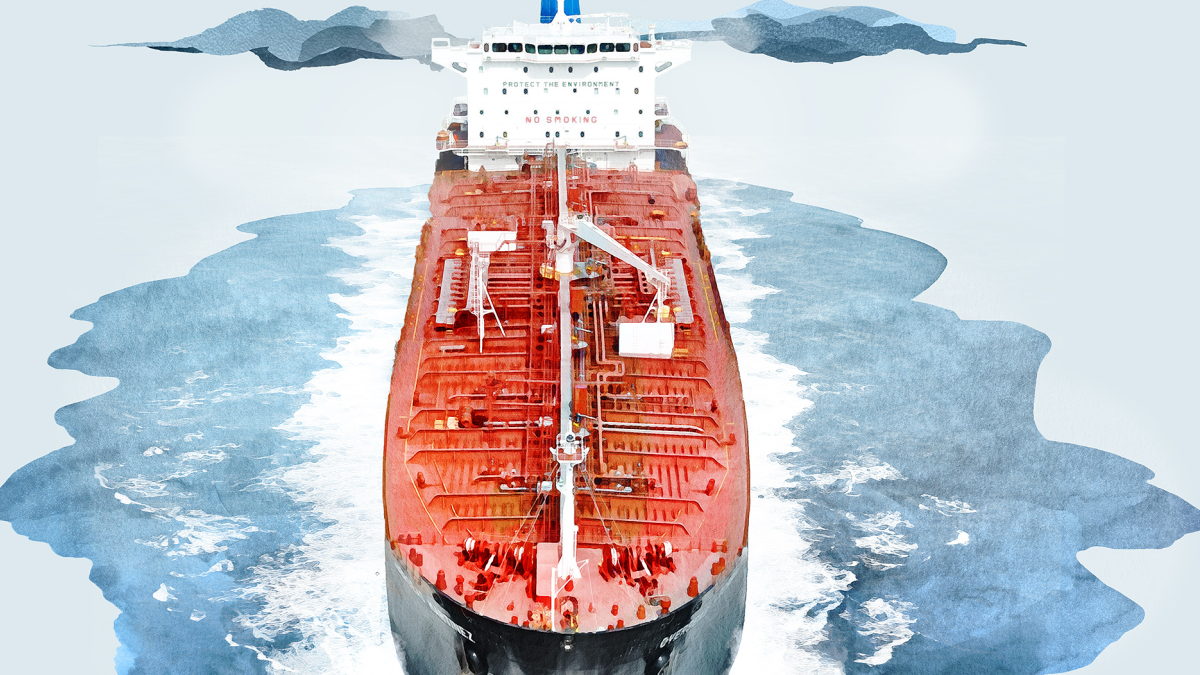
The UK government has announced it will introduce a windfall tax on oil and gas operators as it is working to alleviate the cost-of-living crisis in the country.
The announcement comes amid challenges posed by high inflation – the highest rate seen in the UK in 40 years – and pressures of soaring energy bills on the country’s households.
A windfall tax is a one-off tax imposed by a government on a company, targeting those who benefit from something they were not responsible for; in this case, the huge profits gained by oil and gas companies due to a sharp increase in oil and gas prices following Russia’s invasion of Ukraine. The purpose of this is to distribute excess profits in one area for the greater social good.
UK Chancellor of the Exchequer, Rishi Sunak, on Thursday announced that the government is introducing a temporary, targeted Energy Profits Levy charged on profits of oil and gas companies at a rate of 25 per cent.
“We’re also building in a new investment allowance that doubles the relief for the energy companies that invest their profits in the UK,” Sunak said.
We are introducing a temporary, targeted Energy Profits Levy charged on profits of oil and gas companies at a rate of 25%.
We’re also building in a new investment allowance that doubles the relief for the energy companies that invest their profits in the UK. pic. /nOS87Uzz0I
— Rishi Sunak (@RishiSunak) May 26, 2022
Speaking of the challenge of inflation the country is facing, Sunak said during his speech in the UK Parliament: “We will turn the difficulty into a springboard for economic renewal and growth.”
He added: “It may take time, but we have the tools we need and the resolve it will take to reduce inflation.” Sunak then went on to list the three specific tools available to combat inflation, independent monetary policy, fiscal responsibility, and supply-side activism.
The windfall tax move comes as oil and gas giants, like Shell and BP, booked record profits in the first quarter of this year, driven by a spike in oil and gas prices. BP also revealed it would invest up to £18 billion in the UK’s energy system by the end of 2030.
Stating that the oil and gas sector is making extraordinary profits not as the result of recent changes to risk-taking, innovation or efficiency but as the result of surging global commodity prices driven in part by Russia’s war, the Chancellor said: “For that reason, I am sympathetic to the argument to tax those profits fairly.”
He further added: “But as ever, there is a sensible middle ground. We should not be ideological about this, we should be pragmatic. It is possible to both tax extraordinary profits fairly and incentivise investments.”
Therefore, Sunak stated: “We will introduce a temporary targeted energy profits levy. But, we have built into the new levy a new investment allowance.”
He explained that that means companies will have a new and significant incentive to reinvest their profits, underlining that this is a temporary measure and, when oil and gas prices return to historically more normal levels, the levy will be phased out with a sunset clause written into the legislation.
“Crucially, with our new investment allowance, we are nearly doubling the overall investment relief for oil and gas companies. For every pound a company invests, they will get back 90 per cent in tax relief. So, the more a company invests, the less tax they will pay,” the Chancellor added.
Watch live as I set out in @UKParliament new measures to support families with the cost of living.
— Rishi Sunak (@RishiSunak) May 26, 2022
Oil & gas sector believes windfall tax will deter investors
Previously, UK’s trade organisation Offshore Energies UK, which now also includes low-carbon offshore energy technologies, warned that the windfall tax risks reduced energy security, higher prices for consumers – and long-term damage to the UK’s offshore energy industry.
OEUK has warned that the tax will deter investors and destabilise the industry in the short-term – just when the global energy crisis makes stability vital. In the long-term, it warns, a windfall tax will also make it far harder for the UK to reach its target of net-zero greenhouse gas emissions by 2050.
Deirdre Michie, chief executive of OEUK, stated earlier this week: “The reality is that we are already the UK’s most highly taxed industry. UK oil and gas operators pay 40 per cent tax on their offshore profits.”
As previously reported, The Office for Budget Responsibility predicted that the UK operators will pay over £7.8 billion to the Exchequer this financial year.
“The UK offshore industry needs a stable and predictable regime. A windfall tax may not affect projects already under way – but is likely to deter investments under consideration, for which funds have yet to be committed. “The result would be a decline in oil and gas production in years ahead – just when the UK most needs reliable sources of energy,” Michie concluded.