On November 28, the China Federation of Logistics & Purchasing released logistics operation data for the first ten months of this year. From January to October, China’s logistics operations overall showed a development trend of steady progress, with the total social logistics amounting to 293.7 trillion yuan. High-end and green manufacturing played a significant driving role.
Logistics Demand Scale Grows Steadily
Structural Optimization Becomes Apparent
From January to October, the national total social logistics amounted to 293.7 trillion yuan, a year-on-year increase of 5.1%.
Structurally, the total industrial product logistics increased by 5.3% year-on-year, accounting for 88% of the total social logistics. Among these, the core driving forces for growth in areas such as equipment manufacturing and high-end manufacturing remained relatively strong.
Logistics for goods related to units and residents continued a relatively rapid growth trend. From January to October, the total logistics volume for goods related to units and residents increased by 6.4% year-on-year, with its share rising by 0.1 percentage points compared to the same period last year. Online consumption logistics remained active, with new business formats like instant retail and live-streaming e-commerce flourishing, and related logistics demands all maintained double-digit growth.
Logistics demand in the new energy industry chain continued to grow at a high speed. In October, the logistics volume of green products such as new energy vehicles and lithium-ion batteries for vehicles increased by 19.3% and 30.4% respectively, significantly higher than the average growth rate of the total social logistics. On the other hand, logistics demand for the recycling of renewable resources was released relatively quickly, with stable growth in the logistics volume for processing scrap steel, non-ferrous metal scrap, waste plastics, etc., particularly driven by relevant policies.
Logistics Operation Efficiency Steadily Improves
Since the beginning of this year, China’s logistics operation efficiency has steadily improved, with a significant enhancement in the coordination between the scale growth of logistics supply and efficiency gains. Emerging markets in international logistics have become the main growth points.
From January to October, the total revenue of the logistics industry was 11.8 trillion yuan, a year-on-year increase of 4.5%.
The structure of transportation logistics continued to adjust and optimize. The shift of long-distance cargo categories such as grain, cotton, photovoltaics, and chemicals to railway and water transport continued to advance.
Rail-water intermodal transport continued to expand. From January to October, national railways cumulatively transported 14.258 million TEUs of rail-water intermodal container cargo, a year-on-year increase of 16.2%. The “single-system” logistics product for rail-water intermodal transport cumulatively booked 30,000 TEUs.
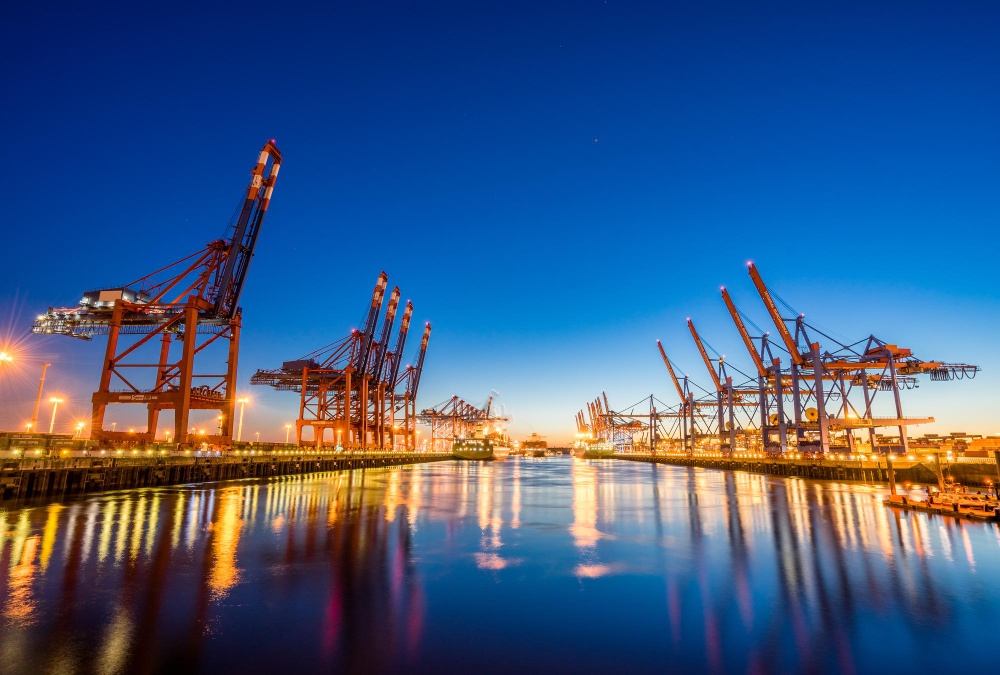
Emerging markets became the main growth point in international logistics. Driven by key sectors such as cross-border e-commerce, high-end manufacturing, and fresh produce trade, the volume of international air cargo and mail transportation in civil aviation increased by over 20% in October. From January to October, the China-Europe and China-Central Asia freight trains made a cumulative total of 28,000 trips, a year-on-year increase of 7.8%; port container throughput increased by 6.4% year-on-year, with some capacity showing a trend of shifting towards emerging markets like Southeast Asia.
Profit Levels of Key Logistics Enterprises Remain Basically Stable
As policy effects manifest in the logistics sector, and influenced by both supply-demand structure and policy adjustments, prices in some sub-sectors have rebounded, and the operating income of key logistics enterprises maintained stable growth.
From January to October, the logistics business revenue of key logistics enterprises increased by 4.4% year-on-year, with the growth rate remaining basically stable for three consecutive months.
Meanwhile, logistics enterprises enhanced their profitability and continued to advance cost control. The cost per 100 yuan of logistics business revenue for key logistics enterprises was 95.8 yuan, a decrease of 0.2 yuan compared to the same period last year. The profit margin on revenue remained at 3.3%, basically flat with the first three quarters.
Structurally, a trend of differentiation among enterprises of different sizes has emerged: the growth rate of logistics business revenue for large enterprises remained in the range of 5% to 6%, while for small and medium-sized enterprises it was less than 3%. This indicates that while the operations of micro-level logistics entities are generally stable, structural adjustments are continuously deepening.
(CCTV Reporter Cao Dan)