Abstract: The 83rd session of the International Maritime Organization’s Marine Environment Protection Committee approved the draft IMO Net-Zero Framework regulations. To clarify its impact on the future development of shipping companies, this paper analyzes the main content of the draft, studies the logic and mechanism behind the rules, and then proposes short-term, medium-term, and long-term strategic suggestions based on the actual situation of shipping companies, providing practical references for them.
Keywords: Net-Zero Framework; EU Regulations; Alternative Fuels; Greenhouse Gas Fuel Intensity
The 83rd session of the International Maritime Organization (IMO) Marine Environment Protection Committee (MEPC 83) was held from April 7 to 11, 2025, at the IMO headquarters in London. One of its core outcomes was the approval of the draft amendments to MARPOL Annex VI concerning the “IMO Net-Zero Framework” (hereinafter referred to as the Net-Zero Framework), [1] introducing dual technical and economic measures to promote the implementation of mid-term measures for greenhouse gas emission reduction in the shipping industry. This article will discuss the main content of the Net-Zero Framework, analyze its impact on shipping companies, and propose measures and suggestions.
I. Main Content of the Net-Zero Framework
The effective date of the Net-Zero Framework (IMO Net-Zero Framework) is March 1, 2027, with the compliance implementation period starting from January 1, 2028. It applies to ships of 5,000 gross tonnage and above, excluding ships engaged solely in domestic voyages, non-mechanically propelled ships, offshore platforms, and semi-submersible ships (subject to review after 5 years). The main content of the Net-Zero Framework includes:
1. Stipulated Annual Two-Tier Compliance Targets
Using the 2008 global fleet average fuel greenhouse gas intensity of 93.3 grams of CO2 equivalent per megajoule (/MJ) as the baseline value, it sets a baseline target and a direct compliance target with annual reduction rates starting from 2028. The reduction rates for 2028–2035 are shown in Table 1. The reduction rates for 2036–2040 will be determined before 2032, with the goal that the baseline target reduction rate in 2040 is 65% of the baseline value.
Table 1 Reduction Rates for 2028–2035
2. Stipulated Ship Compliance Mechanism
Introduces the ship’s annual Greenhouse Gas Fuel Intensity (GFI), representing the lifecycle greenhouse gas emissions per unit of energy used by the ship, measured in /MJ. The lifecycle greenhouse gas emissions of the fuel are calculated from the production source wellhead to the final combustion wake (Well-to-Wake, WtW). If a ship’s annual GFI is below the baseline target for that year but above the direct compliance target, it generates a Tier 1 compliance deficit. The portion exceeding the baseline target generates a Tier 2 compliance deficit. For Tier 1 compliance deficits, Tier 1 Remedial Units (Tier 1 RU) must be purchased. For Tier 2 compliance deficits, Tier 2 Remedial Units (Tier 2 RU) can be purchased, or Surplus Units (SU) can be used for offset. The price for Tier 1 RU from 2028–2030 is 100 /tCO2eq, and for Tier 2 RU is 380 /tCO2eq. Prices from 2031 onwards will be determined before January 2028. When a ship’s annual GFI is below the direct compliance target, the ship obtains SUs. SUs can be stored for two years or traded on the market but cannot be used to offset Tier 1 deficits. The ship compliance mechanism under the Net-Zero Framework is shown in Figure 1.
Figure 1 Ship Compliance Mechanism under the Net-Zero Framework
3. Establishment of Sustainable Fuel Certification Schemes
IMO will establish a set of Sustainable Fuel Certification Schemes (SFCS) under the Net-Zero Framework to ensure that the fuels used by ships meet greenhouse gas emission intensity and sustainability requirements. SFCS involve third-party certification bodies certifying multiple sustainability indicators of the fuel, such as greenhouse gas emission factors, carbon source, and /energy source. All fuels must be accompanied by a Fuel Lifecycle Label (FLL), recording its GFI and other sustainability attributes, and linked to the Bunker Delivery Note and other relevant documents. Specific details need further development and may require revisions to the “2024 Guidelines on Life Cycle GHG Intensity of Marine Fuels” (2024 LCA Guidelines). IMO will publish the first list of recognized SFCS before March 1, 2027.
4. Establishment of the IMO GFI Registry Mechanism
IMO will establish a global database to record ship GFI data, compliance status, SU and Remedial Unit (RU) transactions, and other information, ensuring transparency and traceability of ship greenhouse gas emission data to support the implementation of the Net-Zero Framework. Applicable ships of 5,000 gross tonnage and above must complete the opening of an IMO GFI Registry account before October 2027 and pay an annual account management fee by June 30 each year starting from 2028. Specific details will be further developed by IMO.
5. Establishment of ZNZs Incentive Mechanism
ZNZs (Zero or Near-Zero GHG Emission Technologies, Fuels, /or Energy Sources) refer to zero or near-zero greenhouse gas emission technologies, fuels, /or energy sources. The Net-Zero Framework stipulates that the condition for a ship using ZNZs to receive incentives is that its annual GFI does not exceed a specific threshold: 19 /MJ before December 31, 2034, and 14 /MJ from 2035 onwards. The specific incentive methods and ZNZs certification criteria will be determined before March 1, 2027.
6. Establishment of the Net-Zero Fund
IMO will establish the IMO Net-Zero Fund, aiming to raise funds through a carbon pricing mechanism to promote greenhouse gas emission reduction in the shipping industry. Funds primarily come from the proceeds of ships purchasing Tier 1 RU and Tier 2 RU. The Net-Zero Fund is mainly used to reward ships that perform below the ZNZs threshold, support research & development and infrastructure, fund maritime personnel training in developing countries, and compensate for the negative economic impacts of increased import costs for food, energy, etc., on the most vulnerable countries caused by freight rate increases due to shipping emission reduction measures.
II. Impact Analysis on Shipping Companies
(I) Overlap of the Net-Zero Framework and EU Regulations
The European Union Emission Trading Scheme (EU ETS) and the FuelEU Maritime Regulation (hereinafter referred to as FuelEU) only apply to ships operating on EU voyages and are independent of the MARPOL Convention. EU ETS requires the surrender of carbon allowances (EUA) for emissions from EU voyages in 2024 by September 30, 2025, while FuelEU requires the surrender of penalties for the ship’s fuel GFI on EU voyages in 2025 by June 30, 2026. After the Net-Zero Framework takes effect, starting from the first reporting period in 2028, ships will face dual compliance requirements from both IMO and the EU. It is important to note:
(1) Even if a ship has already paid EUAs and penalties for its EU voyages, it must still pay the compliance deficit RUs for those same EU voyages to IMO. The reasonableness of this repeated imposition of compliance fees on the same ship is debatable.
(2) Both the Net-Zero Framework and FuelEU set compliance baselines based on the ship’s annual GFI, but the calculation formulas, parameter selections, and baseline values differ, and the annual compliance baseline targets are also different, as shown in Figure 2. It can be seen that the compliance standards of the Net-Zero Framework are stricter than those of FuelEU.
Figure 2 Comparison of Compliance Baselines between the Net-Zero Framework and FuelEU
(3) EU ETS began its first phase as early as 2005 and included the shipping industry starting in 2024 [2-3]. As long as a ship operates on EU voyages, its emissions must be covered by surrendering EUAs, regardless of whether its voyage GFI results in a penalty or generates a surplus according to FuelEU regulations. Figure 3 shows a partial screenshot of the emission report for one EU voyage of a certain ship, clearly indicating: the EUAs required for this voyage are 2,105.59, but due to the use of LNG fuel with a GFI below the target value, the FuelEU compliance surplus generated is as high as 512,000 euros.
Figure 3 Emission report for a specific EU voyage
(II) Overlay of the Net Zero Framework and Carbon Intensity Indicator
MARPOL Annex VI also stipulates the Energy Efficiency Design Index (EEDI) for new ships and the Energy Efficiency Existing Ship Index (EEXI), establishing rules and compliance thresholds for the energy efficiency assessment of newbuilds and operational ships from a technical perspective. After 2023, the Carbon Intensity Indicator (CII) for ships is added, which combines ship energy consumption, CO2 emissions from different fuels, and ship operational status to rate the annual CII of ships and record it in the Ship Energy Efficiency Management Plan (SEEMP), aiming to improve ship operational efficiency and reduce carbon emissions. The Net Zero Framework, however, is the first to combine emission compliance requirements and greenhouse gas pricing across the entire industry sector, directly imposing fees on ships that exceed greenhouse gas emission standards based on the annual GFI value. In the future, relevant entities in the shipping industry will face multiple compliance requirements from the IMO regarding technical, operational, and economic measures. Under the combined effect of short-term and mid-term measures, the market demand for older ships is accelerating its contraction, and the phase-out mechanism is being strengthened. For the shipping industry, as a mid-term measure, the Net Zero Framework basically does not affect purely technical indicators like the EEDI for newbuilds and the EEXI for operational ships, but its impact on the CII must be noted: previously, shipowners had the incentive to invest in innovation or technological upgrades for existing ships to improve their CII rating, promoting continuous progress in ship-centric decarbonization technologies; after the Net Zero Framework introduces economic measures, shipowners will direct funds towards fuels that can reduce the annual ship GFI to effectively reduce short-term compliance deficits. This will lead to a shift in technological innovation towards being centered on fuel GFI, deviating from the core theme of shipping technological innovation.
(III) Fuel Choices
1. Fossil and Non-Fossil Fuels
Referring to the fuel list and fuel pathway codes provided in the LCA guidelines supporting the mid-term measures, fuels classified as fossil based on the nature of the carbon source mainly include /high-sulfur fuel oil and /heavy diesel oil (MDO) sourced from crude oil, LNG sourced from natural gas, and methanol, ammonia, and hydrogen sourced from natural gas or coal, among others. The emission factors for fossil fuels will be given as default values, leaving no room for GFI value reduction, making it only a matter of time before compliance deficits occur.
Non-fossil fuels require feedstocks from biomass or renewable sources, carbon sources from bio-based or directly captured CO2, and production processes using renewable electricity. Their types include biodiesel, renewable methanol, renewable ammonia, and hydrogen, among others. Compared to fossil fuels, the greatest advantage of non-fossil fuels is that their sustainably certified GFI can be lower than the direct compliance target, allowing them to avoid compliance deficits or even receive rewards. It is important to note that regardless of whether a fuel is classified as fossil or non-fossil, its chemical composition and combustion reaction equations are essentially the same. Therefore, as the purchasers and users of fuel, shipping companies are primarily concerned with the fuel sustainability certification certificate provided along with the fuel supply order. This certificate currently mainly refers to the EU-authorized International Sustainability and Carbon Certification (ISCC), and in the future, the IMO-recognized SFCS certificate will be added.
2. Biofuels
Biofuels are considered drop-in fuels, meaning they can be used directly without replacing the ship’s main engine and generators, posing no major technical obstacles. The blending ratio of the core feedstock, pure biomass diesel, with low-sulfur fuel oil can be flexibly chosen. For example, using a certain quantity of B24 biofuel could allow a specific ship to meet the compliance target before a certain year. To avoid deficits thereafter, one can either choose higher proportion blends like B30 or B50 biofuel to directly meet the compliance target, or flexibly control the blend to stay below the baseline target value, avoiding the purchase of expensive secondary remedies. Therefore, in the short term, using biofuels can provide shipping companies with a technically reliable and economically flexible solution for compliance. However, as the reduction factor for the compliance baseline target increases, it must be combined with other effective measures.
3. Alternative Fuels
(1) LNG. LNG derived from natural gas is a fossil fuel, with a GFI value of 70-80 /MJ. It is predicted to be directly compliant until 2030, with primary compliance deficits starting in 2031, and secondary compliance deficits starting in 2035, after which compliance costs gradually increase. Methane produced via power-to-X or from biomass feedstocks is a non-fossil fuel. However, the energy consumption and emissions from the liquefaction and storage processes required to convert it from gaseous to liquid LNG must be calculated. Therefore, whether the GFI of e-LNG or bio-LNG meets compliance targets will depend on the sustainable certification results. LNG carriers using boil-off gas from cargo tanks as fuel will also face compliance deficits. Since it is almost impossible for LNG carriers to choose other fuels, shipowners face a “rigid” compliance cost under the Net Zero Framework. Methane slip will impact the default emission value; for example, Otto-cycle low-speed engines have a mass slip of 1.7%, and medium-speed engines have a mass slip of 3.1%. The MEPC.402(83) resolution adopted at MEPC 83 supports real-world measurement of methane slip, the results of which may further affect the GFI value of LNG fuel.
(2) Methanol. Methanol produced from coal and natural gas is a fossil fuel, also known as grey methanol, with a GFI value of about 100 /MJ or higher. Renewable methanol is primarily produced through biomass and power-to-X fuel pathways and is a non-fossil fuel. Its GFI value is related to its feedstock, production process, electricity source, etc., and must be sustainably certified. According to the EU Renewable Energy Directives RED II and RED III, the GFI value of biofuels must be at least 65% lower than the fossil fuel GFI reference value (approximately 94 /MJ), and at least 70% lower for biofuels of non-biological origin (RFNBOs). This means that to meet the EU “green methanol” standard, biomass methanol must have a GFI value below 32.9 /MJ, and e-methanol must have a GFI value below 28.2 /MJ.
(3) Ammonia Fuel. Ammonia produced from coal and natural gas is a fossil fuel, also known as grey ammonia, with a GFI value exceeding 130 /MJ. E-ammonia is a renewable fuel. According to EU regulations, its GFI value must be below 28.2 /MJ to meet the “green ammonia” standard. Another important note: although ammonia is often considered a zero-carbon concept fuel, the combustion of ammonia in marine internal combustion engines releases nitrous oxide (N2O), which has a greenhouse gas effect 273-298 times that of CO2. MEPC 83 has adopted guidelines for real-world N2O slip detection to more accurately calculate the GFI value of ammonia fuel.
(4) Hydrogen Fuel. Hydrogen produced from coal and natural gas is a fossil fuel. Although it produces no greenhouse gases upon combustion, its GFI value, calculated using a lifecycle assessment method, remains as high as 100-120 /MJ. Renewable hydrogen uses water as a feedstock and is produced using renewable electricity. According to EU regulations, its GFI value, after sustainable certification, must be below 28.2 /MJ to qualify as “green hydrogen”.
After the implementation of the Net Zero Framework, shipping companies have more fuel options. When calculating the total cost, multiple factors must be weighed, including the market price of the fuel, consumption (related to calorific value), compliance cost or surplus (related to GFI), etc., for a comprehensive assessment. The lower calorific value, GFI value, and domestic market reference prices for common fuels are shown in Table 2.
Table 2 Lower calorific value, GFI value, and domestic market reference price of common fuels
(IV) Supporting Guidelines and Guidance
IMO will revise and develop a series of technical guidelines and guidance to form a complete regulatory system, ensuring the effective implementation and enforcement of the net-zero framework. Documents to be revised include the Procedures for Port State Control associated with the relevant clauses of MARPOL Annex VI, the Guidelines for the Ship Energy Efficiency Management Plan (SEEMP), the Interim Guidelines on Biofuels, the LCA Guidelines, etc. The documents that need to be newly created are those supporting the new clauses in Chapter 5 of MARPOL Annex VI, including the GFI Calculation Guidelines, Sustainable Fuel Certification Scheme Guidelines, GFI Compliance Guidelines, GFI Data /Verification Guidelines (MRV), GFI Registry Platform and Ship Account Guidelines, ZNZs Incentive Guidelines, Net-Zero Fund Management Rules, etc. These supporting documents will all be successively initiated for development after the formal adoption of the net-zero framework. They are directly related to the specific operations and strategies of shipping companies for future compliance, and their content and drafting progress should be highly prioritized.
III. Strategic Recommendations for Shipping Companies
(I) Short-term Strategies
The net-zero framework is a mandatory rule incorporated into MARPOL Annex VI and will have a profound impact on shipping companies and even the entire shipping-related industry chain. Shipping companies must attach great importance to it, organize professional teams to study and interpret the rules and supporting technical documents, especially based on their own realities, comprehensively examine the impact of the new rules on their business areas from the perspective of high-quality development, focus on core issues, accelerate the formation of strategic judgment capabilities suitable for their own development path, formulate correct strategies, and promote implementation. Based on the above analysis, the short-term strategies of shipping companies can focus on the following aspects:
1. Actively conduct biofuel trials for the fleet
Although conducting biofuel trials for the fleet will increase fuel costs in the short term, it can achieve multiple effects, including: ① Accumulating practical experience in using biofuels for the fleet, improving operational and safety risk assessments, and establishing a normalized, systematic, and highly reliable mechanism; ② Establishing and optimizing a biofuel supply network that meets operational needs, understanding price patterns, and enhancing bargaining power; ③ Improving the CII rating of specific ships; ④ Improving the compliance deficit of ships or fleets in the EU; ⑤ Refining fuel cost calculation models and management tools through actual data, providing effective reference for subsequent longer-cycle and larger-scale decision-making.
2. Actively participate in relevant international proposals or rule revisions
The net-zero framework will be adopted at MEPC 82 in October 2025, and the detailed implementation guidelines will be approved at the MEPC 84 meeting in spring 2026. Shipping companies should intensify research and track the technology and dynamics in areas such as the accounting and certification of ship fuel GFI, the determination of the SFCS mechanism, and the revision of the LCA Guidelines, strengthen cooperation with institutions and units such as maritime administrations, classification societies, and maritime universities, actively participate in the formulation or revision of relevant rules, and strive for more initiative and voice for domestic shipping enterprises in the fields of net-zero framework implementation rules and certification mechanisms.
3. Develop decision-support models or management tools
Shipping companies should actively use digital and intelligent means, embed algorithm deconstruction of the latest IMO conventions and EU regulations, and develop calculation tools and decision-support models suitable for the fleet. For specific ships or routes, comprehensively consider route parameters, fuel costs, compliance costs, and other variable cost impacts to dynamically and intelligently generate the optimal fuel strategy for a future year or voyage, and refine it in operational practice.
(II) Medium-term Strategies
Considering the company’s own development strategy and plan for the next 5 years or longer, medium-term strategies should consider planning and layout in the following aspects.
1. Demonstration of compliance pathways
Future compliance pathways will be diverse, dynamic, and even personalized. It must be acknowledged that fuel selection faces the fact of an “impossible triangle,” meaning no single fuel can simultaneously possess sufficiently low GFI value (green attribute), guaranteed continuous and reliable supply chain (availability attribute), and competitive price (cost attribute) – these three key elements. In a transparent market with full competition, the result after博弈 will tend towards a certain balance, meaning that regardless of the fuel used, the total cost for shipping companies will be basically equal: the cost saved when purchasing fuel will be transferred to covering the fuel GFI deficit, and the compliance surplus saved or rewards obtained through fuel GFI will be offset by the high price of fuel procurement. Shipping companies should, based on the actual situation of their own fleet, conduct comprehensive demonstrations on various possible combinations of fuels and technologies, such as using fuel oil as a base, combined with alternative fuels like LNG, methanol, ammonia, etc., plus technical means like onboard carbon capture.
It should be noted that there are many permutations and combinations of these elements. If the boundary parameters for the demonstration are inaccurate or too coarse, the conclusions drawn may be vastly different from reality and even mislead decision-making. Therefore, during the demonstration, parameters such as the GFI of various fuels, cost price, initial equipment investment, and operational maintenance should be considered meticulously. The more rigorous the design of the demonstration model architecture, the more reliable the results, and the greater the value for providing reference for medium-term decisions.
2. Considerations for ship type strategy
When formulating the fleet development strategy for the next 5 years, shipping companies must carefully consider how to choose ship types so that newly invested ships in the future can both meet the development needs of fleet renewal and balance the cost pressures of multiple compliances such as IMO and EU. The most important strategy among them is still how to choose alternative fuels for newbuildings, paying attention to fuel incompatibility, the technical reliability of dual-fuel internal combustion engines, and the uncertainty of key equipment.
(1) Fuel incompatibility. Once a marine main engine chooses one among alternative fuels like LNG, methanol, or ammonia, it cannot be switched to another alternative fuel during the entire life cycle of the ship. Although, in theory, power generation units can achieve multi-source power configuration, such as installing power generation units using different fuels on the same ship, the design of the fuel storage and supply system would be very complex, with high initial investment and maintenance costs.
(2) Technical reliability of dual-fuel internal combustion engines. After long technological updates and iterations, traditional diesel engines, whether two-stroke or four-stroke, have become very mature in terms of safety, reliability, and energy consumption indicators. Among dual-fuel engine types, currently only LNG dual-fuel technology is relatively mature and reliable, having been practiced in LNG fleets and some container ship operations; very few methanol dual-fuel main engines have been put into use, and the technology is still in the stage of trial, error, and correction; ammonia dual-fuel main engines are even fewer, and related norms and rules are not yet perfect, with risk control effects yet to be tested.
(3) Uncertainty of key equipment. In October 2024, the German engine giant MAN (now renamed Everllence) suddenly announced the cessation of sales of its LNG dual-fuel low-pressure two-stroke ME-GA engine. The reason behind this event is directly related to technical defects, causing shipowners and shipyards that had already chosen this engine type to face potential technical, economic, and other disputes. Uncertainty issues are by no means isolated cases. In the future, when shipowners choose new types of dual-fuel main engines, they must have the mental preparation and bottom-line thinking for “stepping into pitfalls” and formulate risk response plans.
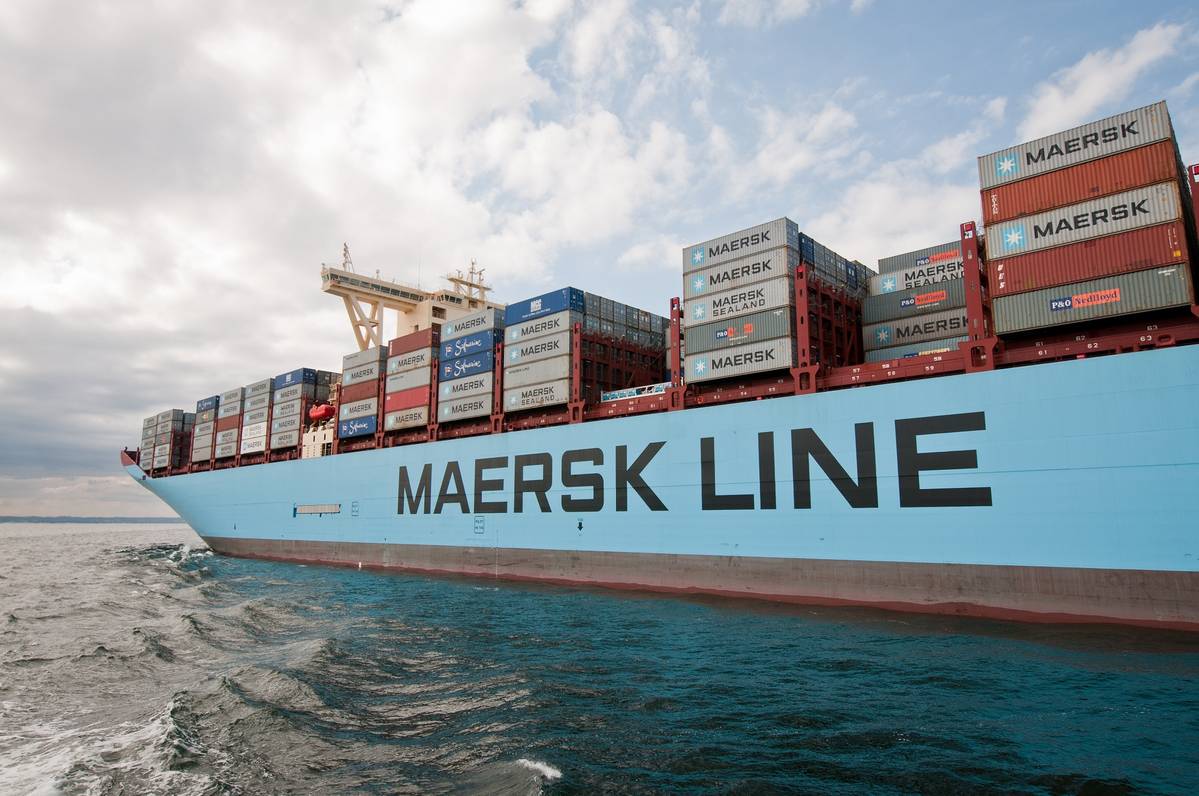
In summary, the proportion of orders for alternative fuel ship types should be gradually increased based on ship type characteristics and technical reliability, and diversified choices should be made among the three alternative fuels of LNG, methanol, and ammonia, avoiding betting solely on one fuel. In terms of technical maturity and medium-term (before 2035) comprehensive compliance costs, LNG dual-fuel ship types may be the most ideal choice, followed by methanol dual-fuel, and then ammonia dual-fuel. According to a report on global new shipbuilding orders in the first half of 2025 provided by the American Bureau of Shipping (ABS), after excluding the LNG and LPG fleets, alternative fuel new ship orders accounted for 43% of global new ship orders by gross tonnage, among which LNG dual-fuel ship orders accounted for 65%, methanol dual-fuel ship orders accounted for 29%, while ammonia dual-fuel ships only had a small number of orders in bulk carriers, tankers, and tugs. International shipping giants like Maersk and CMA CGM have adopted a strategy of “walking on two legs” using both LNG and methanol as alternative fuels. This approach is worthy of reference by other shipping companies.
(III) Long-term Strategies
Long-term strategies include gradually increasing the proportion of zero-carbon or near-zero-carbon fuels used by the fleet, or achieving the “de-internal combustion engine” of ship power through revolutionary technologies, such as pure battery power, controllable nuclear power, etc., to completely solve the problem of greenhouse gas emissions from ships. At the same time, with the maturity of related technologies and the industry chain for onboard carbon capture and storage, the future configuration of carbon capture devices on ships may become as common as scrubbers are today.
In terms of fuels, shipping companies should actively embrace the application of synthetic fuels, proactively participate in the layout of the biomass fuel and electro-fuel industry chains, seek out and select enterprises with core technologies and sustainable production capabilities for cooperation based on their own development needs, deeply bind with the supply chain of new marine fuels, explore new tracks for fuels in future competition, and gain new opportunities and new momentum.
For technologies, fuels, and new energy fields related to ZNZs, in addition to continuously paying attention to the certification results of sustainable indicators for synthetic fuels, attention should also be paid to the research, development, and application of new technologies and new energies in related fields, mastering technological development trends, improving the ability to assess and study future technological development directions, and seizing opportunities to make layouts in the ZNZs field.
IV. Conclusion
The net-zero framework will have a profound impact on shipping companies. The long-awaited mid-term measures have finally landed. Technical and economic elements, including the global greenhouse gas pricing mechanism, will work together with the already implemented short-term measures to propel the entire shipping industry towards the long-term goal of net-zero emissions. On the one hand, almost all shipowners will pay compliance costs for emissions, and LNG shipowners will also be forced to adapt to the fall in identity from “clean energy transporters” to “rigid users of fossil fuels.” On the other hand, biofuels are facing major opportunities, the development of non-fossil synthetic fuels is booming, and the long-term interests of shipping companies are extending towards the new alternative fuel industry chain. At the same time, the “impossible triangle” of new fuels urgently needs to be solved through the integration of technological innovation and industrial innovation. How the SFCS mechanism for sustainable certification can be introduced as soon as possible has become the focus of博弈 among various stakeholders. In short, shipping companies are already facing a complex situation with overlapping multiple elements such as costs, fuel selection, and ship technology routes. There is no single optimal solution for the medium- and long-term development of the future fleet, nor can they bet solely on one alternative fuel. This complex uncertainty breeds huge opportunities for future innovation, waiting for shipping enterprises and related industry chains to explore and realize.
References:
[1] Xue Shuye. Analysis of the Draft “IMO Net-Zero Framework Rules”[J]. World Shipping, 2025(6):21-29.
[2] Peng Xu. Comparison of Multi-national Carbon Emission Trading Mechanisms under the Background of Shipping GHG Emission Reduction and China’s Countermeasures[J]. World Shipping, 2020(5):1-5.
[3] Chang Shengdi, Lin Zhengjin, Sun Yonggang, et al. Application Path of Marine Alternative Fuels Based on EU Shipping Market Mechanism[J]. Journal of Shanghai Maritime University, 2025(1):112-119.
Author Profiles:
Song Yuan, Senior Engineer.
Chen Chao, Engineer.
This article is published in “World Shipping” Issue 9, 2025. Reproduction must indicate the author and original source.