Recently, Anhui’s first LNG-powered vessel adopting the “tank swap mode,” the “Yuanshun Lüdong 1,” was officially launched at the Xinfeiyang Ship Repair and Construction Co., Ltd. within the Guichi Shipbuilding Industrial Base. This marks another new breakthrough for Guichi District in the field of new energy vessel construction.
The “Yuanshun Lüdong 1” is a pure LNG-powered propulsion bulk /container ship (dual-use), with a total length of 119.8 meters, a beam of 19.4 meters, a depth of 8 meters, and a designed maximum deadweight tonnage of 11,050 tons. The vessel utilizes the tank swap mode, equipped with 2 sets of 40-foot LNG tank containers and gas supply systems jointly developed by CIMC Blue Water and Nantong CIMC Energy, subsidiaries of CIMC ENRIC. These can power the vessel’s main propulsion engine and gas-powered generators for approximately 65 hours, enabling a range of over 1,100 kilometers.
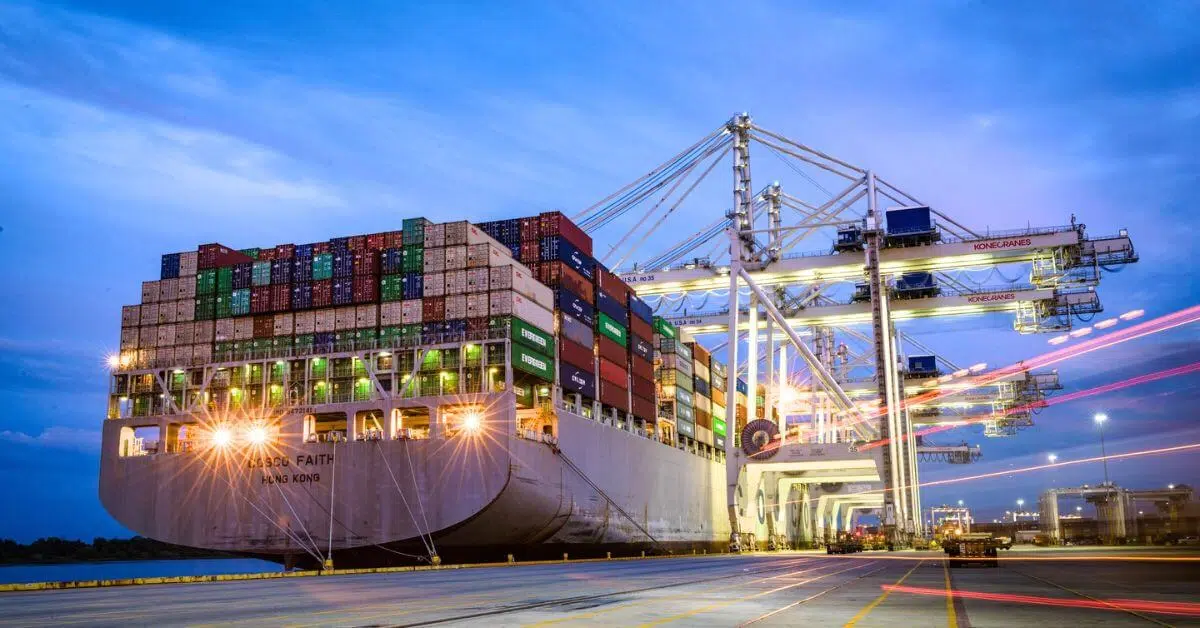
Traditional LNG-powered vessels typically use fixed storage tanks for refueling, which often involves issues such as long refueling times, limited refueling stations, and fuel boil-off. In contrast, the tank swap mode employs standardized, modular tank container designs, enabling rapid replenishment through “whole tank swapping.” When a vessel requires energy replenishment, the tank can be directly replaced using shore cranes at ordinary cargo terminals. A single tank swap takes only 15-30 minutes, which not only improves operational efficiency but also effectively reduces the risk of fuel leakage and evaporation loss, providing a convenient experience similar to the “battery swapping” for new energy vehicles.
Furthermore, the tank swap mode also excels in safety and environmental protection. The LNG tank containers used employ high-vacuum multi-layer insulation technology, which effectively reduces fuel evaporation loss. The gas supply system配套 for the “Yuanshun Lüdong 1” tank containers has passed the specification certification of the China Classification Society (CCS). Utilizing intelligent safety control, it can monitor over 30 key data points in real-time, such as tank pressure, temperature, and liquid level. In case of any abnormality, it automatically initiates interlock protection to ensure the safe operation of the vessel. Using LNG as fuel significantly reduces emissions of sulfur oxides, nitrogen oxides, and particulate matter compared to traditional marine fuels, playing a positive role in protecting the ecological environment of the Yangtze River Basin.
A responsible person from the Guichi Shipbuilding Industrial Base stated that against the backdrop of the持续推进 “Dual Carbon” goals and the deepening implementation of the “Gasification of the Yangtze” strategy, the successful launch of the “Yuanshun Lüdong 1” provides a replicable and promotable practical case for the green transformation of inland waterway shipping. Its “tank swap mode” can effectively address pain points such as the long construction cycles and limited coverage of refueling stations, offering a new path for promoting clean energy vessels.
Looking ahead, the Guichi Shipbuilding Industrial Base will seize the opportunities presented by national strategies, continue to deepen its efforts in the field of green and intelligent shipbuilding, accelerate the research, development, and manufacturing of clean power vessel types like LNG-powered ships, continue to advance in modular vessel design and intelligent construction, actively build a green ship industry chain encompassing R&D design, core supporting industries, and /testing, create a high-end shipbuilding cluster with regional influence, and contribute to accelerating the green and low-carbon transformation of Yangtze River inland waterway shipping.
It is understood that the Guichi Shipbuilding Industrial Base is one of the three major shipbuilding industrial bases along the river in Anhui Province. It has the highest concentration of shipbuilding enterprises, utilizes the longest contiguous stretch of Yangtze River shoreline, and covers the largest area among these bases. It is the largest ship repair and construction cluster upstream of Nanjing. Since its establishment in 2009, it has attracted eight ship repair and construction enterprises.
In 2024, the Guichi Shipbuilding Industrial Base has completed 36 vessel orders, with a shipbuilding completion volume of 414,800 deadweight tons, and a full-caliber统计 output value of 1.45 billion yuan. In the next step, the Guichi Shipbuilding Industrial Base will focus intently on the goal of building an “International Green Offshore Industry Cluster” and continue its efforts to promote the transformation of the shipbuilding industry towards high-end, digitalized, green, and intelligent development, contributing more to the advancement of green shipping.