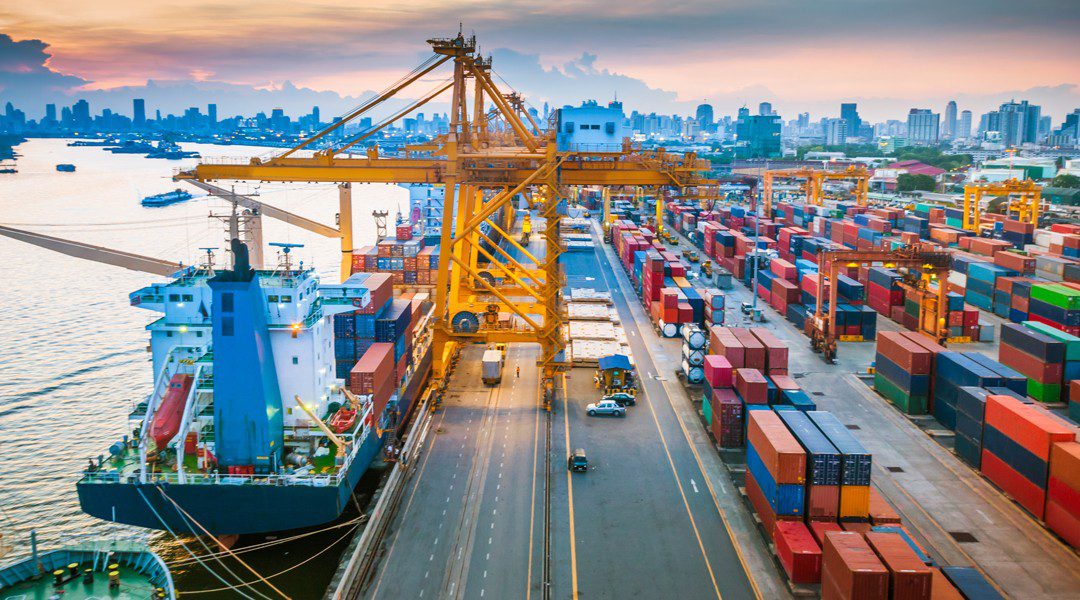
It is reported that Ports America has decided to pay the 30% tariff for the first imported Chinese-made Ship-to-Shore (STS) crane following the “new tariff policy” enacted by U.S. President Trump on April 2nd.
The terminal operator believes that, compared to reselling the equipment or placing it in bonded storage to await uncertain future changes in tariff policy, paying the tariff is currently the more preferable option.
This STS crane, manufactured by Shanghai Zhenhua Heavy Industries Co., Ltd. (ZPMC), which holds over 80% of the global market share, arrived by ship at the Port of Gulfport, Mississippi, on September 11th. The same vessel carried four other cranes manufactured by the company: two destined for the Port of Freeport, Texas, which are subject to the 30% tariff; and another two headed for Kingston, Jamaica.
Matthew Leech, CEO of Ports America, stated that this 30% tariff makes the investment “marginally viable.” Due to the tariff impact, the original price of $16 million for the equipment has increased to nearly $21 million.
Leech said the company does not plan to directly charge customers a surcharge to offset the tariff cost but will gradually absorb this expense through long-term operations.
Choosing an alternative would require offloading the idle STS crane and placing it in bonded storage, awaiting uncertain outcomes such as a U.S. Supreme Court ruling on the legality of the Trump administration’s use of the International Emergency Economic Powers Act (IEEPA) to impose tariffs, or waiting for bilateral negotiations to reach an agreement that reduces the current tariffs.
Like other U.S. port operators procuring STS cranes from China, Ports America had attempted to apply to the White House for a tariff exemption but was unsuccessful.
By choosing to receive the equipment at this time, Ports America is utilizing a policy window, putting the crane into service before potentially more unfavorable conditions arise in the future. On August 12th, the 30% U.S. tariff on China was extended by 90 days, with a new expiration date of November 10th. If not extended, the tariff rate would have risen to 145%, and it may still reach that level in the future.
Ports America stated that if the tariff policy is not extended, the company would face the choice of reselling and re-exporting the STS crane or placing it in indefinite bonded storage. Leech pointed out: “Such an outcome would not only waste valuable resources but also mean missing a significant opportunity to create real economic benefits for the Gulf Coast region and beyond.”
It is understood that the Port of Houston had proposed a retroactive exemption clause for Chinese-made STS cranes that were contracted for and under construction before December 31, 2024, but there is currently no indication that any such exemption applications have been approved.
What is certain for now is that the annual U.S. market replacement demand for 20-25 STS cranes will not be interrupted. The total number of STS cranes currently deployed at ports in the U.S. mainland and its overseas territories is approximately 450.
Comprehensively compiled by CNSS (Maritime Services Network).