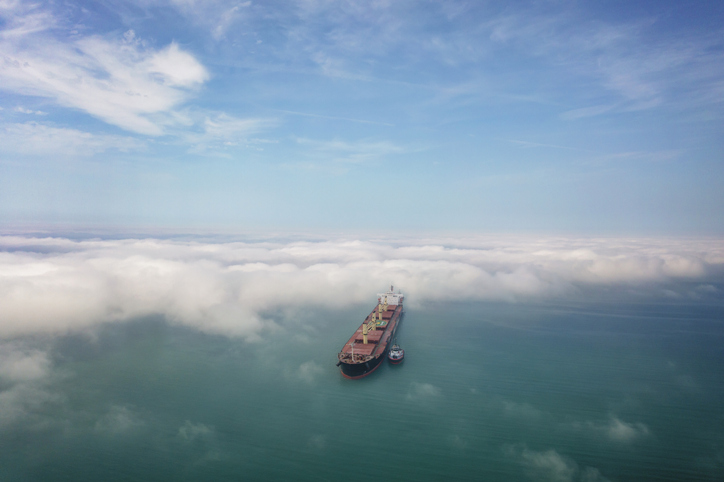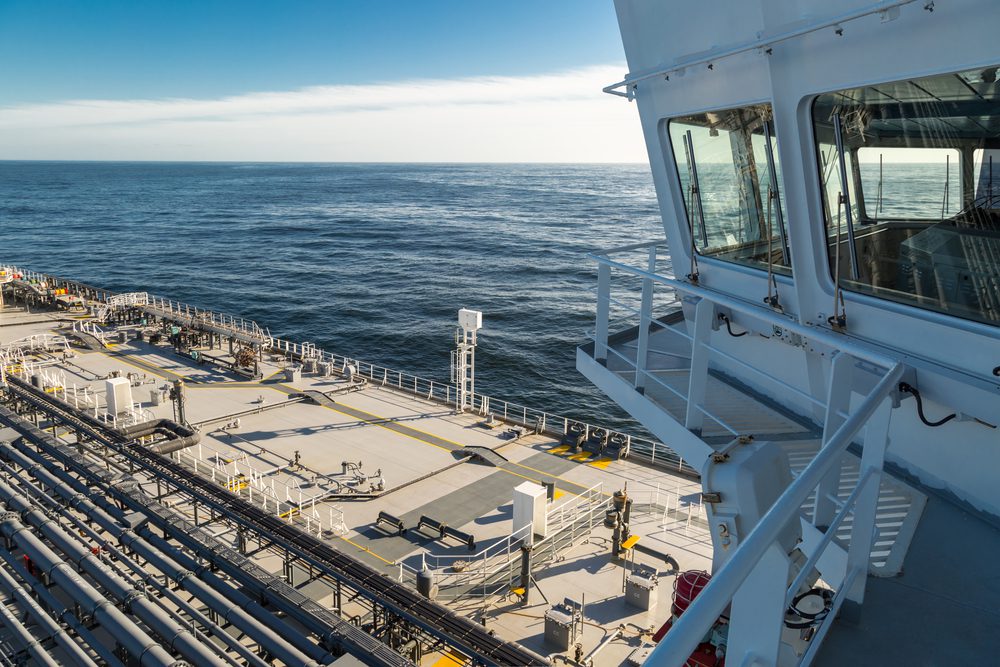
Tandanor announced the completion of the rudder blade reconstruction and the general maintenance of a bulk carrier. The shipyard in Argentina concluded a comprehensive intervention on the Bosphorus Asia, which is 177 meters in length and 28.4 in beam, and which entered after losing its rudder blade due to an impact during navigation.
The operation included the complete reconstruction of that piece, along with mechanical, boiler-making, hull cleaning, coppering, and quality control tasks.
The central focus of the work was the construction of a new rudder blade, developed by the Engineering Management from the original plans using 3D modeling. The piece, with a NACA hydrodynamic profile, was manufactured in Grade A steel, with a weight of 12 tons, 6.60 meters in height, 4.3 in length, and 830 mm in maximum thickness. Its execution allowed the ship’s maneuverability to be restored under international technical parameters.
The boiler-making area had a significant intervention. In addition to the rudder blade, a 2.5-meter section of the boom of cargo crane No. 1 was renewed in AH36 steel, including its connecting flange. The fabrication and assembly of three plugs and plug holders were also executed, the fairleads were disassembled and reinstalled, and the four blades of the propulsion propeller were completely repaired through weld deposition and grinding to recover their original geometry. Furthermore, steel renewal work was carried out on the hull and associated structure.
For its part, the Mechanics sector disassembled the fixed-pitch propeller for its repair, polishing, and balancing, and the seals of the shaft line were renewed, after machining the internal and external stern tubes, and disassembled the propeller shaft for inspection of the sleeves and cone.
The intermediate shaft and bearing were also intervened, recording the line drop at each stage. Work was also done on the sea chest grates, and the boom of crane No. 1 was repaired with the combined assistance of the ship’s cranes and shore cranes.
The quality control tasks included non-destructive testing (NDT) using ultrasound and magnetic particles on the welds of the rudder blade, casting elements, propeller, and crane boom. The dimensions of critical components were verified, and a static and rotation load test was performed on crane No. 1 afloat, with certified weights.
Hull cleaning, for its part, performed hydrojetting on the hull and rudder, cleaning of areas in ballast tanks, repainting of regulatory marks, and anti-corrosive treatment on all renewed surfaces.
Finally, Coppering performed a pneumatic leak test on the new rudder blade at 0.5 bar, guaranteeing its operability before delivery.