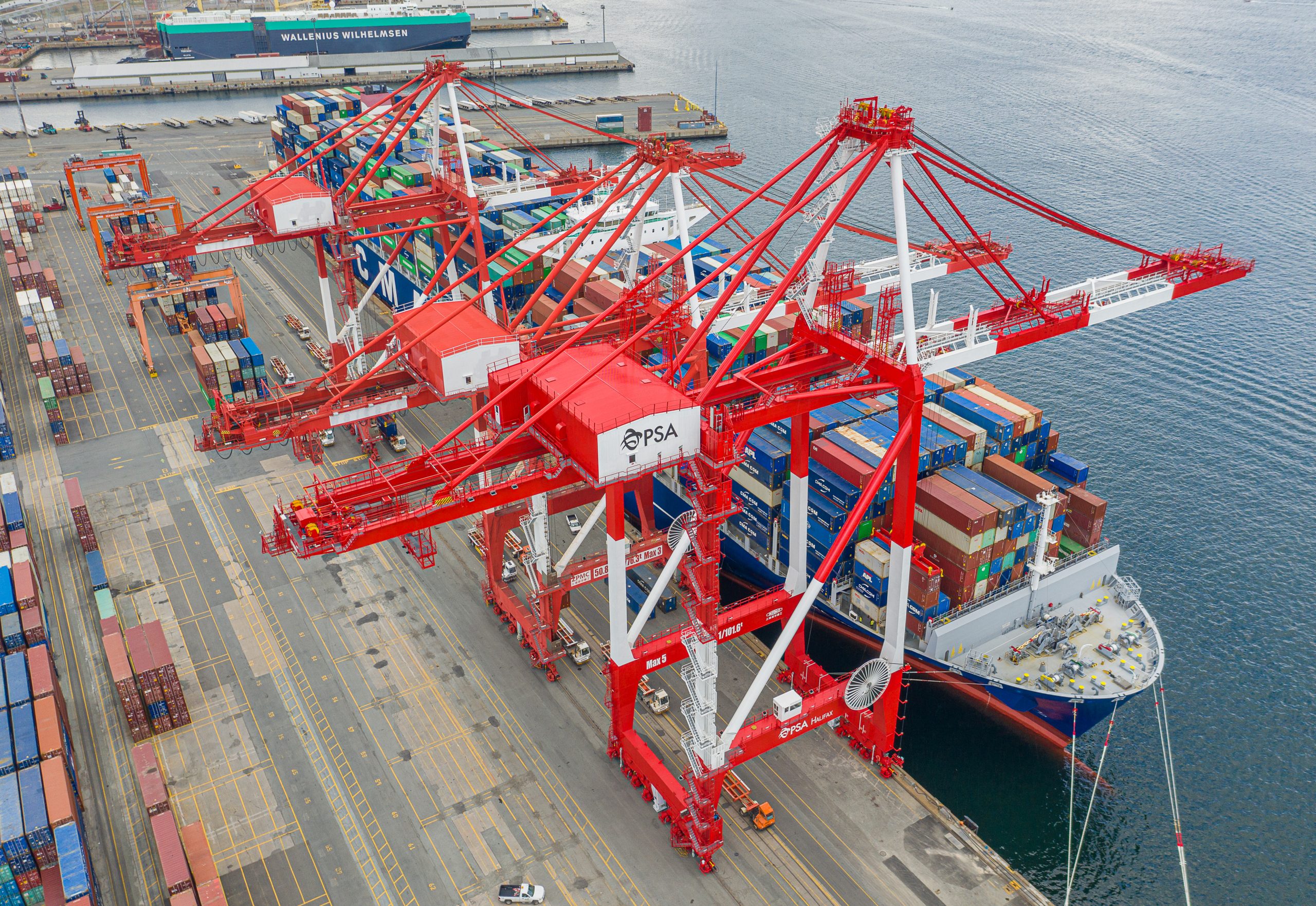
On November 14, the high-quality development on-site promotion meeting for the Phase II project of Jining Port and Shipping Liangshan Port was held at Liangshan Port. During the meeting, the Phase II project of Jining Port and Shipping Liangshan Port was launched. With a total investment of 2.9 billion yuan, the project plans to construct 7 berths, a 27.6-kilometer dedicated railway line, and supporting storage yard facilities. It is expected to commence trial operations by the end of 2026 and officially begin operations in the first quarter of 2027. As the “core project” for Jining City’s goal of building a northern inland river shipping center, the accelerated implementation of this project not only marks Jining’s port and shipping economy entering the “fast lane” of leapfrog development, but will also add a significant chapter to revitalizing the millennium-old canal and reshaping the pattern of northern inland river shipping.
Jining, possessing the unique advantages of having the longest navigable mileage and the largest transport capacity along the Beijing-Hangzhou Grand Canal, is endowed with abundant shipping resources. Liangshan Port is precisely located at the “golden intersection” of the Wa-Ri Railway and the Beijing-Hangzhou Canal. It is not only the “leading hub port” of Jining Port but also the “crucial gateway” connecting the energy-rich hinterlands of Shanxi, Shaanxi, and Inner Mongolia with the economic circles of the Yangtze River Delta and the Pearl River Delta.
Since its completion and operation in 2017, Liangshan Port has focused on bulk commodities such as coal, coke, steel, building materials, and iron ore. Through port-port linkage, port-trade linkage, port-ship linkage, and port-finance linkage, it provides customers with diversified “single-bill” integrated supply chain services including centralized procurement and distribution, joint operations and sales, and total logistics contracting. The cumulative cargo throughput has exceeded 150 million tons. The comprehensive logistics park centered around it saw its revenue surge to 17 billion yuan in 2024, and it aims for a throughput of 42 million tons and revenue of 20 billion yuan in 2025. It has already grown into a “pacesetter” among Jiangbei’s inland river ports and a “super transfer station” for bulk cargo distribution, laying a solid operational foundation and industrial support for the Phase II project.
After the completion of the Phase II project, Liangshan Port will achieve a leap in its capacity level. Its cargo throughput capacity will soar to 80 million tons, container throughput capacity will exceed 400,000 TEUs, static coal storage capacity will reach 3 million tons, and the park’s revenue is projected to reach 30 billion yuan. It is expected to become the first “100-million-ton inland river port” in Jiangbei.
Upon operation, the project will also strongly drive the development of industrial clusters in the hinterland, such as steel processing, equipment manufacturing, and logistics trade, empowering the growth of seven “10-billion-yuan-level port-proximate industrial parks.” It will promote the deep integration of the “front port – middle production – rear park” industrial layout with the “232” advantageous industrial clusters. Simultaneously, it will smooth the “Shanxi-Shaanxi-Inner Mongolia – Yangtze River Delta” major logistics corridor, significantly enhancing the distribution efficiency and radiation radius of northern inland river shipping, and injecting a “strong stimulant” into reducing costs and increasing efficiency for bulk commodity transportation.
Currently, Jining’s port and shipping development is gaining strong momentum. From January to October this year, the city’s port cargo throughput reached 96.25 million tons, and container throughput reached 403,000 TEUs, steadily ranking first in the province’s inland river ports. By the end of the year, it will officially join the ranks of 100-million-ton major ports. The advancement of the Liangshan Port Phase II project is bound to inject powerful momentum into Jining’s accelerated construction of a northern inland river shipping center that “is based on the Beijing-Hangzhou Canal, connects with the Yangtze River Delta, and radiates to the Belt and Road,” continuing to write a new chapter of “port-city symbiosis and industrial co-prosperity” along the millennium-old canal.