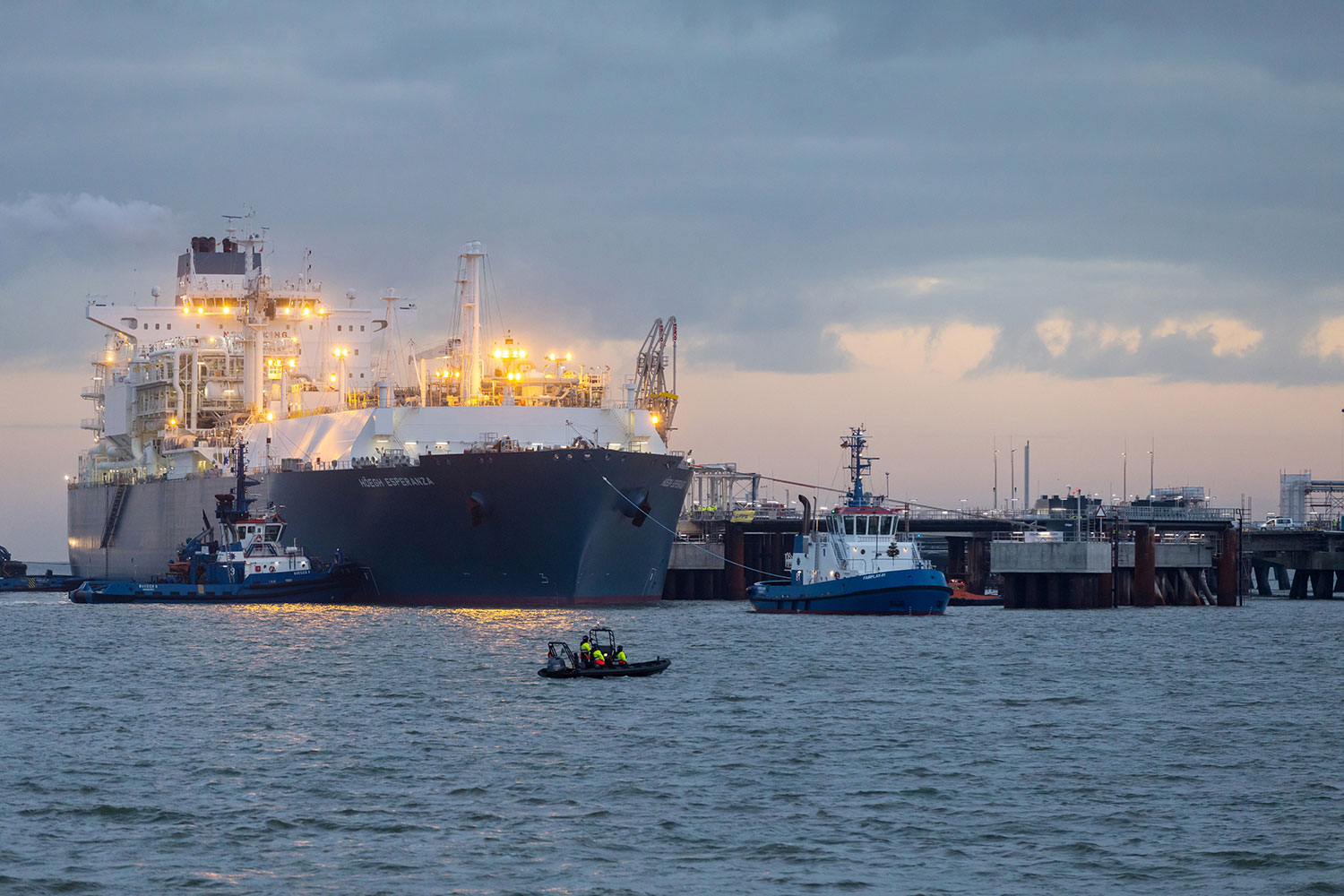
Medium-sized South Korean shipbuilders, once on the brink of collapse due to a prolonged global shipbuilding downturn, are now experiencing a full recovery.
In the first quarter of this year, four mid-sized shipbuilders—DH Shipbuilding (Daehan Shipbuilding), HJ Heavy Industries (formerly Hanjin Heavy Industries), K Shipbuilding (formerly STX Offshore & Shipbuilding), and Dae Sun Shipbuilding—all turned a profit. Notably, this marks the first time in 14 years that three of these companies (excluding Dae Sun Shipbuilding) have simultaneously achieved profitability. As the “backbone” of South Korea’s shipbuilding industry, the revival of these four firms, which collectively employ around 10,000 workers, has injected new vitality into regional economic development and the job market.
Located in Haenam County, South Jeolla Province, DH Shipbuilding currently holds orders worth approximately 3 trillion won (about $2.2 billion or 15.8 billion yuan), covering three years of workload. The shipyard is now operating at full capacity to meet delivery deadlines.
In 2024, DH Shipbuilding captured about 14% of the global market share for mid-sized tankers, ranking first worldwide, with an operating profit margin of 14%—a rare feat in the shipbuilding industry. This success stems from the company’s fully integrated in-house production system, handling everything from steel pretreatment to block fabrication without outsourcing any processes.
In Q1 2024, DH Shipbuilding reported revenue of 307.7 billion won (about 1.54 billion yuan) and operating profit of 69.7 billion won (about 350 million yuan).
K Shipbuilding, based in Jinhae District, Changwon City, South Gyeongsang Province, achieved an average operational rate of 110% in Q1, significantly higher than last year’s 93%, requiring overtime work on weekends and nights to fulfill production demands. This high operational tempo has led to a marked improvement in performance, with Q1 revenue reaching 285.6 billion won (about 1.42 billion yuan), up 22.7% year-on-year, and operating profit surging 404.9% to 12.7 billion won (about 63.36 million yuan).
K Shipbuilding’s recovery is largely driven by the booming refined oil shipping market. The prolonged Russia-Ukraine conflict has shifted oil transport from pipelines to maritime routes, driving up prices for related vessel types. To date, the company has delivered over 240 MR-type tankers. In July 2023, it delivered its first LNG dual-fuel refined oil tanker, accelerating its push into the eco-friendly ship market.
HJ Heavy Industries, located in Yeongdo District, Busan, has found a niche in South Korea’s strong military ship market in recent years. Once ranked among the world’s top six shipbuilders after acquiring the Subic Shipyard in the Philippines, the company suffered heavy losses during the 2010s shipbuilding downturn. Emerging from creditor-led management in 2021 after nearly five years, HJ Heavy Industries has refocused on military vessels and green fuel ships, targeting specialized markets where it can avoid direct competition with large shipbuilders and differentiate itself from Chinese rivals.
At the MADEX (International Maritime Defense Industry Exhibition) held in Busan in May, HJ Heavy Industries showcased products such as the large transport ships “Marado” and “Dokdo,” high-speed landing craft (LSF-II), missile patrol boats (PKG), and 3,000-ton rescue vessels, attracting interest from Middle Eastern countries like the UAE and Egypt. Some nations have already conducted on-site inspections at the Yeongdo shipyard.
In Q1, HJ Heavy Industries posted revenue of 410 billion won (about 2.05 billion yuan) and operating profit of 5.4 billion won (about 26.94 million yuan).
Dae Sun Shipbuilding, the smallest of the four, is now in its third year of restructuring. Previously focused on small and medium-sized container ships and bulk carriers, the company suffered from “excessively low-priced orders” that worsened its financial performance. It plans to complete all low-cost newbuild projects this year, accelerate operational improvements, and continue reducing losses.
In Q1, Dae Sun Shipbuilding reported revenue of 70.2 billion won (about 350 million yuan) and operating profit of 1.2 billion won (about 6 million yuan). Moving forward, the company aims to capitalize on growing U.S.-South Korea shipbuilding cooperation, targeting the naval vessel MRO (maintenance, repair, and overhaul) sector.
Industry insiders note that South Korea once had over 20 mid-sized shipbuilders, but after a brutal market downturn, only four remain: DH Shipbuilding, HJ Heavy Industries, K Shipbuilding, and Dae Sun Shipbuilding. In recent years, these firms have undergone deep restructuring, exiting the container ship market—where they struggled to compete with low-cost Chinese shipyards—and refocusing on their strengths in tankers, specialized vessels, and refined oil carriers to enhance competitiveness.
Data from South Korea’s Ministry of Trade, Industry and Energy shows that these four companies employ about 10,000 workers directly, while supporting 150,000 jobs across the supply chain, making them a critical pillar of the nation’s shipbuilding industry. Although their global market share dropped from 17% in 2007 to 4% last year, it has rebounded to 9% this year. After enduring the industry’s “winter,” these shipbuilders are now poised for new breakthroughs. DH Shipbuilding, for instance, plans to go public this year, having submitted its securities registration statement to the Financial Services Commission on June 24 to initiate an IPO on the KOSPI market, with an estimated valuation exceeding 1 trillion won (about 5.3 billion yuan).