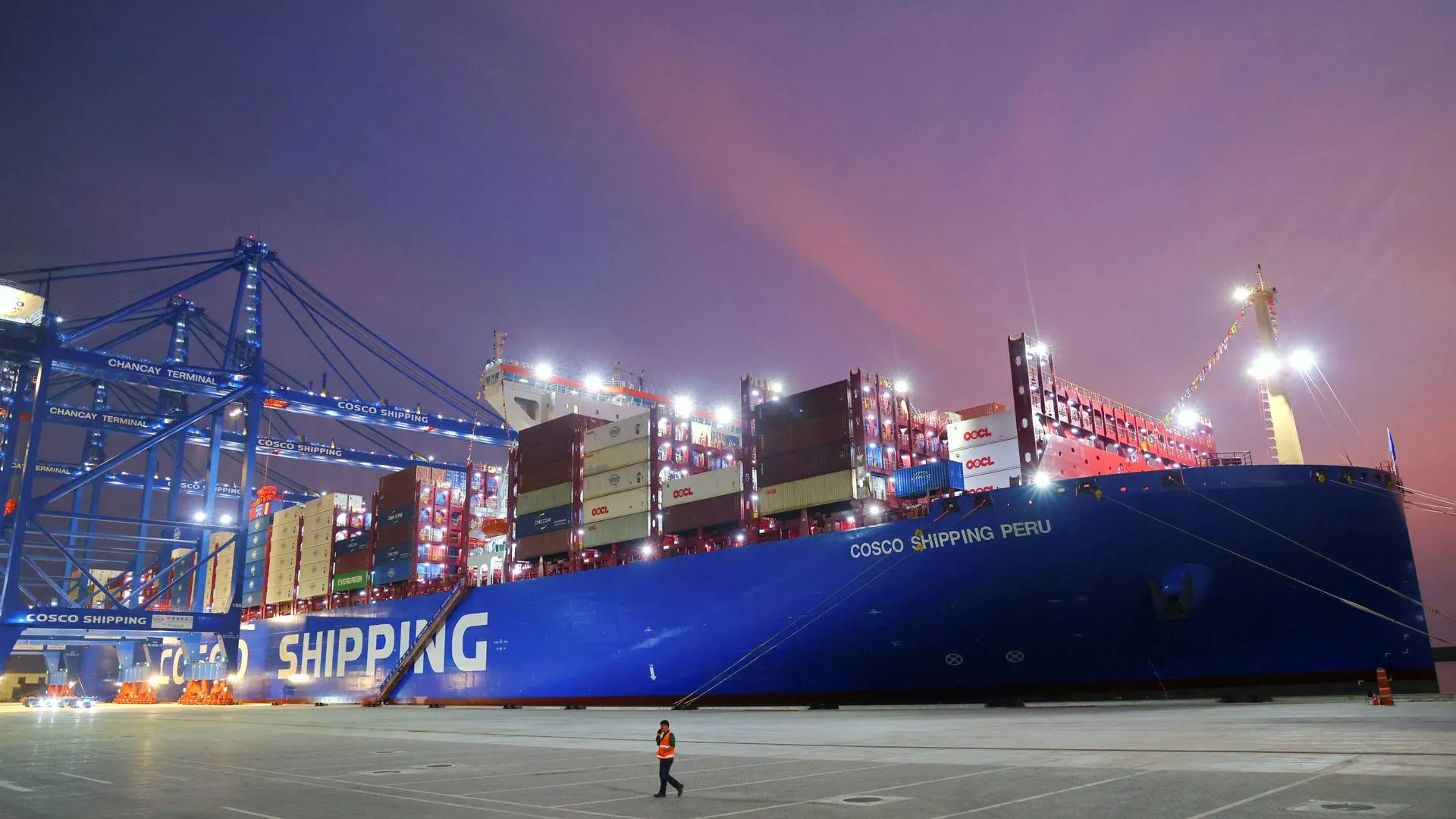
Biofuelwatch, Forest Watch Indonesia and Global Forest Coalition stressed the importance of preventing biofuels from being included as a supposed “green” alternative to fossil fuels.
International nature conservation organisations Biofuelwatch, Forest Watch Indonesia and Global Forest Coalition on Monday (20 October) urged the International Maritime Organisation (IMO) to exclude harmful biofuels from compliance with the Net-Zero Framework.
Last week, during the Extraordinary Session of the Marine Environment Protection Committee (MEPC ES.2) in London, countries decided to postpone the decision on the adoption of the Framework to 2026.
But important discussions will continue on 20 to 24 October on key details on clean energy incentives in the Framework, and the organisations stressed the importance of preventing biofuels from being included as a supposed “green” alternative to fossil fuels.
Decades of evidence show that indirect land use change (ILUC) emissions from crop-based biofuels – such as soy and oil palm – wipe out their claimed climate benefits, driving forest loss, food insecurity, and land and water grabbing as agriculture is displaced onto marginal or uncultivated land. Soy and oil palm-based biofuels can generate emissions even higher than fossil fuels.
“Biofuels are not a sustainable solution under any circumstances. In Latin America, the push for soy-based biofuels has accelerated deforestation and driven communities off their lands. If the IMO creates new demand for biofuels, it will unleash more emissions, more inequality, and more land grabbing” said Jana Uemura, Climate Campaigner at the Global Forest Coalition.
“Rejecting biofuels in the Net-Zero Framework means protecting the world’s remaining tropical forests – critical carbon sinks and biodiversity hotspots.” said Anggi Putra Prayoga, Forest Campaigner at Forest Watch Indonesia.
“The climate crisis is already real. It is crucial to take a firm stance on adopting truly zero-emission energy sources, rather than biofuels that generate new emissions through deforestation.”
“The loss of forests not only worsens emissions but also endangers the lives and rights of Indigenous peoples who depend on forest resources,” added the Forest Campaigner.
To avoid these impacts, the IMO should make sure high-ILUC fuels are excluded in the Framework. Major national and industry frameworks, including the EU’s Maritime and Aviation policies, the UK SAF Mandate, and the International Civil Aviation Authority’s CORSIA scheme, already exclude or cap high-ILUC biofuels, or include ILUC emissions in the life cycle accounting. The organizations said the IMO must not fall behind.
“We urge all IMO member governments to take a strong, united stance against the inclusion of biofuels in the Net-Zero Framework” said Pax Butchart, Biofuel Campaigner at Biofuelwatch.
“The science is clear: crop-based and waste-derived biofuels cannot deliver real emissions reductions. Governments now have a historic opportunity to steer the shipping sector toward truly clean, zero-emission solutions that protect people and the planet.”
Equally, biofuels produced from waste and residues such as used cooking oil (UCO), have limited availability and scalability, and won’t be able to satisfy the demand of international shipping in the long run.
“The IMO governments must now pursue truly sustainable alternatives, including improved energy efficiency, wind-assisted propulsion and reducing demand for maritime transport in international trade,” the organisations concluded.