As a core indicator defining the maximum loading limit of a ship, the ship’s load line directly relates to the ship’s reserve buoyancy, navigational stability, and the safety of crew life and property. It is an indispensable and important component of the ship navigation safety system.
The so-called ship load line survey refers to the comprehensive inspection, testing, and assessment conducted by survey organizations, in accordance with relevant international conventions, domestic regulations, and technical standards, on the ship’s load line marks, assigned freeboard, related structures and equipment. This ensures that the ship’s loading complies with safety requirements in different navigation zones and seasons, preventing maritime accidents such as sinking and grounding caused by overloading and insufficient freeboard at the source.
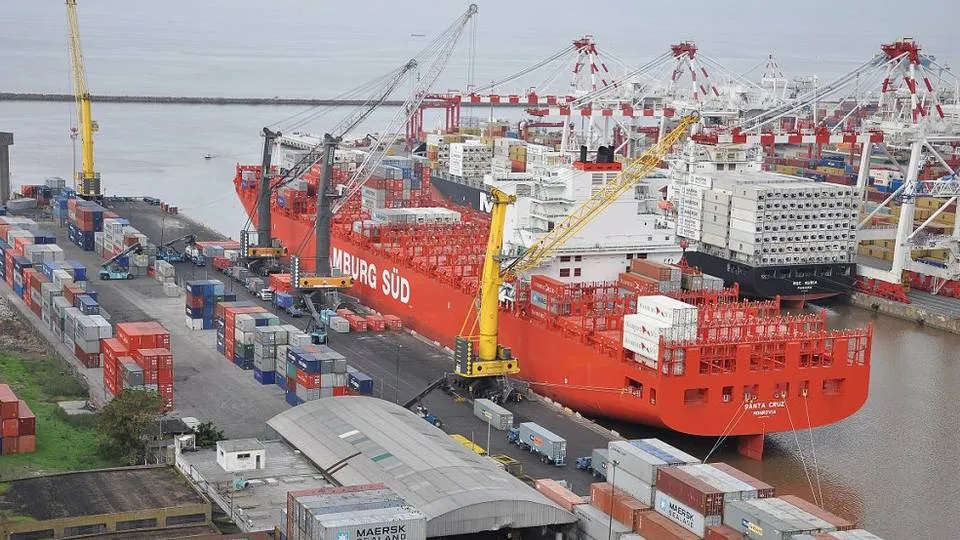
▲Source: Internet, Infringement must be deleted
The core significance of the ship load line survey lies in regulating ship loading behavior through a scientific and rigorous survey process, ensuring the ship possesses sufficient reserve buoyancy. Reserve buoyancy is the “safety margin” for a ship in emergencies such as storms, waves, or damage. The delineation and survey of the load line ensure this safety margin is not breached by clearly defining the ship’s maximum draft limits under different navigation conditions.
Historically, countless maritime accidents caused by overloading or incorrect load line markings have proven the importance of load line surveys. In the 19th century, British MP Samuel Plimsoll promoted the establishment of the load line system precisely to curb the numerous shipwreck tragedies caused by excessive loading at that time. Today, the load line is also known as the “Plimsoll mark” in commemoration of this important reform. In modern shipping, load line surveys are a crucial part of maritime supervision and a key means of implementing the ship’s primary responsibility for safe production and maintaining order in水上 traffic safety.
I. Core Basis and Standards for Load Line Surveys
Ship load line surveys are not conducted in isolation but strictly follow the dual requirements of international conventions and domestic regulations, ensuring the legality, standardization, and scientific nature of the survey work.
At the international level, the International Convention on Load Lines is the core guideline for global ship load line management, clarifying the rules for load line delineation, freeboard calculation methods, and survey requirements. At the domestic level, regulations formulated by China’s Maritime Safety Administration, such as the “Rules for the Statutory Survey of Ships and Offshore Installations” and the “Technical Rules for the Statutory Survey of Sea-going Ships Engaged in Domestic Voyages,” provide specific detailed provisions for load line surveys based on the characteristics of China’s coastal and inland river navigation, offering a clear basis for the survey of domestic voyage ships.
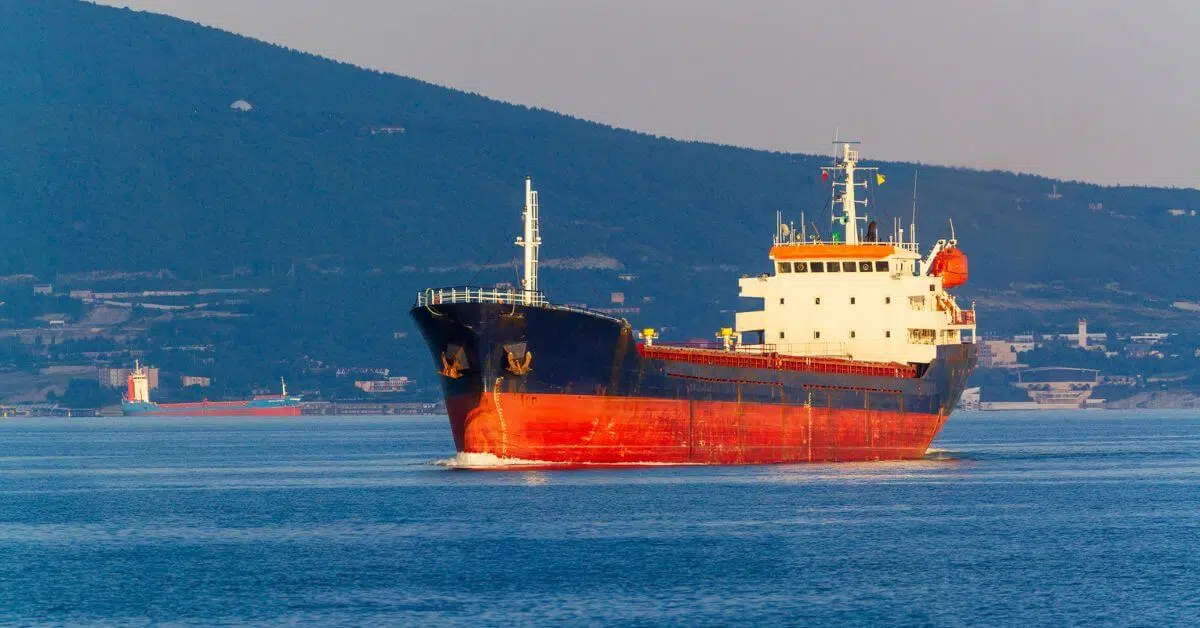
▲Source: Internet, Infringement must be deleted
The core of the survey standards revolves around “freeboard assignment” and “load line mark delineation.”
Freeboard is the vertical distance measured from the upper edge of the deck line amidships down to the upper edge of the relevant load line. It is a key indicator for measuring a ship’s reserve buoyancy. Its calculation must combine multiple parameters such as the ship’s principal dimensions, block coefficient, and navigation area to ensure the ship has sufficient safety reserve in different navigation zones and seasons.
The load line mark must be permanently delineated on the shell plating on both sides amidships. It consists of a ring with an outer diameter of 300 mm and a width of 25 mm, a horizontal line 450 mm long and 25 mm wide, and various load lines. The upper edge of the horizontal line passes through the center of the ring. The center of the circle is located at the midpoint of the ship’s length on both sides. The color of the mark must form a sharp contrast with the background color of the ship’s side to ensure clear visibility – painted with white or yellow paint on a dark background primer, and black paint on a light background primer.
Additionally, the markings for different survey organizations are clearly specified. China Classification Society uses the symbol “CS,” while other domestic ship survey organizations use the symbol “ZC.”
II. Main Content and Process of Load Line Surveys
Ship load line surveys run through the entire life cycle of a ship and are mainly divided into four types: initial survey, annual survey, periodical survey, and occasional survey. The focus of different survey types varies, but the core content revolves around the compliance of load line marks, freeboard, related structures, and equipment. The survey process is standardized and rigorous.
(I) Core Survey Content
1. Survey of Load Line Mark and Deck Line Delineation:
This is the basic step of the survey, focusing on verifying the completeness, clarity, and accuracy of the marks.
Surveyors need to confirm that both sides of the ship are delineated with the deck line and load line mark, without any missing, peeling, or corroded parts. The upper edge of the summer load line mark “X” must pass through the center of the ring. The load waterline must be delineated forward of the load line ring. The size, position, and color of the marks must comply with regulatory requirements. Issues such as incorrectly delineated marks or uncleared “remnants” of old marks must be eliminated – for example, some ships, after changing class, still retain the “W” (Winter Load Line) mark from their previous international voyage status; such situations require timely rectification.
Simultaneously, the consistency of the load line mark with the Load Line Certificate and the Freeboard Calculation Book must be checked to avoid significant deviations between the mark and the certified value.
2. Freeboard Assignment and Verification:
The assignment of freeboard must combine parameters such as the ship’s principal dimensions, structural strength, and stability. Surveyors need to refer to the Freeboard Calculation Book, measure the actual freeboard amidships on site, and confirm it is not less than the statutory minimum freeboard.
For older ships or ships that have undergone major conversions, the accuracy of the freeboard calculation must be specifically verified to avoid insufficient freeboard caused by errors in displacement calculation or deviations in principal dimension measurement – for instance, if a ship’s Freeboard Calculation Book mistakenly overestimates the displacement by 3000 tons, leading to a larger draft and smaller freeboard, such issues require recalculation and rectification.
Furthermore, based on the ship’s navigation area and seasonal division, it is necessary to confirm that the freeboard meets the corresponding requirements. For example, in China’s coastal waters north of Shantou, the summer load line applies in winter (November 1 to April 15); in coastal waters south of Shantou, the load line needs to be switched between the tropical season (February 16 to October 31) and the summer season (November 1 to February 15).
3. Survey of Related Structures and Equipment:
The ship’s enclosed superstructures, hatches, ventilators, air pipes, and other structures and equipment directly affect the ship’s watertight integrity and strength, forming an important part of the load line survey.
Specifics include:
Doors on the end bulkheads of enclosed superstructures must be made of steel or equivalent material, with coaming heights meeting requirements (usually not less than 380mm), free from corrosion holes, ensuring weathertightness and strength;
Cargo hatch coaming heights must meet “Position 1” (not less than 600mm) and “Position 2” (not less than 450mm) requirements, with wedge socket spacing not exceeding 600mm, and clamping devices not missing, ensuring weathertightness;
Ventilator coaming heights on the main deck must be not less than 900mm for “Position 1” and not less than 760mm for “Position 2”; those exceeding 900mm in height require special supports;
Air pipes must be fitted with automatic closing devices; chain lockers must have watertight doors to ensure watertight integrity;
Guardrails must be fitted on both sides of the main deck, with a height not less than 1m, and the spacing between rails must comply with standard requirements to ensure crew safety.
4. Verification of Certificates and Documents:
Surveyors need to verify the validity of the ship’s Load Line Certificate, confirming it is consistent with the actual condition of the ship, without issues like expiration or alteration;
Simultaneously, verify documents such as the Freeboard Calculation Book, Hydrostatic Tables, and Loading Manual, confirming they are complete, accurate, and consistent with the ship’s actual parameters and load line marks. This avoids discrepancies between the certificate, marks, and calculation book – for example, if the freeboard assigned in a ship’s Load Line Certificate deviates by 500mm from the load line marked on the side, investigation might reveal an error in the displacement calculation in the Freeboard Calculation Book, requiring a new calculation book and adjustment of the certificate or marks.
(II) Basic Survey Process
1. Survey Preparation:
The shipowner or operator submits a survey application to the survey organization in advance, providing relevant documents such as the ship’s Load Line Certificate, Freeboard Calculation Book, ship principal dimension data, and previous survey records. The survey organization formulates a specific survey plan based on the ship type, navigation area, and survey type.
2. On-site Survey:
After boarding the ship, the surveyor first verifies the completeness and accuracy of the relevant documents. Subsequently, they conduct an on-site inspection of the load line mark and deck line, measure the actual freeboard, check the technical condition of related structures and equipment, and perform tightness tests on key parts such as hatches and ventilators to confirm they meet watertight requirements.
3. Deficiency Handling:
For deficiencies found during the survey, the surveyor issues a Deficiency Notice, specifying the deficiency level, rectification requirements, and rectification deadline.
The shipowner or operator must complete the rectification within the specified period. After rectification, a re-inspection application is submitted. The surveyor boards the ship again for re-inspection to confirm all deficiencies have been eliminated.
4. Survey Conclusion and Certificate Issuance:
For ships that pass the survey, the survey organization issues or renews the Load Line Certificate, which specifies key information such as the ship’s navigation area, seasonal load lines, and minimum freeboard. For ships that fail the survey and have not completed the required rectification, the certificate will not be issued, and the ship is prohibited from sailing.
III. Common Deficiencies in Load Line Surveys and Rectification Requirements
Based on special inspections conducted by maritime authorities in recent years, common deficiencies found in ship load line surveys mainly concentrate in three areas: mark delineation, structural equipment, and document management. If these deficiencies are not rectified promptly, they will seriously threaten the ship’s navigation safety and may also lead to administrative penalties from the maritime authorities – according to the Maritime Traffic Safety Law of the People’s Republic of China, acts such as a ship failing to clearly display load line marks as required or loading cargo exceeding the assigned load line will result in fines, and in severe cases, relevant certificates may be revoked, and crew competency certificates may be suspended.
(I) Common Types of Deficiencies
1. Deficiencies Related to Load Line Marks:
Missing deck line, peeling or corroded load line mark; the upper edge of the summer load line mark “X” not passing through the center of the ring, excessive deviation in height between the upper edge of the mark centerline and the summer load line;
Load waterline not delineated forward of the ring;
Unclear mark color, non-compliant dimensions;
Presence of “remnants” of obsolete load line marks causing confusion; inconsistency between the load line mark and the values assigned in the certificate and calculation book.
2.
Structure and Equipment Related Defects:
Doors and coamings of enclosed superstructures are rusted through with holes, failing to meet weathertight and strength requirements;
Coaming height is less than 380mm; center-to-center spacing of cargo hatch cleats exceeds 600mm, and clamping devices are missing;
Hatch coaming height is insufficient; engine room openings and ventilator coaming heights do not meet requirements, and ventilators lack dedicated supports;
Air pipes lack automatic closing devices; porthole installation positions violate regulations (e.g., windows installed on the first tier end bulkhead of enclosed superstructures);
Chain locker pipe door is missing, failing to ensure watertightness; main deck port and starboard sides lack guardrails, or guardrail height and spacing do not comply with regulations.
3. Documentation and Certificate Related Defects:
Load Line Certificate is expired; freeboard calculation contains errors, and parameters such as displacement and freeboard do not match actual conditions;
Information on the certificate, markings, and calculation book are inconsistent;
Relevant inspection records are incomplete, and self-inspections and records have not been carried out as required.
(II) Rectification Requirements
For the above defects, the shipowner or operator must promptly complete rectification in strict accordance with the requirements of the inspection authority: For marking defects, the load line marks and deck line shall be re-marked, obsolete markings removed, ensuring the completeness, accuracy, and clarity of markings, with dimensions, colors, and positions complying with regulatory requirements;
For structure and equipment defects, rusted or damaged components shall be replaced, damaged structures such as doors, coamings, and hatch coamings repaired, and missing equipment such as cleats, doors, and guardrails supplemented, ensuring that each structure and equipment meets watertightness and strength requirements;
For documentation and certificate defects, freeboard shall be recalculated, the calculation book corrected, application made for reissuance of a valid Load Line Certificate, and inspection records and self-inspection records completed, ensuring consistency among the certificate, markings, and calculation book.
After rectification is completed, a re-inspection shall be applied for in a timely manner to ensure defects are completely eliminated before the vessel can be put into operation.
IV. Development and Precautions for Load Line Inspection
With the continuous development of the shipping industry, the technical level and regulatory requirements for ship load line inspection are also constantly improving. Nowadays, inspection work has gradually integrated digital and intelligent means, improving inspection efficiency and accuracy through remote ship monitoring, online verification, and other methods. Meanwhile, maritime authorities also regularly organize special load line inspections, focusing on identifying load line defects in small ships and aging vessels, and strengthening supervision—for example, in 2022, China’s maritime authorities organized a “Special Inspection on Ship Load Lines and Cargo Loading,” focusing on domestic voyage ships with a length of 20m or more and a gross tonnage of less than 3000, effectively identifying a number of safety hazards and improving the level of ship navigation safety.
For shipowners, operators, and crew, the following key points require attention: First, strictly implement the primary responsibility for safety production, strengthen daily maintenance of ship load line marks, related structures, and equipment, regularly check the clarity of marks and the integrity of structures, and promptly address issues such as rust and damage;
Second, be familiar with relevant regulations and seasonal and zonal load line requirements, reasonably formulate cargo loading plans, strictly control the maximum allowable cargo load, prohibit overloading, conduct self-inspections before departure, and have designated personnel check the draft after loading is completed to ensure compliance with load line requirements;
Third, properly keep the Load Line Certificate, freeboard calculation book, and other related documents, apply for inspection and certificate renewal in a timely manner to avoid certificate expiration;
Fourth, for aging vessels or vessels that have undergone major modifications, pay special attention to the accuracy of freeboard calculations, conduct regular self-inspections, promptly identify and rectify potential defects, and avoid safety hazards caused by documentation errors or structural aging.
Conclusion: Ship load line inspection is the “lifeline” safeguarding maritime navigation safety. It is not only a mandatory regulatory requirement but also the core guarantee for the safe operation of ships.
Every inspection link and every detail check directly affects the safety of the ship, crew, and cargo, as well as the stability of the maritime traffic safety order.
Only by strictly adhering to inspection standards, implementing rectification requirements, and strengthening daily maintenance and management can it be ensured that the loading of ships in different navigation zones and seasons complies with safety regulations, preventing maritime accidents at the source and promoting the safe, healthy, and orderly development of the shipping industry.