Cruise HVAC suppliers are focusing on new developments within energy efficiency, antiviral techniques and retrofit demands
HVAC suppliers to the cruise industry are juggling energy efficiency demands with an increased focus on battling viruses.
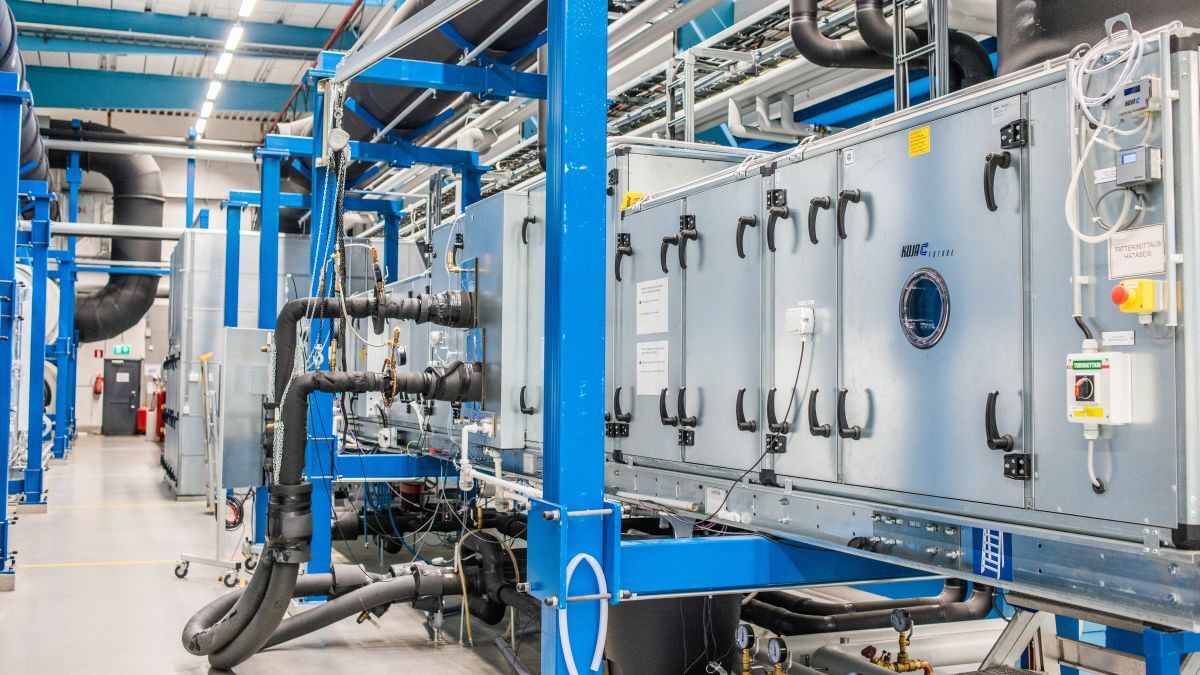
Koja Marine has launched its Koja Health Systems in response to the Covid-19 pandemic. Koja marine director Esko Nousiainen tells PST, “It uses UV lights, hybrid filters, public fan coils – we have developed the equipment to be safer.”
Swan Hellenic’s new Minerva-class cruise ships are the first to be equipped with this equipment.
Furthermore, a subsidiary of Koja Marine is conducting several small projects with Carnival and Royal Caribbean, where it is working on the hospital areas. “We are updating the equipment to use UV lights and filters, and fight viral spread,” explains Mr Nousiainen. “We are capturing the viruses with the filters and killing them with UV light. The pressure is higher in these filters, and we use special fans to keep the airflow flowing. We only use the UV light for a brief period every day, as it is very intensive.”
He emphasises, “These features are absolutely necessary, it is something you must have to avoid spreading viruses in public areas.”
In terms of retrofits, he explains the company can simply renew the components of Koja Marine equipment as required.
Alongside fighting the Covid-19 virus, Koja Marine is also working on energy efficiency and is currently developing a new fan coil and new cabin system. This is being tested in Koja Marine’s laboratory and the company is applying a patent on this new technology.
Mr Nousiainen sums up, “It will be a revolution when it is ready. It is a huge improvement with recent technology, it is not just deploying AC, but it uses automation and lots of new gimmicks.”
He says it should be ready by the end of the year and the company is already arranging field tests with some cruise ship owners.
Current projects include working at Meyer Turku with Royal Caribbean’s Icon of the Seas, plus Mein Schiff 7, the last TUI vessel where Koja is providing the whole HVAC system. It is the fifth Mein Schiff-class vessel where Koja Marine has provided the HVAC system.
Other projects include the sixth Oasis-class vessel built at Chantiers de l’Atlantique, new Silversea vessels at Meyer Werft and at RMC, Tallink’s MyStar ferry and two new Spirit of Tasmania vessels, where Koja is providing the whole HVAC package.
Virus fighting
Trident BMC has been working on both increasing the virus-fighting abilities of its HVAC systems and boosting its energy efficiency focus even further.
Its director, energy management technology and marine conversionsMagnus Hansson tells PST, “We have started actions to deactivate and prevent Covid through HVAC and have finalised many projects. We have succeeded with good co-operation with owners in this regard, both in UV installations and other strategies that have been applied.”
He singles out it is important to implement solutions that have proven Covid deactivation. “We focus on technology used in hospitals, including UV and HEPA filters. We have developed installation methods in a smart way as UV lights and filters need to be maintained and changed. Much of our development is how to integrate these and have a customised design of applying these updates into existing HVAC systems.”
He explains, “We are compiling the solution to meet the new requirements of air quality especially when it comes to Covid. We need to adapt solutions for the existing fleet and match how they operate as many ships are back in operation.”
With experience of delivering the HVAC for Mercy Ships’ new hospital vessel, Trident now has a customised toolbox of solutions. Mr Hansson says this has helped Trident to be well equipped to mitigate the Covid situation and to offer holistic health solutions.
On top of this, Trident is also focused on maximising energy efficiency. “It has been a focus over the past 20 years and now with CII and EEXI regulations, combined with fuel costs, this is something that has an ever-greater focus.”
Mr Hansson adds, “HVAC is one of the biggest consumers on board and we have developed many tools to manage it. One of those is a cloud-based HVAC survey tool so everyone from top management to the mechanic see the same thing – maintenance is key to operational efficiency and to have control of the HVAC plant is good asset management and ensures sustainability.”
On top of this, Trident recently restarted its training programme after a pause due to the pandemic. This is a one-week training programme for HVAC crew on board and for cruise ship management.
Mr Hansson sums up, “This, together with our proven energy-saving solutions, cloud-based tools and KPIs, allows HVAC operation to be much more efficient, sustainable and tomeet passenger expectations and comfort on board.”
Galley ventilation retrofit focus
There is also a focus on enhancing galley ventilation efficiency on existing ships. Halton Marine cruise segment director Erik Schobesberger says, “While the energy efficiency of new cruise vessels has increased by over 50% during the past 20 years, more than two thirds of the current fleet is over 10 years old, thus representing a significant part of the overall capacity in the market. Enhancing the energy efficiency of existing vessels has become more vital than ever, with different efficiency-enhancing modifications becoming a core part of every larger drydock and refit for a vessel.”
He explains that cruise vessels have a constant high energy demand from the hotel side, with the HVAC system being the largest consumer. Mr Schobesberger says, “While there are significant differences between vessels depending on their size, operating profile, age and HVAC setup, the HVAC system can use up to 35% of the total energy consumed, which in some cases can even be more than the energy used for propulsion.”
While improving the energy efficiency of galley ventilation systems poses challenges, there are new technologies available that can have a significant impact on energy consumption, provided the whole system is properly designed and configured for maximum efficiency. For newbuildings, Mr Schobesberger singles out that Halton’s patented Capture Jet technology provides a reduction in necessary air flow of up to 50% (typically 35%) compared with traditional suction-only hoods, while also providing for a quieter, more comfortable operating environment. The full saving potential of the Capture Jet technology can only be realised if the whole galley ventilation is optimised for the reduced airflow required.
He adds, “Retrofitting technologies like the Capture Jet can be difficult, since it often requires extensive mechanical modifications or even completely new hoods, which usually makes a retrofit cost prohibitive.”
Halton has developed a cost-effective retrofit solution based on its proprietary M.A.R.V.E.L. technology, an intelligent, responsive, and completely flexible and adaptable demand-controlled ventilation system designed explicitly for galley hoods.
Mr Schobesberger says, “While the M.A.R.V.E.L. system was first installed on select newbuilding projects, retrofitting it as either a stand-alone system for the galley areas or as part of a larger energy efficiency makeover is possible due to readily available retrofit solutions, which can, when combined with variable speed fans for the galley area, save up to 40% of the energy required for galley ventilation.
“Halton’s retrofit package has the same functionality as the M.A.R.V.E.L. systems delivered for new galley hoods and can be retrofitted to various galley hoods, no matter the age of the vessel. Very small physical modification to the hoods is required, essentially just the installation of infrared sensors and new control modules, which can easily be installed even when the vessel is underway.”
But he warns there are typical pitfalls that apply specifically for retrofit projects that should be kept in mind to avoid them. He says, “The first and most common is the operating profile of the vessel and the galley are not properly considered when designing and using an energy efficiency enhancing system, resulting in less energy being saved during operation of the vessel than what had been initially projected.
“The second is different components and systems that are highly efficient are mixed together without understanding the complete picture of them working together.”
Mr Schobesberger gives the example, just installing a Halton M.A.R.V.E.L. system without also having variable speed fans (or just a high–low setting) will not result in major savings, since the HVAC system is still pushing the same amount of air into the galleys, even if it is not required.