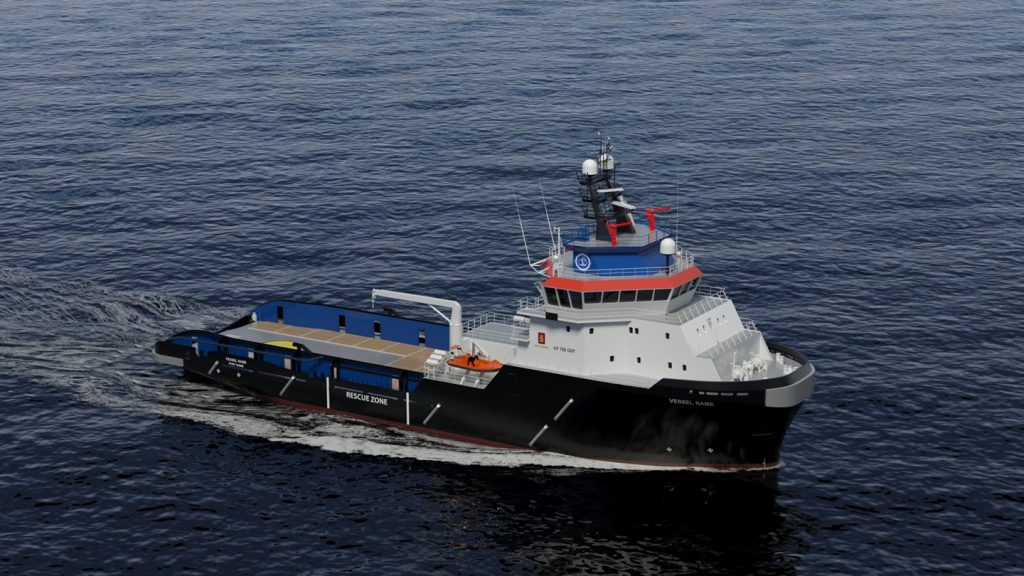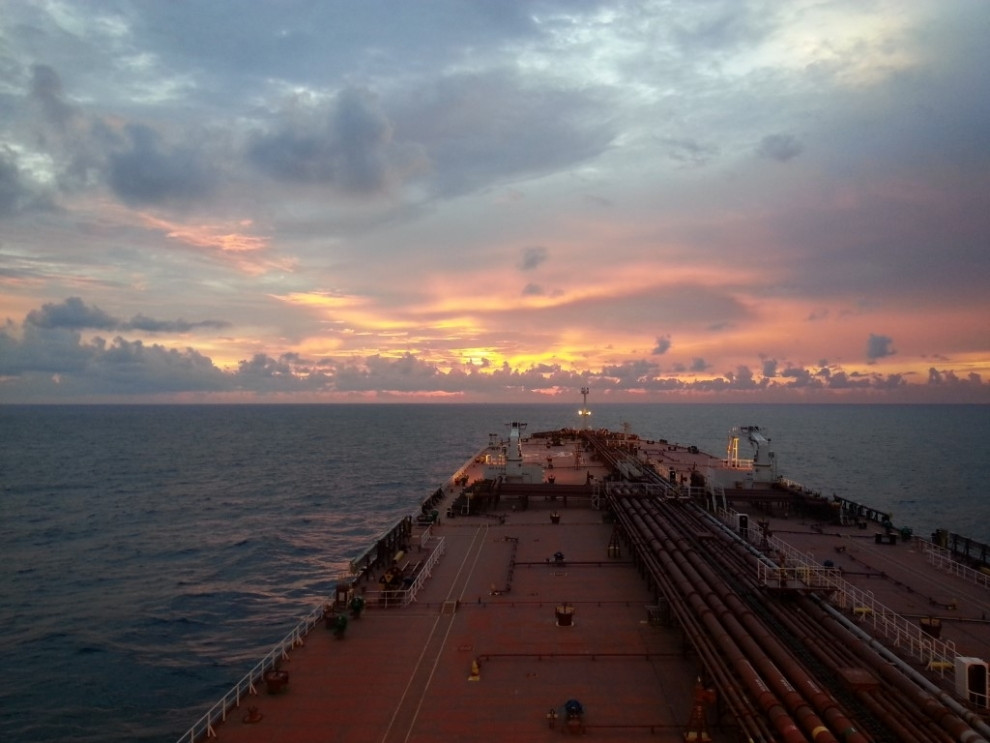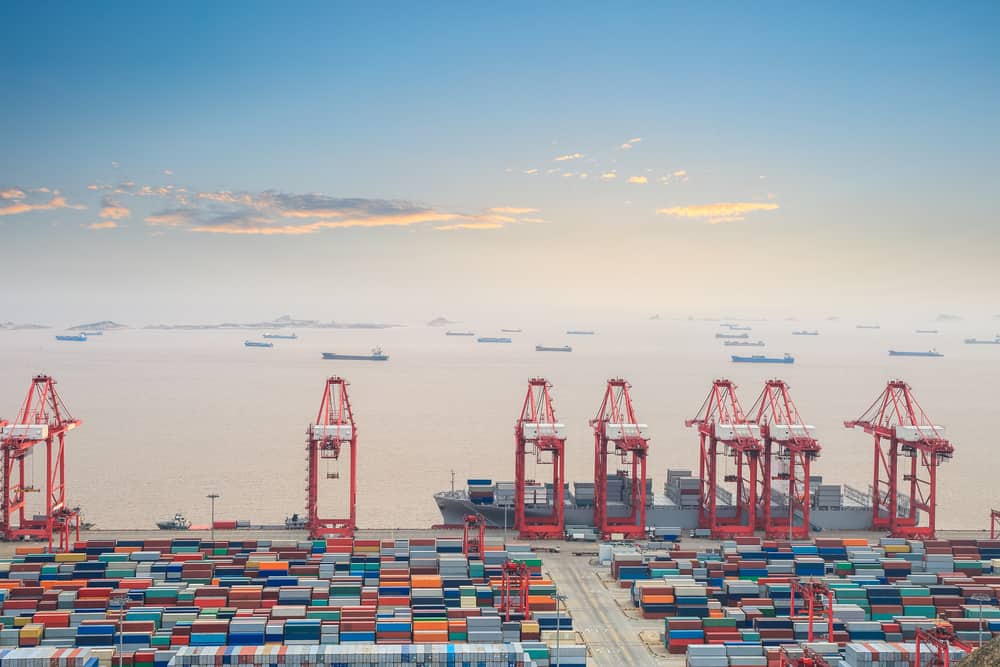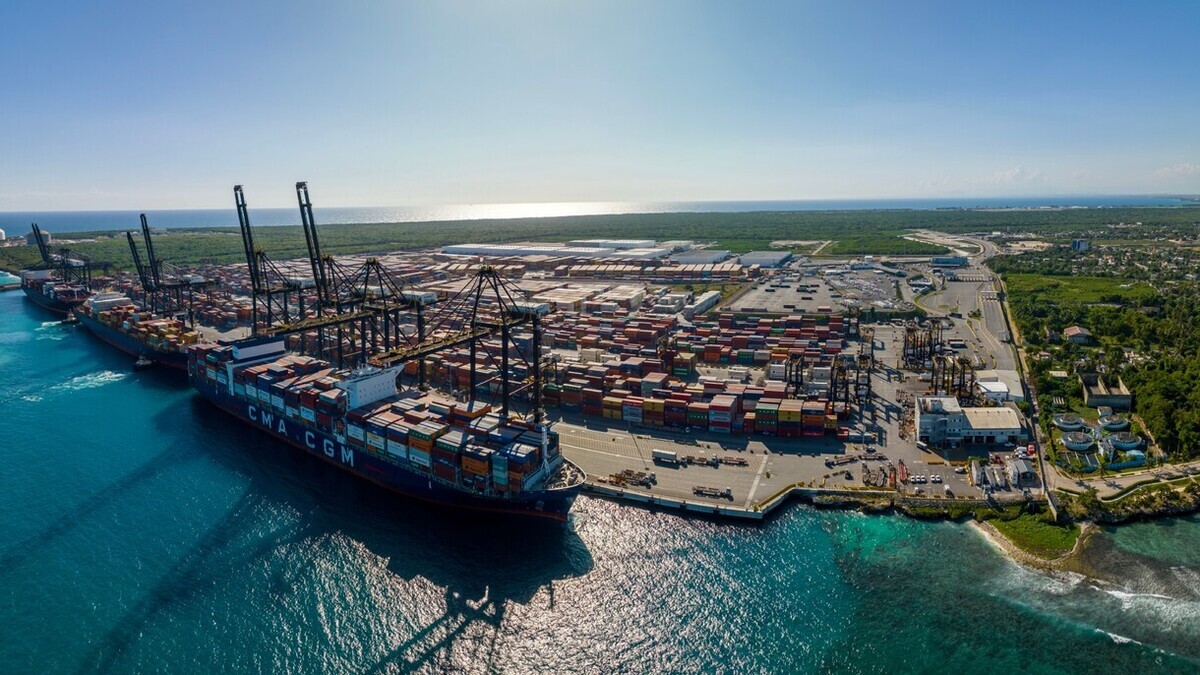
At Rizhao Port in Shandong, a row of striking red large port machines stand along the shore, and on the wide, emerald-green sea, giant ships满载 “Made in China” are moored.
Recently, a newly built international voyage vessel, “Ming Lu,” set sail from here for its first departure, carrying 32,000 tons of large engineering vehicles, domestic steel, and other materials and equipment, heading to Nigeria.
As China-Africa economic and trade cooperation continues to deepen, Rizhao Port leverages its geographical advantages to continuously smooth logistics channels. With the assistance of local border inspection, maritime, and other departments, customs clearance is “without a moment’s delay,” allowing foreign trade to “accelerate.”
“After receiving the vessel departure service order, we coordinated with the shipowner, port, and port authorities to optimize the inspection process, proactively boarding the vessel and providing forward services,” said Wang Xingzheng, a police officer from the Third Duty Team of Rizhao Entry-Exit Border Inspection Station. The port’s “one ship, one policy” and “inspect upon arrival” inspection model, with round-the-clock follow-up support, ensures vessels clear customs smoothly with “zero delay.”
In the first four months of this year, China’s total import and export value of goods trade was 16.23 trillion yuan, a year-on-year increase of 14.9%. Foreign trade has started strongly, fully demonstrating the resilience and vitality of imports and exports.
On May 8, the “Tianle” vessel, loaded with four sets of domestically produced large wind power equipment, set sail from Nanjing Port. Wind turbine towers, ultra-long blades with a single length of 90 meters, transformers… This is the first time Nanjing Port has exported a complete set of wind power equipment. These goods will arrive in Pakistan for use in local new energy project construction.
“We optimized the service plan for wind power equipment exports, implemented measures such as online inspection declaration and one-stop inspection, reducing customs clearance time by 70% compared to traditional models,” introduced Zhang Chengkai, a police officer from the Third Duty Team of Nanjing Port Border Inspection Station.
At the same time, Nanjing Port Border Inspection Station uses a service model of “land patrols, river patrols by boat, and aerial patrols by drone” to build a water, land, and air supervision system. It closely monitors key nodes such as vessel berthing and unberthing, and large cargo lifting and transfer, providing uninterrupted dynamic control to safeguard the security line of port entry and exit.
It is understood that in the first quarter of this year, national immigration management agencies inspected a total of 10.098 million (aircraft, trains, ships, vehicles) entry-exit transportation vehicles, a year-on-year increase of 18.9%.
On the coast of the South China Sea, the accelerated export of “national heavy equipment” is also continuously unfolding.
Recently, the world’s largest car carrier, “Glovis Leader,” independently built by a Chinese shipbuilding enterprise, was delivered in Nansha, Guangzhou. Under the innovative “Smart Speed Release” model for new ships introduced by the Nansha Entry-Exit Border Inspection Station, this “maritime giant” efficiently completed customs clearance procedures and embarked on its maiden ocean voyage.
“The ‘Smart Speed Release’ model integrates one-stop online processing, intelligent inspection, drone patrols, and green channels to achieve one-stop completion,” introduced Liu Huijun, instructor of the Second Duty Team of Nansha Border Inspection Station. He stated that this year, the model has saved a total of over 400 hours in vessel customs clearance and port stay time.
On this waterway advancing into the “deep blue,” police officers from Nansha Border Inspection Station shuttle day and night between docks and shipyards, climbing on gangways and “cages.” As of May 9, Nansha Border Inspection Station has facilitated the delivery and departure of 26 newly built vessels this year. “Whether it’s early morning or late at night, border inspection handles reports immediately upon receipt,” said Kang Youping, Deputy General Manager of Guangzhou Shipyard International Company Limited.
Ye Yuanfeng, Station Chief of Nansha Border Inspection Station, stated that the station will continue to integrate immigration management services into the development of the ship and offshore engineering industry, escorting more “national heavy equipment” to sell well globally, and contributing to the construction of a maritime power. (Reporter Sun Pengcheng)