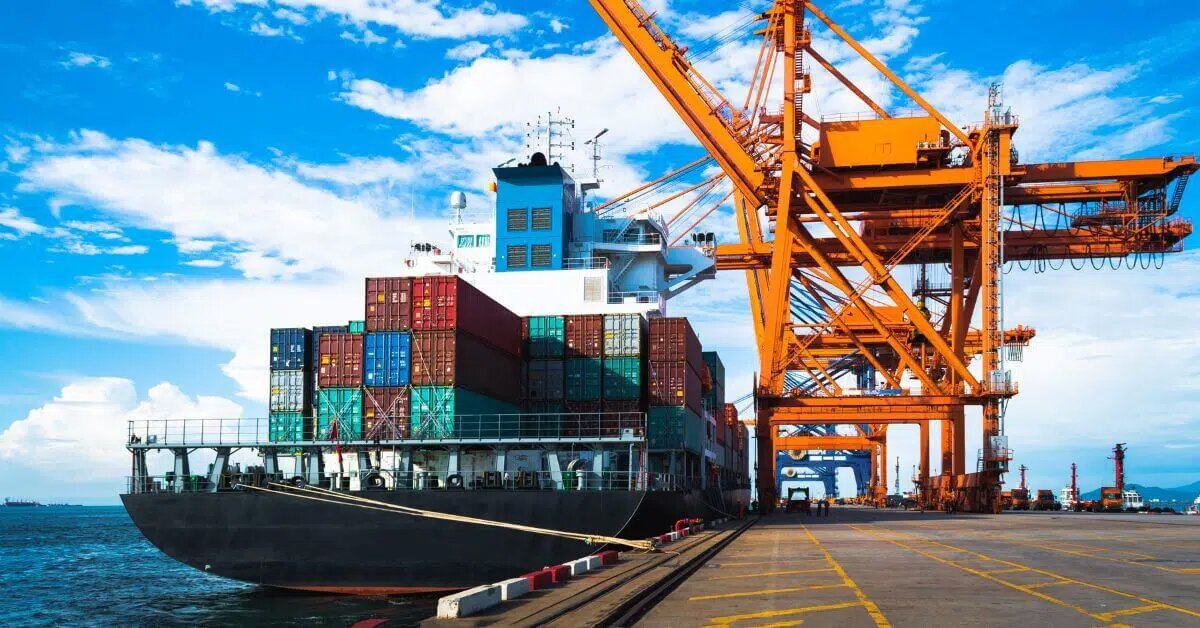
Fortescue and CMB.TECH have signed a landmark agreement for the charter of up to 12 ammonia-capable Newcastlemax bulk carriers, advancing the use of ammonia as a zero-emission marine fuel. If operated on green ammonia, the fleet could reduce carbon dioxide emissions by approximately 250,000 tonnes annually compared with conventional marine fuels.
Antwerp, Belgium | June 22, 2026 – In one of the most significant ammonia-fuel shipping agreements announced to date, Fortescue and CMB.TECH have signed a landmark charter agreement covering up to 12 ammonia-capable Newcastlemax bulk carriers, accelerating efforts to decarbonise maritime transport and scale the adoption of ammonia as a zero-emission marine fuel.
The agreement will see Fortescue charter a fleet of 210,000 dwt Newcastlemax vessels from Bocimar, the dry bulk shipping division of CMB.TECH, marking a major commitment by both companies to support the maritime industry’s transition away from conventional fossil fuels.
The deal is being viewed as a significant vote of confidence in ammonia’s future role as a marine fuel, particularly at a time when the shipping sector is under increasing pressure to meet tightening emissions regulations and long-term net-zero targets.
Table of Contents
Under the agreement, up to three vessels will be delivered with dual-fuel ammonia engines, enabling them to operate on both conventional fuels and ammonia. These vessels are expected to enter service before the end of 2026, becoming part of a growing number of ammonia-capable ships entering the global fleet.
The remaining nine Newcastlemax vessels will be delivered as ammonia-ready ships, allowing future conversion to ammonia propulsion as fuel availability, infrastructure, and regulatory frameworks continue to develop.
The phased approach is designed to balance immediate operational requirements with long-term decarbonisation objectives, while providing flexibility as the ammonia fuel market matures.
According to the companies, the full fleet could reduce carbon dioxide emissions by approximately 250,000 tonnes per year compared with vessels operating on conventional marine fuels, provided the ships are fuelled using green ammonia.
Green ammonia is produced using renewable energy and is widely regarded as one of the leading zero-carbon fuel candidates for long-distance shipping due to its ability to store and transport renewable energy in a scalable form. Industry stakeholders increasingly view ammonia as a critical pathway for achieving the International Maritime Organization’s long-term decarbonisation goals, particularly for deep-sea shipping segments where battery-electric solutions remain impractical.
Fortescue has been one of the strongest advocates for ammonia as a future marine fuel and has invested heavily in demonstrating its viability through research, vessel development, and fuel technology programs.
Katie Charuga, Director of Integrated Operations at Fortescue, said the industry must move beyond discussion and accelerate real-world deployment of low-carbon technologies.
“The shipping industry doesn’t need more talk. It needs action,” Charuga said. “Green ammonia is one of the clearest pathways to reducing carbon dioxide emissions from shipping, and these vessels represent a practical step towards that future.”
She noted that Fortescue’s ammonia-powered demonstration vessel, Green Pioneer, has already proven that ammonia can be safely and effectively used in marine applications.
“The next challenge is scaling the use of green ammonia,” Charuga said. “By investing in ammonia-capable vessels and working with partners who share our ambition, we are helping create demand for green ammonia and supporting the technologies needed to reduce emissions from global shipping.”
The agreement builds on a commercial relationship spanning more than two decades between Fortescue and Bocimar, one of the world’s leading dry bulk shipping operators.
Alexander Saverys, Chief Executive Officer of CMB.TECH, described the agreement as a major milestone for both companies and for the broader maritime decarbonisation effort.
“Fortescue and Bocimar have built a strong partnership over more than two decades, grounded in shared values and a clear commitment to decarbonise shipping,” Saverys said. “This agreement marks an important step in showcasing ammonia as a viable marine fuel and advancing the transition to zero-emission shipping.”
He added that the deal sends a strong signal to the global shipping market at a time when uncertainty remains over the pace and feasibility of maritime decarbonisation. “It also sends a powerful signal to the market, particularly at a time when there is doubt about the decarbonisation of shipping: our sector can decarbonise at scale. It just takes like-minded, determined partners who walk the talk.”
The announcement comes amid growing momentum behind ammonia-fuelled shipping projects worldwide. Shipowners, engine manufacturers, classification societies, ports, and fuel suppliers have intensified efforts to develop ammonia-powered vessels and supporting bunkering infrastructure as the industry prepares for stricter greenhouse gas reduction requirements.
Several major engine manufacturers are expected to deliver commercial ammonia-fuel engine solutions over the coming years, while ports across Europe, Asia, Australia, and the Middle East are advancing plans for ammonia fuel handling and bunkering facilities.
The Fortescue-CMB.TECH agreement represents one of the largest commercial commitments to ammonia-capable dry bulk tonnage announced so far and could serve as an important catalyst for further investment in ammonia production, distribution, and marine fuel infrastructure.
For both Fortescue and CMB.TECH, the agreement reflects a broader strategy to accelerate the maritime industry’s transition toward zero-emission operations. Fortescue continues to pursue its Real Zero target, aiming to eliminate Scope 1 and Scope 2 emissions from its Australian iron ore operations by 2030, while expanding investments in clean energy technologies and green fuel production.
CMB.TECH, meanwhile, has positioned itself as a leading maritime decarbonisation player, operating one of the world’s largest diversified shipping fleets while actively developing hydrogen and ammonia fuel solutions for the maritime sector.
As regulatory pressure intensifies and demand for low-carbon transport solutions grows, the partnership between the two companies highlights how long-term collaboration and investment in alternative fuels are increasingly shaping the future of global shipping.
Fortescue exists to accelerate decarbonisation on a global scale, rapidly and profitably.
The company is committed to achieving its ambitious Real Zero target, which aims to eliminate Scope 1 and Scope 2 emissions from its Australian terrestrial iron ore operations by the end of 2030.
Fortescue is investing significantly in research and development to diversify and expand its core business by combining the operational expertise of a world-leading mining company with innovative technologies. As the company expands its global footprint, its growth strategy remains deliberate, disciplined, and commercially focused.
Beyond its business operations, Fortescue is committed to building thriving communities and delivering lasting social and economic benefits. Through training, employment, and business development initiatives, the company aims to ensure its success creates shared and enduring value.
CMB.TECH is one of the world’s largest listed, diversified, and future-focused maritime groups, operating a combined fleet of approximately 250 vessels, including dry bulk carriers, crude oil tankers, chemical tankers, container vessels, and offshore energy vessels. CMB.TECH also supplies hydrogen and ammonia fuels to customers through its own production facilities and third-party producers.
Headquartered in Antwerp, Belgium, the company maintains offices across Europe, Asia, and Africa. CMB.TECH is listed on Euronext Brussels and the New York Stock Exchange (NYSE) under the ticker symbol CMBT, and on Euronext Oslo Børs under the ticker symbol CMBTO.