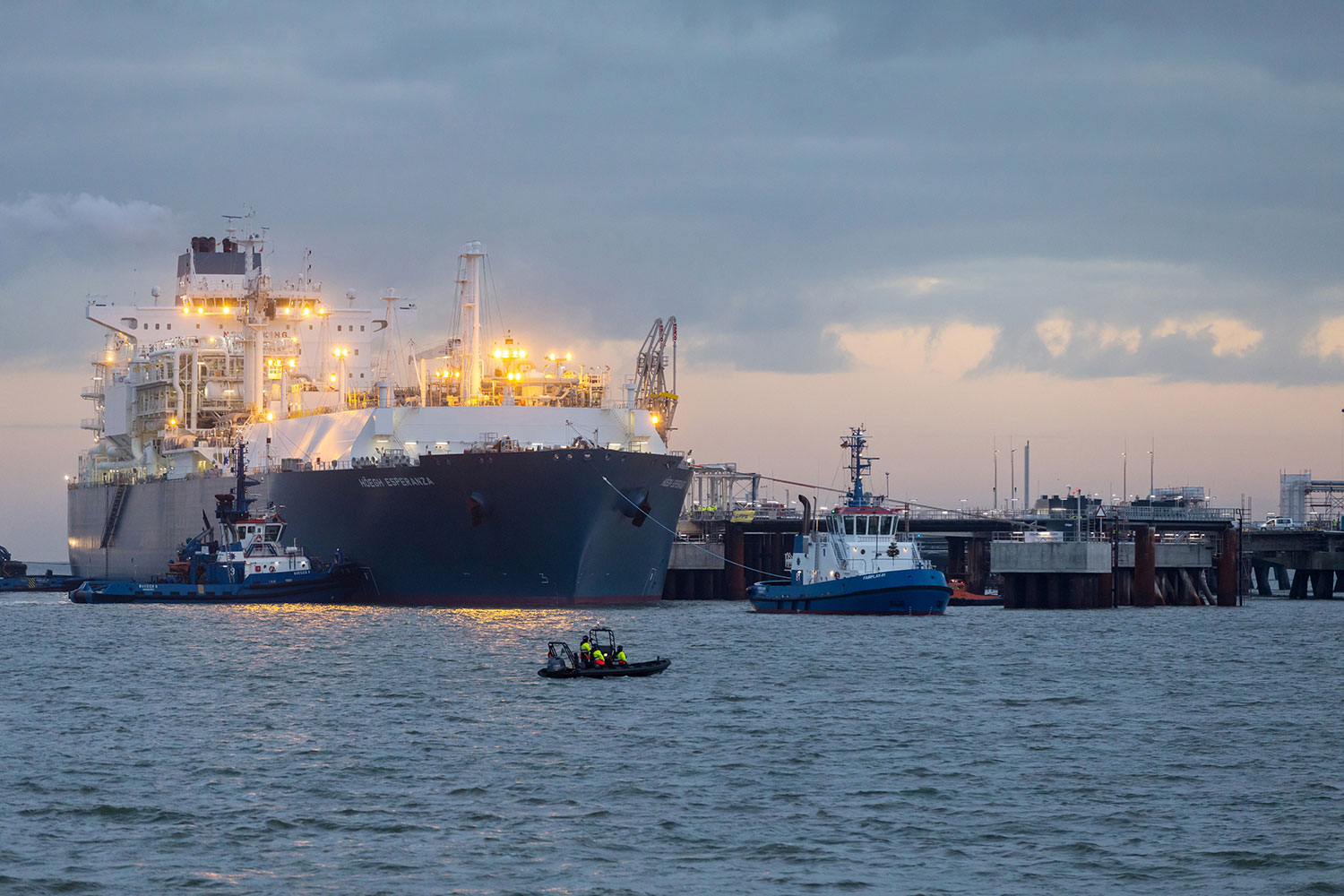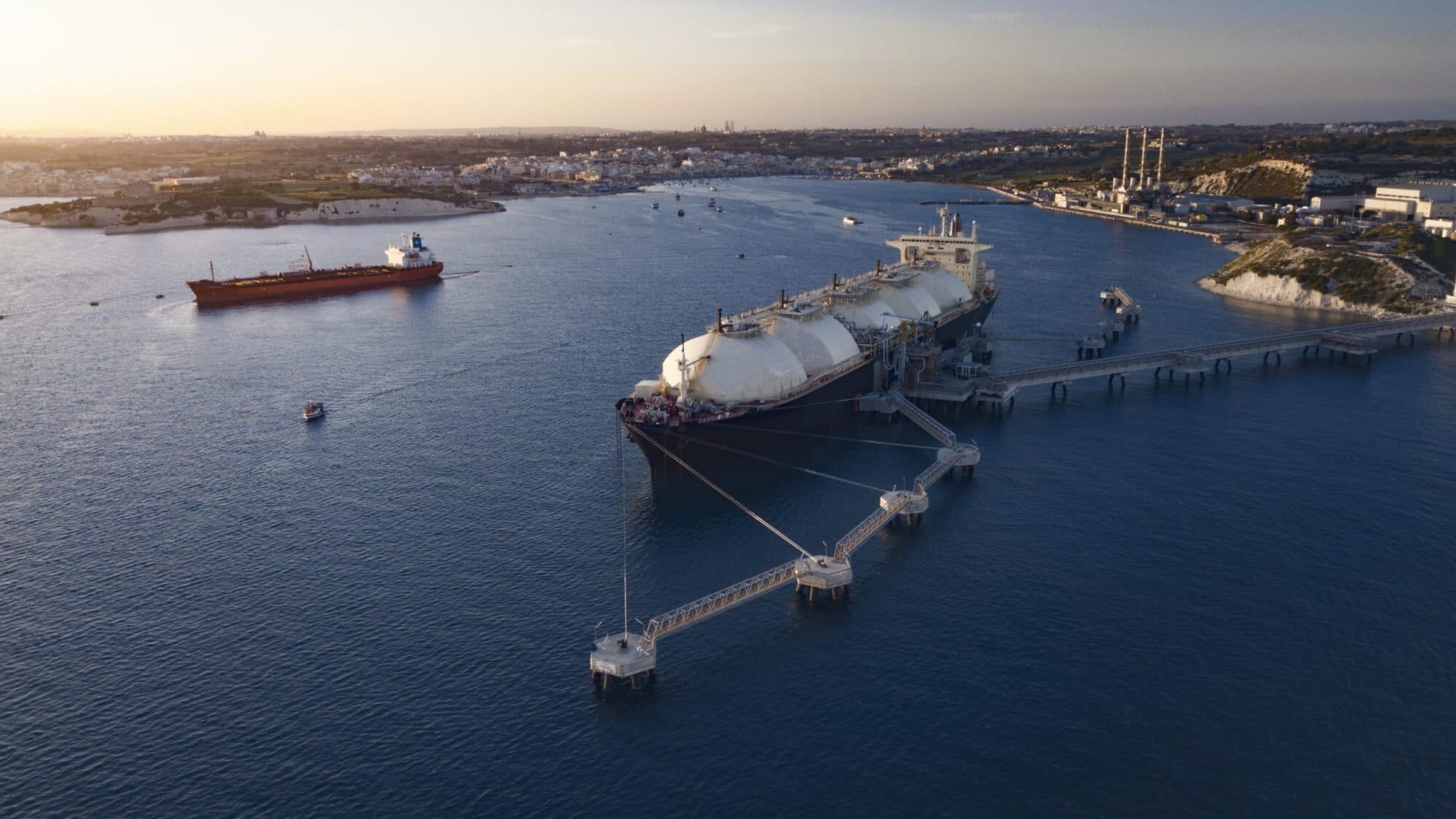
LPG and LNG carriers appear to be on the move following news of a peace agreement between the US and Iran, with activity continuing despite reports that Tehran may have once again closed the Strait of Hormuz over the weekend
Intelligence service and data provider Anfil Gas noted in its latest report that the lifting of blockades at the end of last week triggered a wave of departures by Iranian-traded very large gas carriers (VLGCs), with nearly a dozen vessels leaving the area and releasing almost half a million tonnes of LPG.
Market participants estimate that the majority of these cargoes will be discharged in China.
Meanwhile, some other VLGCs linked to the Iranian trade have entered the Middle East Gulf for loading, according to Anfil Gas data.
Outside vessels affiliated with Iranian trade flows, the company noted that a 2018-built VLGC that loaded at Kuwait’s Mina Al Ahmadi in early March managed to depart the Gulf after being effectively stranded in the region for more than 100 days.
Anfil Gas said that while uncertainty in the region remains a key deterrent for many owners, with reports of a renewed Hormuz closure expected to weigh on sentiment, some VLGCs originally scheduled to reposition towards the US Gulf Coast (USGC) have opted to explore loading opportunities in the Middle East Gulf.
According to Anfil Gas, key regional exporters remain willing to continue moving cargoes loaded from the terminals of Ruwais, Mina Al Ahmadi and Ras Laffan through ship-to-ship (STS) operations, either at the Sohar or Vadinar anchorages in India.
More ballast LNG carriers heading to Qatar
Turning to the closely watched LNG carrier market, expectations for a gradual normalisation of trade flows are increasing as more QatarEnergy-controlled vessels appear to be ballasting back to Qatar through the Strait of Hormuz.
ICIS senior LNG analyst Alex Froley told Riviera that four additional Qatari-linked LNG carriers – 2009-builtAl Sadd, Mekaines and Mesaimeer, along with 2025-built Wadi al Sail – have crossed westbound through the Strait of Hormuz.
Riviera reported last week that 2008-builtAl Hamla became the first empty Qatari LNG carrier to return to Ras Laffan to load a new cargo since the war began in late February.
Al Hamla was followed by 2007-built Al Areesh and 2008-built Al Khuwair. With the latest four vessels completing the passage, the number of empty Qatari LNG carriers returning westbound for new cargoes has now risen to seven.
Regarding laden LNG carriers departing the Gulf, Fearnley LNG said that 16 transits through Hormuz have been observed since the start of the war, with cargoes heading to Pakistan, China, India and Japan.
These volumes were sourced from Ras Laffan storage, alongside limited production from LNG trains operating at reduced capacity and cargoes from ADNOC’s Das Island LNG facility.
“QatarEnergy has indicated that once safe passage through Hormuz is restored, output could ramp to 50% within one month and 80% within two months. The remaining capacity (the two trains damaged in March) is expected to take years to fully recover,” Fearnley LNG noted.
However, in the latest major development, Qatar’s Ministry of Interior reported an“internal explosion” at the Barzan gas plant in Ras Laffan Industrial City, part ofQatar’s LNG production infrastructure, leaving at least 54 people injured and 18 missing.
QatarEnergy also confirmed the incident, stating that the fire caused by the explosion had been brought under control. The impact on the country’s LNG production remains unclear for now.