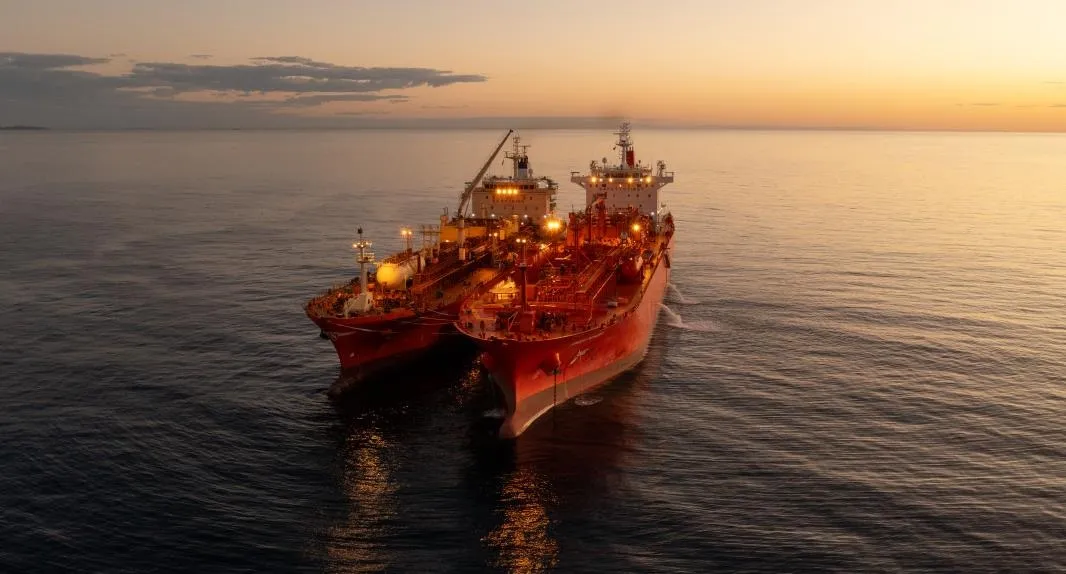
Tankers dominate the global sanctioned fleet. Shipbroker Xclusiv noted in its latest weekly report that the total number of sanctioned ships globally has reached 1,387, of which 1,004 are tankers, accounting for 72%, with an average age of 20.4 years. There are 65 LNG carriers and 206 general cargo ships, with the remainder being container ships and bulk carriers. Their age distribution is notably skewed towards older vessels: this high-risk group has long operated outside mainstream commercial standards, and most are not bound by standard insurance, vetting, and classification society frameworks.
Xclusiv’s analysis stated that within the tanker segment, the proportion of sanctioned vessels by type reveals the profound impact of such trading on the global tonnage balance. There are 320 LR2 tankers, representing 26.8% of the total LR2 fleet, the highest among all market segments. Suezmax tankers and VLCCs follow, with proportions of 17.1% and 16.1% respectively. While the shares of MR1, MR2, and LR1 tankers are smaller, they still represent a significant proportion ranging from 6% to 13%. Overall, sanctioned tankers account for 12.8% of the global active fleet of 7,820 vessels. From an age perspective, the distribution further tilts towards older ships: 335 ships are aged 17-20 years, and 494 ships are over 20 years old, meaning approximately 82% of the sanctioned tankers fall into the category of older vessels.
The age distribution highlights a structural imbalance. Among the sanctioned tankers, only 175 are younger than 16 years, while 829 are 17 years or older. In contrast, within the active fleet, there are 4,814 younger vessels (under 16 years) and 3,006 older vessels (17 years and above). This means sanctioned vessels constitute only 3.6% of the younger fleet but account for a significant 27.6% of the fleet aged 17 years and above, up from the previous 26.1%. This concentration trend is even more pronounced in large crude carriers: for vessels over 17 years old, sanctioned tonnage represents 60.6% of the LR2 fleet, 51.5% of the Suezmax fleet, and 47% of the VLCC fleet. This imbalance far exceeds replacement potential, as the orderbook-to-fleet ratio remains low at around 15.6%, offering limited offsetting effect. Consequently, this sanctioned fleet constitutes a hidden buffer; if it were removed or idled, new capacity could not quickly fill the gap.
Xclusiv further pointed out that flag state information further underscores the opacity of this system. Russia, Comoros, and Sierra Leone collectively account for over a quarter of the sanctioned tankers, followed by Iran, Oman, and Panama. Registrations in North Korea, Palau, and Tanzania (Zanzibar) are also prominent, along with a long list of minor flag states ranging from Gambia to Vanuatu. This concentration in lax jurisdictions reflects intentional evasion of mainstream compliance requirements, complicates the tracing of beneficial ownership, and reveals governance vulnerabilities within this “shadow” ecosystem.
Xclusiv concluded by stating that should sanctions eventually be lifted, the path for this fleet to return to the compliant market would not be smooth. The majority of ships over 17 years old would face significant obstacles in securing charters, obtaining insurance, or reinstating their class. Having long operated outside standard maintenance cycles, coupled with opaque dry-docking inspection records and lax flag state oversight, has likely led to a decline in their technical condition and safety standards. Many vessels would likely be sent directly into lay-up or for scrapping, leading to a reduction in the actual active fleet size, while the cargo volumes affected by sanctions would return to compliant trade. Under this scenario, global tanker supply would tighten, and transportation demand would increase correspondingly—a structural change that would push freight rates higher and trigger asset repricing. The ultimate result would be a market divergence: modern, insurable vessels would command high charters and values, while the older “grey” fleet would gradually be phased out of the market under the weight of its past operations.