From the purchase of one second-hand ship in 1970, the Aponte family-owned MSC has grown to become the world’s largest container shipping group
As Mediterranean Shipping Company (MSC) crashes through one barrier after another, its rapid expansion inevitably asks questions about what it is up to next in the pursuit of vertical control of the logistics chain on sea, land and air.
So far in 2025 alone, the family-owned maritime giant has become the first container shipping group in the world to operate a fleet of 900 wholly owned, managed or chartered vessels. It has just placed a US$17Bn order for 20 ultra-large container vessels (ULCVs). In July it committed to a five-year, 120-ship programme that will renew its ageing feeder fleet by 2029.
And moving on, such is MSC’s faith in global trade that its current orderbook of ULCVs runs to 74, according to brokers. At this rate, as the group acknowledges, MSC is heading for a 1,000-strong fleet before too long and will in the coming months become the first carrier to break the 7M TEU mark.
This latest spate of records follows a decade of headlong growth that has kept analysts guessing about what the Switzerland-registered giant will do next. After all, in those 10 years the Alponte family-owned group has nearly tripled in size to the point that its fleet alone is worth more than $40Bn, according to VesselsValue. Recently, Swiss newspaper Le Matin put MSC’s overall worth at around $100Bn in what is generally seen as a conservative estimate.
The Aponte family does not try to do everything itself. Along the way it established what it calls “collaborative alliances” — mutually beneficial arrangements with other major lines, including Maersk in the 2M partnership. “This alliance helped MSC enhance its service offerings while maintaining cost efficiency,” said the group.
“MSC is heading for a 1,000-strong fleet”
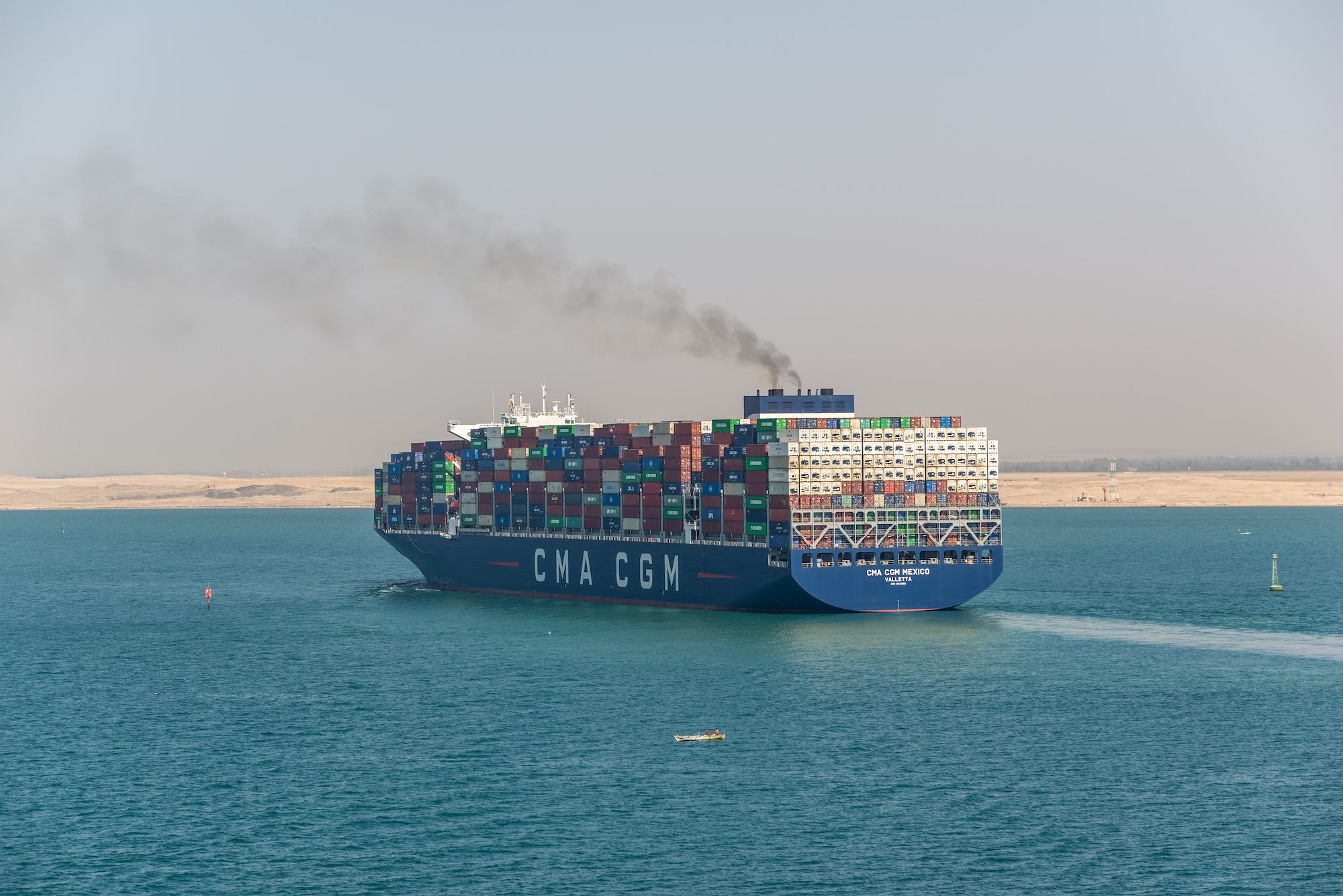
MSC’s rapid expansion parallels that of rival CMA CGM, the France-based shipping and logistics giant, that in late July declared its interest in acquiring some of the terminals of CK Hutchison in a deal priced at around $22.8Bn. That followed MSC’s apparent withdrawal from exclusive negotiations in a rare abandonment of an acquisition opportunity. Like its Geneva-headquartered competitor, CMA CGM has, over the last few years, invested heavily in the entire logistics chain – ships, containers, terminals, warehouses, e-transport and airlines as it pursues a similar strategy of vertical control. CMA CGM has interests in 65 terminals around the world.
This race is also being run by other big container lines such as Maersk and China’s COSCO, which is involved with CMA CGM in the Ocean Alliance and is mooted as a potential investor in CK Hutchison.