In 2022, the value added generated and activated by the “Sea System” reached 178.3 billion euros, accounting for 10.2% of the total value added of the national economic system.
Businesses related to the Blue Economy, employing over one million workers, generated 64.6 billion euros in value added, while also stimulating an additional 113.7 billion euros in other economic activities outside the Blue Economy through supply chain effects.
This is revealed by the latest study by Unioncamere on the maritime economy.
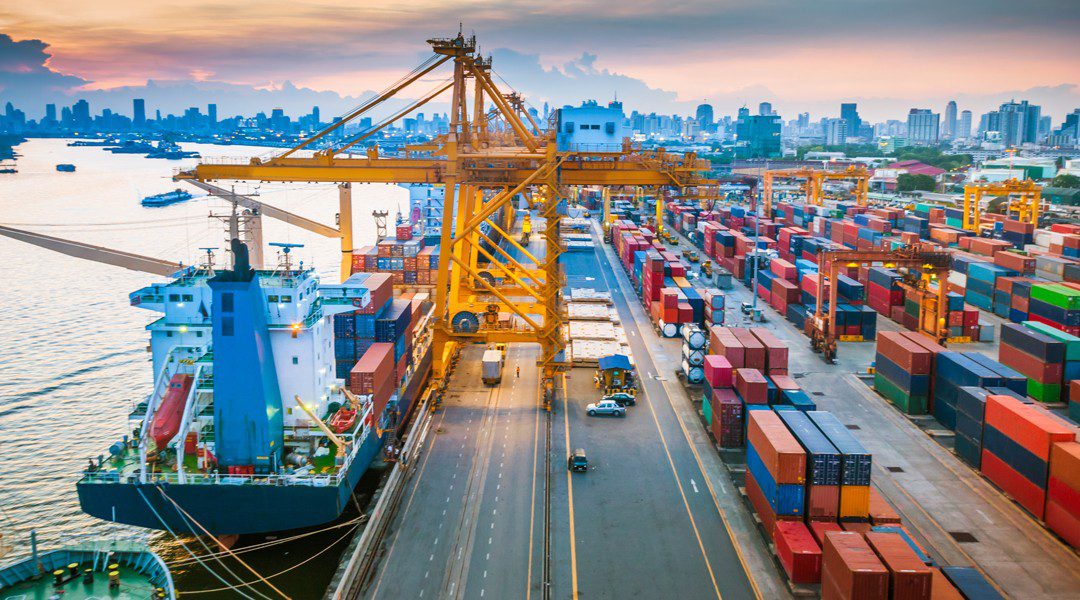
The largest contribution to the multiplier effect of the ocean economy comes from maritime cargo and passenger transport activities, which generate 2.7 euros in the broader economy for every euro of wealth produced. The 12.7 billion euros generated by this sector thus activated 33.9 billion euros in other economic sectors.
The study also highlights a high multiplier effect in the shipbuilding supply chain, where every euro of value added generates an additional 2.5 euros in the broader economy. The 8.7 billion euros produced by this sector stimulated 21.4 billion euros in other economic sectors.
This is followed by sports and recreational activities (multiplier of 2.1), accommodation and food services (multiplier of 1.9), and the fishing supply chain (multiplier of 1.7).
The multiplier effects are significantly lower for marine extraction industries (0.8 euros) and environmental research, regulation, and protection activities (0.5 euros).
From a territorial perspective, the regions contributing most to the wealth of the ocean economy are the South and the Center, with value added reaching 20.8 billion euros and 18.7 billion euros, respectively.
However, the highest multiplier effect is observed in the Northwest and Northeast regions, which, in absolute terms, generate lower direct value added (12.5 billion euros and 12.6 billion euros, respectively).
In the Northeast, every euro of value added produced by the ocean economy sectors stimulates an additional 2 euros in the broader economic system, while in the Northwest, the multiplier is 1.9. The multiplier effect is lower in the Center and the South, at 1.7 euros and 1.6 euros, respectively.
The report highlights that in 2022, the weight of the Blue Economy in the national economy increased significantly compared to the previous year, both in terms of wealth produced (rising from 3.4% in 2021 to 3.7% in 2022) and employment (increasing from 3.9% in 2021 to 4.1% in 2022).
Indeed, in 2022, the blue economy experienced very positive dynamics. Value added grew by 15.1% year-on-year, significantly higher than the overall economic growth of +6.9%.
All sectors of the supply chain drove value added growth, except for the marine extraction industry, which saw a 54.1% decline in wealth produced compared to 2021, likely due to significant fluctuations in raw material prices.
Other sectors performed positively, though growth rates varied.
In 2022, employment also increased by 6.6% year-on-year, compared to overall economic growth of just 1.7%.
Again, the data shows a decline in the marine extraction industry (-10.5%), while the decrease in environmental research, regulation, and protection activities was less pronounced and closer to stagnation (-0.4%). All other sectors saw positive growth.
Tourism once again stood out positively. Accommodation and food services grew by 11.2%, while sports and recreational activities increased by 9.1%. Following in order of magnitude are maritime cargo and passenger transport (+6.6%), shipbuilding (+5.9%), and the fishing supply chain (+1.2%).