Juan Carlos Paz Cárdenas is the former president of the National Port Authority of Peru
The recent signing of Addendum No. 5 to the concession contract for the Port of Matarani is not simply a legal procedure. It is, in reality, a political, economic, and strategic act of the first order. It marks the first time that the Peruvian state has extended a port concession to 60 years, under rules of transparency and committed new investments. But beyond the specific case, it opens a broader conversation: what infrastructure model do we want for the coming decades and how should it interact with the new economic geography of the country?
For more than twenty years, the Peruvian port system has proven that public-private partnerships (PPP) can generate sustainable results: accelerated modernization, reduced logistics costs, and attraction of foreign capital in stable environments. However, time forces a new perspective. The Matarani addendum not only extends a contract signed a quarter of a century ago: it renews confidence in the port model, adapting it to a world where ports no longer compete only for cargo, but for logistical, energy, and industrial ecosystems.
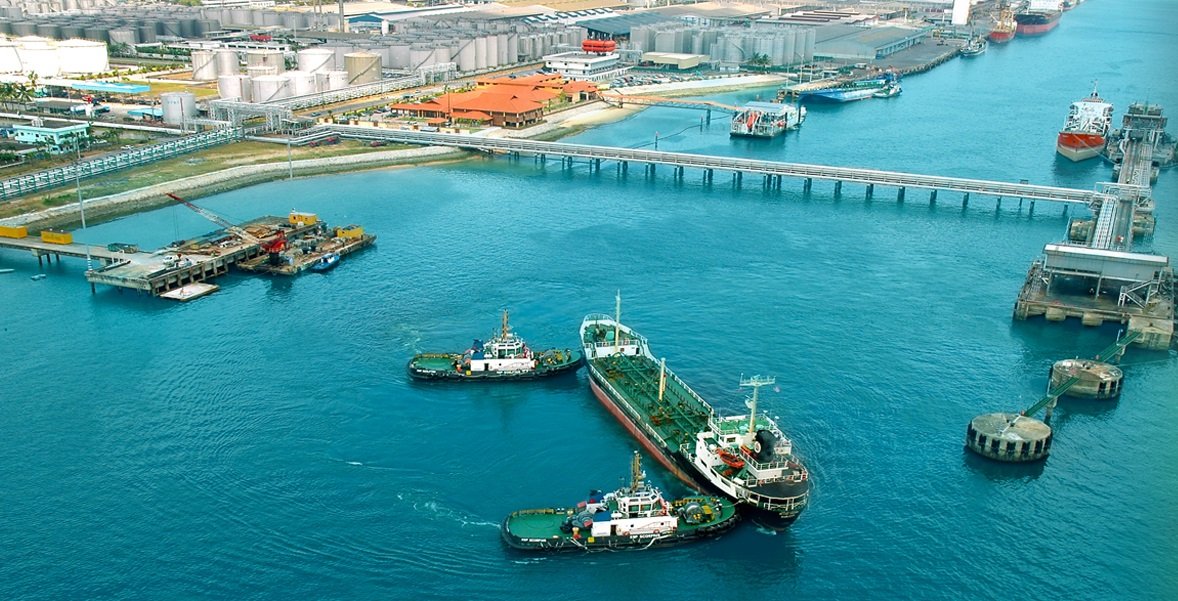
Matarani, managed by Tisur, has established itself as the great port of the southern Andes: it connects mining, agro-exports, and light manufacturing; it integrates corridors from Arequipa, Cusco, Moquegua, Tacna, and Puno; and it operates with international standards of efficiency. With the addendum, the concessionaire undertakes new investments in infrastructure, dredging, sustainability, and digitalization. But its true value is intangible: it introduces predictability. It allows for long-term planning without the uncertainty of political or budgetary cycles.
A less visible but highly revealing indicator is the recent change in cargo flows to Bolivia. In the last two years, Matarani has managed to partially displace the port of Arica as a transshipment point, handling Bolivian imports of steel from China —in lots of between 3 and 5 thousand tons— and malt from Uruguay and Argentina —between 5 and 6 thousand tons per shipment—. This shift was not the product of a decree, but of a competitive innovation: Tisur voluntarily assumed the storage cost that Bolivia received for free in Arica and Antofagasta due to agreements following the War of the Pacific. The strategy, more private than diplomatic, broke a historical logistical inertia and made Matarani a real alternative for Bolivian trade.
In the same vein, the port could play a growing role as a gateway for Brazilian meat to the Pacific, an emerging flow that confirms its capacity to diversify cargo and markets.
At a structural level, the addendum inaugurates a paradigm shift: from the rigid contract to the evolutionary contract. Instead of waiting for a concession to expire to rethink investments, it is recognized that infrastructure is a living system that must be updated according to demand, technology, and market conditions. This principle, incorporated in port legislation, places Peru in line with countries that understand concessions as dynamic processes, beyond the contractual relationships between the State and the private sector.
With a broader view, Matarani could become an anchor point for the southern bioceanic corridor, integrating the Bolivian altiplano and Brazilian industrial hubs with the Pacific.
That possibility redefines its role: from a terminal port to an intercontinental logistics platform. In a scenario of nearshoring and decarbonization, southern Peru can attract light manufacturing and logistics services for supply chains seeking proximity to Pacific markets without the bottlenecks of the Atlantic.
The debate should not focus on whether or not to extend the concessions, but on how to use them strategically. An extended concession is not a mercantilist privilege: it is a tool to secure investments that would otherwise not be made, and to preserve the residual value of assets that ultimately belong to the country. The State maintains its governing role, but with a pragmatic view: less direct administration, more intelligent governance.
The Matarani case also allows for the projection of something more ambitious: a new national logistics pact. If legal stability is combined with complementary infrastructure —southern railway, logistics zones in Arequipa, road integration with Brazil— Peru could consolidate a major port hub in the south. In that scenario, decentralization would cease to be political discourse and would become a tangible physical structure. The lesson is clear: infrastructure should not be measured only in investment amounts, but in systemic value. What Matarani symbolizes is a mature model, capable of evolving without breaking, of attracting capital without losing sovereignty, and of looking to the future without denying its history.
The challenge now is to replicate that logic across the entire National Port System. Extending contracts is not perpetuating: it is updating. The Matarani addendum, if interpreted correctly, is a rehearsal for a future where ports mobilize not only goods but also ideas, energy, and territorial development.