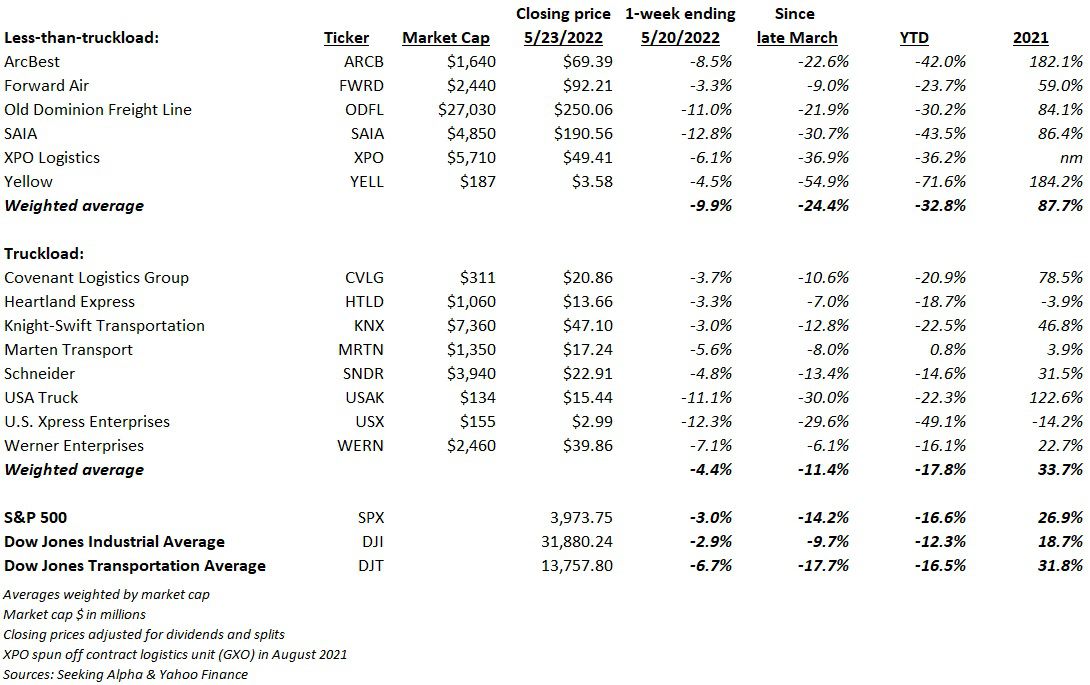
 Table: Share price performance
Some even softly guided to new highs.
So, what gives with the stocks?
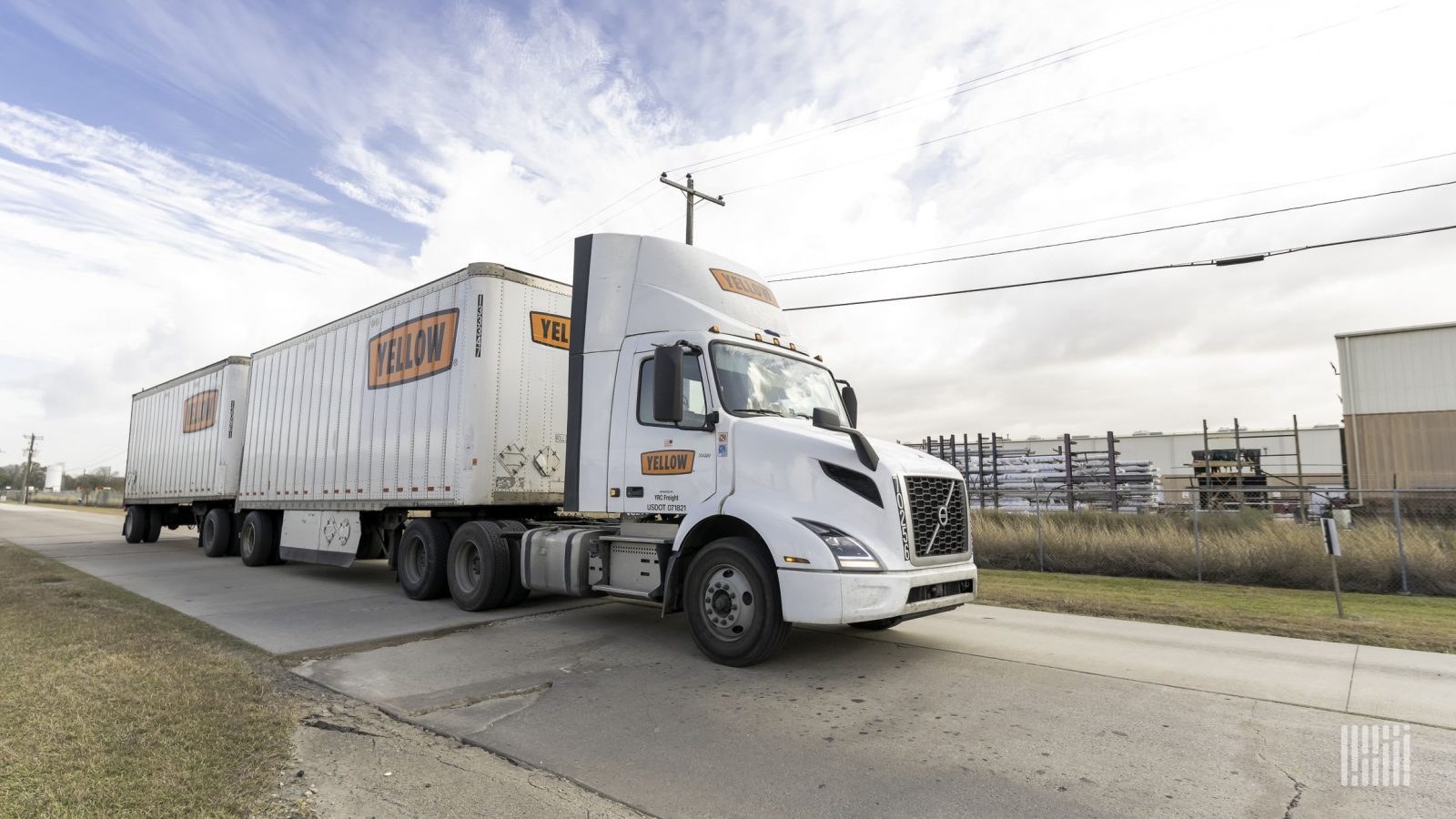
The LTL industry is highly consolidated, with 10 carriers accounting for 75% of the $40 billion-plus market. By comparison, the roughly $800 billion TL industry has 50,000 fleets, 90% of which have five trucks or less.
Less-than-truckload networks are capital intensive: a closely woven map of terminals, multiple truck and trailer types, and the technology to operate it all. A typical freight shipment sees multiple stops on different trucks to different terminals. The high barriers to entry make it so only a few carriers are actually bidding on the same freight. Thus, the group exhibits a high degree of price discipline.
Historically, LTL earnings are highly correlated with moves in industrial data sets like the Manufacturing Purchasing Managers’ Index and industrial production. However, after taking on a significant amount of e-commerce-related freight during the pandemic, the stocks appear to also be tethered to retail.
The linchpin will continue to be pricing
“We think otherwise,” Mehrotra said. “We believe the consolidated nature of the LTL market, coupled with the importance shippers put on service above price, allows the very best LTL operators (i.e. ODFL and SAIA) to preserve the pricing gains achieved in recent years.”
His comments pointed to Old Dominion’s ability to increase revenue per shipment by 5.1% on average in each of the past 15 years compared to a cost-per-shipment increase of only 3.5% annually over the same time (160-basis-point spread).
“And this is not simply explained by COVID-related benefits, with the average annual spread +100bps from 2006 to 2019,” Mehrotra said. “This has equated to a +502% increase in ODFL’s operating profit per shipment since 2006 (+13% CAGR), which we believe speaks to the potential within the LTL industry for high quality companies to see sustainable pricing above inflation.”
The question for the LTL stocks is whether the pricing gains, and outsized margins, hold through the downside of the freight cycle.
“Management teams seem confident in their ability to maintain pricing through a downturn and many LTLs now see themselves as supply-chain partners valued for quality of service as opposed to just a commodity, which they believe should help to buoy them through the cycle’s end,” Shanker said.
Mehrotra has a “buy” rating on Saia, as he believes it has a lengthy runway to improve pricing, and a “hold” rating on Old Dominion.
The picture may get a little clearer in early June when several public carriers provide tonnage and yield updates for the first two months of the second quarter.