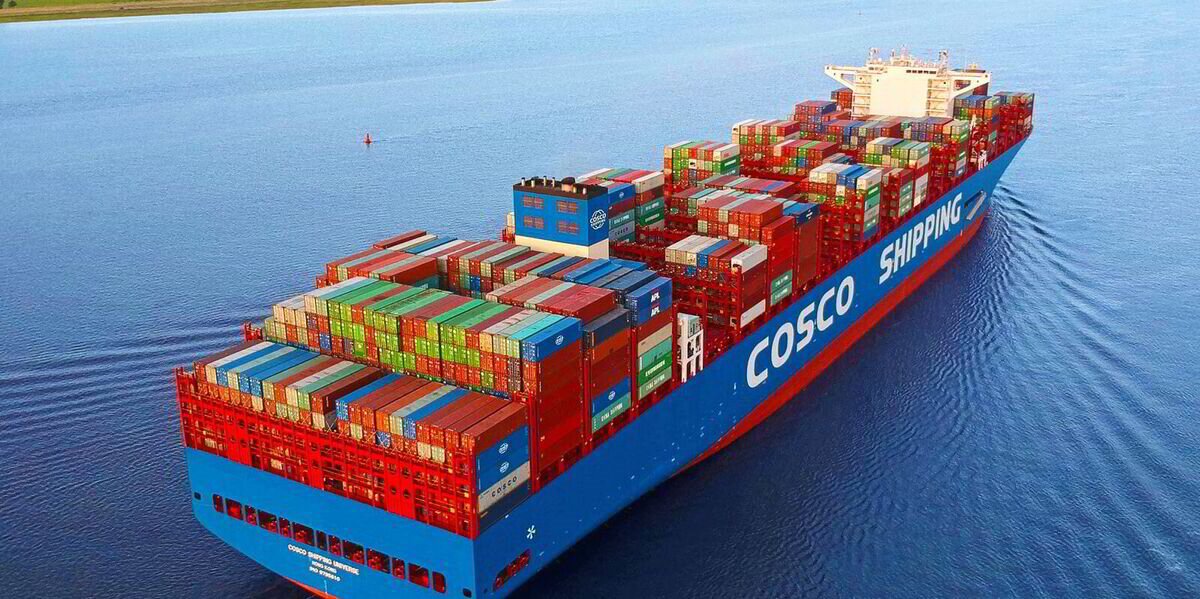
Danish shipping giant Maersk, the world’s largest container carrier, carried out its first voyage using a ship powered entirely by ethanol. The operation was completed successfully in the first quarter, the company said in a statement accompanying its financial results for the period.
Maersk began testing ethanol-methanol blends last year on its dual-fuel vessels, which can operate on both bunker fuel, the petroleum-based fuel oil used in shipping, and on methanol or ethanol. The initial trials used a blend of 10% ethanol in methanol, followed by a 50-50 mix.
According to the company, the tests “confirmed that ethanol can be safely and effectively integrated into the fuel mix.” “The availability of ethanol offers another scalable, low-emission fuel option for decarbonization, and the successful test using 100% ethanol highlights the potential to create optionality for Maersk’s methanol dual-fuel fleet,” the company said in the statement.
Shipowners will be required to neutralize all greenhouse gas emissions by 2050 under a rule set by the International Maritime Organization, with emissions already needing to be reduced by at least 20% by 2030. Shipping currently accounts for about 2% to 3% of total global greenhouse gas emissions.
Maersk, however, has set its own emissions target and has publicly committed to reaching carbon neutrality a decade earlier, by 2040. To do that, the company has been exploring renewable fuel options such as bio- and e-methanol, biodiesel and ethanol. Maersk has placed an initial order for 45 dual-fuel vessels, of which 14 are already in operation.
Other shipping companies are also investing in alternative renewable fuel options such as liquefied natural gas and ammonia.
It is estimated that if the shipping industry were to use just 10% ethanol in its vessels, the biofuel would face new demand of 50 billion liters a year, a volume that exceeds Brazil’s entire current output, even with the growing supply of corn ethanol.
The main global suppliers of ethanol to the maritime transport industry are the United States and Brazil, which together account for 80% of worldwide biofuel production.
One of the challenges for the use of Brazilian ethanol by shipowners is the lack of infrastructure in Brazil to bunker vessels along the country’s coast. That would require transporting the biofuel to ports where bunkering can take place, which would cancel out part of the emissions reduction effect, since fuel would have to be burned just to move Brazilian ethanol to another port. In the tests conducted by Maersk, cargoes of Brazilian ethanol were shipped to the Port of Amsterdam, where they were then used to fuel the vessel Laura Mærsk.
One of the shipping industry’s biggest concerns is the origin of alternative fuels. In the case of Brazilian ethanol, the concern is that the additional demand created by shipowners, potentially in the billions of liters, could contribute to an increase in deforestation in the country, even if legally.
Source: Valor Econômico