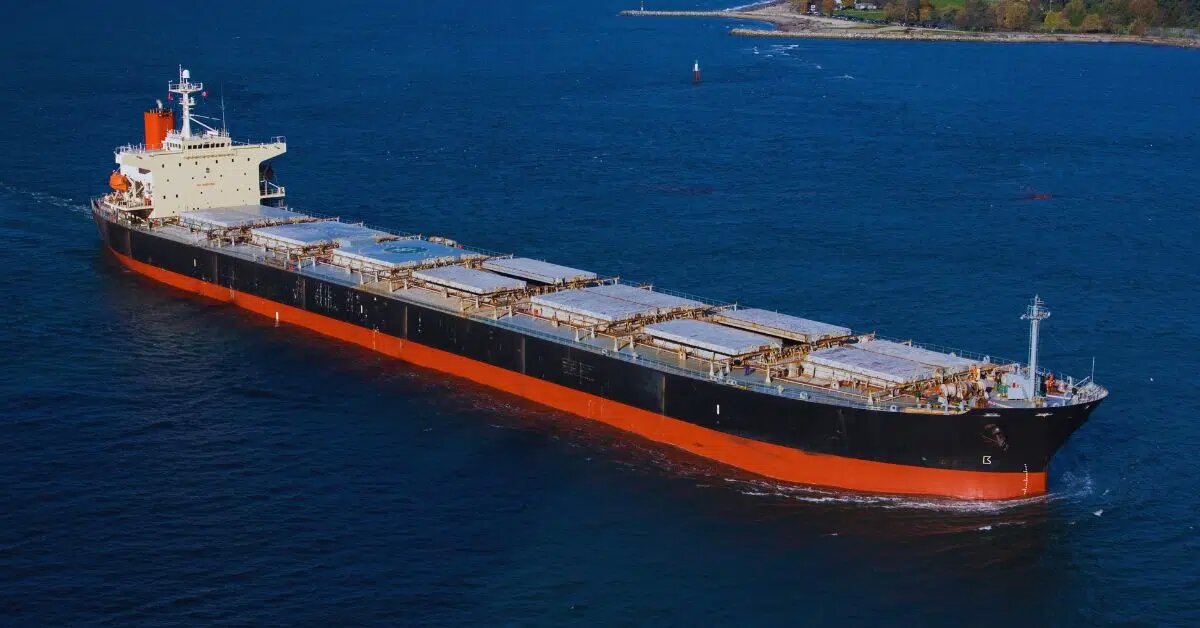
As marine fuel evolves towards lower sulfur, cleaner, and more diversified options, VLSFO, ULSFO, LNG, methanol, LEG, LPG, and biofuels have become mainstream choices, posing new challenges to traditional cylinder lubrication strategies.
MAN Energy Solutions has released Service Letter SL2023-737, comprehensively updating the cylinder lubrication guidelines for two-stroke diesel engines, replacing the previous specifications and providing a systematic solution for reliable lubrication of cylinder liners and piston assemblies in multi-fuel scenarios.
1. Lubrication Concept Upgrade: From Anti-Corrosion and Anti-Wear to Cleanliness Priority
With the widespread use of low-sulfur fuel (S≤0.50%), the core challenge of cylinder lubrication has shifted from corrosive wear to in-cylinder cleanliness.
The reduction in fuel sulfur content allows for lower feed rates but imposes higher requirements on oil film retention, piston ring cleanliness, and deposit control.
Accordingly, MAN has divided cylinder oils into two main categories, establishing a new selection logic:
– Category II Cylinder Oil (Cat. II):
Possesses excellent cleaning performance, with cleaning capability equivalent to traditional BN 100 oils, covering BN 140 and higher grades. It is universally applicable across all engine types and is the preferred recommendation.
– Category I Cylinder Oil (Cat. I):
Conventional grades, only suitable for older engine models with lower loads. BN
The specification clearly states that new engine models and dual-fuel engines must use Category II oil. Older models can be compatible with Category I oil, but Category II oil is still recommended for optimal cleanliness.
2. Precise Selection: Matching by Engine Model and Fuel Sulfur Content
The new specification uses engine model generation and fuel sulfur content as core criteria, providing a clear selection scheme covering all scenarios including low-sulfur fuel, high-sulfur fuel (HSFO), LNG, methanol, LEG, LPG, and biofuels.
▲ Source: Internet, Infringement must be deleted
(1) Low-Sulfur Fuel Mode (S≤0.50%)
Applicable to VLSFO, ULSFO, dual-fuel pilot fuel, and clean fuels such as LNG, methanol, LPG, LEG:
– Mark 9 and newer engines + all dual-fuel engines:
Mandatory use of Category II BN 40;
– Mark 8 and older engines:
Minimum use of Category I BN 40, Category II BN 40 recommended.
(2) High-Sulfur Fuel Mode (HSFO, S>0.50%, with Scrubber)
– Mark 9 and newer engines: Use Category II BN 100–140+;
– Mark 8 and older engines: Option of Category I BN 70 or Category II BN 100–140+;
– If wear remains excessive despite a Feed Rate Factor (FRF) > 0.32 g/kWh·S%, an upgrade to a higher BN oil is mandatory.
The specification explicitly cancels traditional practices such as alternating between high and low BN oils and oil blending (ACOM), relying on a single Category II oil for stable and reliable lubrication.
3. Feed Rate Control: Safety Minimums and Running-in Specifications
The feed rate directly impacts in-cylinder lubrication, wear, cleanliness, and operating costs. The new guidelines establish strict control standards.
(1) Low-Sulfur Fuel Feed Rate
– Minimum feed rate:
0.6 g/kWh. To ensure cleanliness and prevent micro-seizure, 0.8 g/kWh is recommended for Mark 9 and newer engines;
– Actual consumption must deviate by no more than ±10% from the value calculated by the HMI. If lower, immediately increase to 1.2 g/kWh for investigation;
– For in-service vessels, the starting point for reducing the feed rate is 1.0 g/kWh, with gradual stepwise reductions (0.05–0.1 g/kWh). A single large reduction is strictly prohibited.
(2) Running-in Feed Rate for New /Replaced Parts
New cylinder liners and piston rings require a stepped feed rate:
▲ Source: Internet, Infringement must be deleted
– 0–5 hours: 1.7 g/kWh;
– 5–16 hours: 1.5 g/kWh;
– 16–500 hours: Gradually reduce to the normal value;
– During start-up and load changes, the LCD function automatically increases the feed rate by 25% for 30 minutes.
(3) High-Sulfur Fuel Feed Rate Factor (FRF)
The initial FRF for new engine running-in is set at 0.40 g/kWh·S%. Reduction is only permitted after verification by scavenge drain oil analysis. If FRF > 0.32, increase BN; maintain between 0.25–0.32; if
▲ Source: Internet, Infringement must be deleted
4. Cylinder Condition Monitoring and Abnormal Condition Handling
The specification emphasizes monthly in-cylinder inspections. Scavenge drain oil analysis must be completed before reducing the feed rate, with a focus on monitoring iron content:
▲ Source: Internet, Infringement must be deleted
– Low-sulfur fuel: Monitor metallic iron (/adhesive wear);
– High-sulfur fuel: Monitor iron oxide (corrosive wear).
Corrective measures for typical abnormalities are provided: For carbon deposits in piston ring grooves, increase the feed rate and switch to Category II oil;
If hard contact or scuffing marks appear, immediately increase to 1.2 g/kWh, and replace piston rings or hone the cylinder liner if necessary.
5. Cross-Regional Operations and Equipment Trials
For vessels entering and leaving Sulfur Emission Control Areas (SECA), only Category II BN 40 is needed for the entire low-sulfur operation; no oil change is required;
For vessels switching between high and low sulfur, using a single high-BN oil is recommended, with cylinder condition checks before and after crossing zones.
During newbuilding berth trials and sea trials, use Category II BN 40 uniformly for low-sulfur fuel mode, and Category II BN 100–140+ for high-sulfur fuel mode, ensuring full-cycle lubrication compliance.
6. Summary
MAN SL2023-737 marks a new phase of precision, standardization, and cleanliness in marine diesel engine cylinder lubrication.
By centering on Category II cylinder oil, precisely selecting based on engine model and fuel, strictly controlling feed rates, and strengthening cylinder condition monitoring, the challenges of low-sulfur fuel and dual-fuel operations can be effectively addressed, improving piston ring and cylinder liner reliability, extending overhaul intervals, and reducing maintenance costs.