The user requests a strict translation of Chinese text to English, with specific requirements: preserve proper nouns and technical terms, maintain original formatting, and avoid any additional commentary or prefixes. The response must be plain translated text only.
First, I need to confirm the exact content to be translated. The current text only shows “Text to translate:” without specific content. This could be an incomplete input or a test case. If no specific text is provided, I cannot proceed with translation.
Next, I consider the user’s emphasis on strict translation. This likely means they want a literal, word-for-word translation rather than localized adaptation. Proper nouns and technical terms should remain unchanged, which is standard in translation work.
The instruction to avoid any additional text is crucial. Many translation services automatically add headers or footers, but this user explicitly forbids that. The output should be clean and direct.
Since no actual Chinese text is provided here, the appropriate response is to wait for the specific content. If this were a real task, I would extract the Chinese text and apply the strict translation rules as requested.
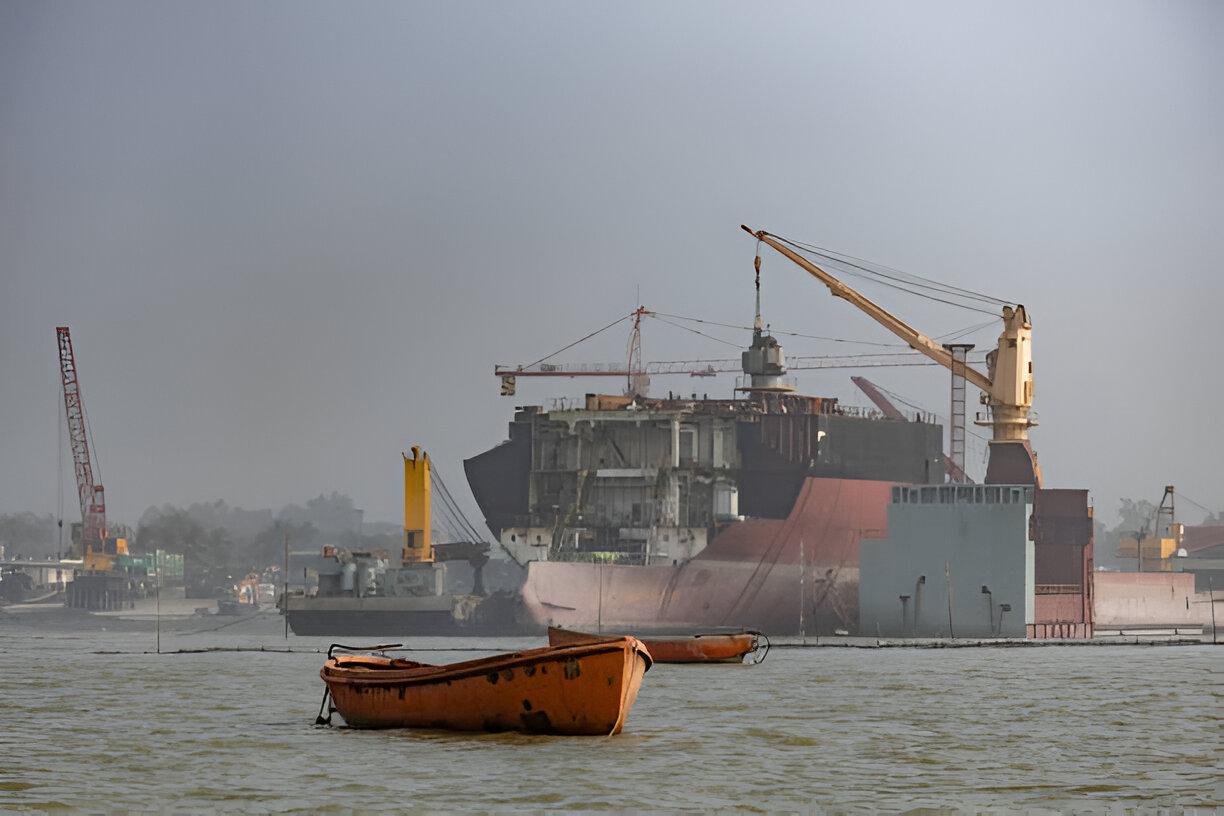
Since 2025, against the backdrop of a global downturn in the shipbuilding market, Japan’s new shipbuilding orders have significantly declined, with its market share hitting a record low. The business performance of shipbuilding enterprises, after two consecutive years of growth, has begun to diverge. The domestic competitive landscape is undergoing deep adjustments, with leading shipbuilders forming powerful alliances and strengthening technical cooperation in new types of vessels, aiming to shape new competitive advantages. Simultaneously, the government has proposed development goals to revitalize Japan’s shipbuilding industry, promoting its recovery and development through Japan-US cooperation, green and intelligent transformation, capacity expansion, and talent cultivation.
01. Tight Production Resources for Shipbuilders, Continuously Declining Market Share
Since 2025, the global newbuilding market has cooled down, and Japan’s volume of new ship orders has further decreased. From January to October, a total of 173 ships were ordered, amounting to 7.219 million deadweight tons (DWT) and 2.543 million compensated gross tons (CGT). Measured by DWT and CGT, this represents year-on-year decreases of 56% and 50% respectively, accounting for only 7.6% and 6.6% of the global total new ship orders, the lowest level since the new century. The main reason is the current tight production and labor resources in Japanese shipyards, with new ship schedules extending beyond 2028, making it difficult to meet the demand of the newbuilding market.
Looking at segmented ship types, Japan’s new orders are still dominated by bulk carriers, accounting for 52%, primarily Handysize bulk carriers. This is followed by tankers at 33%, mainly consisting of VLCCs and product tankers. Container ships account for 7%, while other ship types such as LPG carriers, general cargo ships, and car carriers make up 8%. As of the end of October 2025, Japan’s total orderbook stood at 732 ships, 40.70 million DWT, and 13.26 million CGT, which can basically meet the construction volume for the next 3.5 years, remaining at a relatively high level in recent years.
02. Divergence in Enterprise Operating Performance, Cost Pressure Remains Prominent
In the first half of FY2025 (2025.4-9), the operating performance of Japan’s major shipbuilding enterprises began to diverge after two consecutive years of substantial growth. Among them, Japan Marine United saw significant growth in both revenue and net profit, with full-year net profit expected to reach a record high. Naikai Zosen’s revenue slightly declined, but its profit doubled. Namura Shipbuilding, affected by business transformation and a temporary contraction in construction scale, saw significant decreases in both revenue and profit. Kawasaki Heavy Industries’ shipbuilding business scale is very small, and its operating performance is more influenced by other business segments.
Analyzing the reasons, on one hand, the decline in Japanese steel plate prices from high levels has significantly alleviated cost pressures for shipbuilders. In the first half of FY2025, the average price of Japanese shipbuilding steel plates was about $570 per ton, down 14.3% year-on-year and 43% lower than the peak in 2022. On the other hand, the rigid increase in labor costs and the slight appreciation of the Japanese Yen adversely affected the operating performance of shipbuilders. In Q2 2025, Japan’s manufacturing labor cost index was 114.7, up 5.1% year-on-year and 15.5% higher than the low in 2020, indicating that labor costs in Japan’s shipbuilding industry have continued to rise in recent years, putting significant pressure on corporate operating costs. Meanwhile, the average /JPY exchange rate in the first half of FY2025 was 146.7, with the Yen appreciating 3.5% compared to the same period last year, bringing certain adverse effects to corporate foreign exchange settlement.
03. M&A and Restructuring Resume, Imabari Shipbuilding Takes Control of JMU
Merger and acquisition activities in Japan’s shipbuilding industry have resumed after a two-year pause, with Imabari Shipbuilding and Tsuneishi Group acquiring shares in other companies to enhance market competitiveness and expand market share.
After acquiring 30% of Japan Marine United (JMU) shares and establishing the joint venture Nihon Shipyard to jointly receive new ship orders in 2021, Imabari Shipbuilding acted again in June of this year, acquiring 15% shares of Japan Marine United each from JFE Holdings and IHI Corporation, increasing its stake in Japan Marine United from 30% to 60% and becoming its largest shareholder. The shareholding ratios of JFE Holdings and IHI were reduced from 35% to 20%. Imabari Shipbuilding stated that this acquisition aims to strengthen the cooperative relationship between the two parties, enhance information exchange, improve construction efficiency, and consolidate efforts to increase the market share of Japan’s shipbuilding industry. Currently, the combined annual building capacity of the two shipyards is approximately 4.7 million gross tons, accounting for about 52% of Japan’s shipbuilding capacity. Furthermore, Imabari Shipbuilding acquired a 15.5% stake in Daihatsu Diesel for 9 billion JPY (approximately 410 million RMB), becoming the largest shareholder with a final holding ratio of 15.8%, planning to accelerate the development of alternative fuel engines and ensure stable supply of marine equipment.
Additionally, Tsuneishi Shipbuilding acquired the remaining 34% stake in Mitsui E&S Shipbuilding held by Mitsui E&S for 4.2 billion JPY (approximately 190 million RMB). Combined with the 49% and 17% stakes acquired in Mitsui E&S Shipbuilding in 2021 and 2022 respectively, this gives Tsuneishi 100% control of Mitsui E&S Shipbuilding, which has been renamed Tsuneishi Solutions Tokyo Bay Co., Ltd. Concurrently, Tsuneishi Shipbuilding will indirectly hold a total of 49% of the shares in the Chinese shipyard, Yangzijiang Mitsui E&S.
04. Accelerated Technological Cooperation, Focusing on Breakthroughs in New Ship Types
Currently, Japan’s shipbuilding industry is facing dual pressures of limited design resources and intensified international competition, urgently needing to accelerate technological cooperation among relevant enterprises in cutting-edge fields such as artificial intelligence, green power, and digital twins, to establish technical barriers for high-end ships and reshape market competitiveness. Specific initiatives include:
The MILES alliance, composed of three major shipping companies (NYK Line, Mitsui O.S.K. Lines, Kawasaki Kisen Kaisha) and four shipbuilding enterprises (Imabari Shipbuilding, Japan Marine United, Nihon Shipyard, Mitsubishi Shipbuilding), has been formally launched to conduct joint research on standardized ship types for LCO2 carriers. The alliance is also calling for other shipbuilders to join and expanding the research scope to include new fuel vessels such as ammonia-fueled ships.
Osaka University’s Center for Marine Technology is collaborating with seven companies including Shin Kurushima Dockyard, Namura Shipbuilding, Nihon Shipyard (NSY), and Kawasaki Heavy Industries on a joint research project for next-generation ship fundamental technologies. The project involves four research directions: ① R&D of next-generation intelligent ships: advancing autonomous navigation technology based on research on AI-assisted collision avoidance and automatic berthing; ② Research on ship sustainability: applying Life Cycle Assessment (LCA) methods to optimize costs and assess emission reduction scale; ③ Enhancing performance of large ships in sea areas: analyzing the impact of ship size increase and wind propulsion devices on ships; ④ Simulation of automated welding.
NYK Line, Imabari Shipbuilding, Japan Marine United, ClassNK, and the Graduate School of Engineering, Osaka University jointly established the “Advanced Marine Systems Open Collaboration Laboratory (Osaka University OCEANS)”. Research objectives include: ① Achieving design automation using AI technology: optimizing ship design processes through artificial intelligence to improve efficiency and reduce R&D costs; ② Cultivating interdisciplinary talent: building a cross-disciplinary education platform to foster new talent integrating the entire chain of ship design, construction, and operation technologies; ③ Promoting technology industrialization: meeting the needs for rapid design and construction of next-generation ships.
The R&D project “Construction of an Integrated Simulation Platform for a Sustainable and Competitive Maritime Industry”, jointly submitted by NYK’s MTI, Mitsubishi Shipbuilding, Tsuneishi Shipbuilding, the Japan Agency for Marine-Earth Science and Technology, Japan Marine United, Mitsui E&S, Mitsui Zosen Akishima Research Institute, Osaka University, and Kyoto University, has been approved by the Japan Science and Technology Agency. The project has an implementation period of 5 years and a budget of 12 billion JPY (approximately 550 million RMB). It aims to enhance the R&D, design, and construction capabilities for next-generation ships, focusing on building a comprehensive simulation platform that can simultaneously consider lifecycle and supply chain elements during the development and design stages, achieve optimal shipbuilding solutions, and promote the application of virtual technology in the maritime industry.
05. Japan-US Government Cooperation Begins, Enterprises Remain Cautious
The Japanese government regards US-Japan cooperation as one of the “bargaining chips” in tariff negotiations. Recently, the two governments signed a Memorandum of Cooperation aimed at promoting cooperation between the US and Japan in the shipbuilding sector. Focusing on shipbuilding cooperation and maritime industry development, the two countries will establish a “US-Japan Shipbuilding Working Group” and cooperate around the following five areas: First, expanding the shipbuilding capacity of both countries, establishing corporate partnerships between the two nations, communicating best practices to enhance competitiveness and efficiency, and modernizing shipyards through strategic investment. Second, promoting investment in the US maritime industrial base by identifying investment opportunities. Third, clarifying the ship demand of market entities, clarifying relevant policies issued by both governments that affect the demand for public vessels and merchant ships, and exploring operable technical specifications to improve production compatibility. Fourth, strengthening education and training, cultivating shipbuilding talent, standardizing talent training and education programs, and establishing new talent pipelines for the industry. Fifth, promoting technological innovation, with the two countries cooperating to develop and apply advanced technologies, including digital solutions and advanced manufacturing technologies (such as AI, robotics), and optimizing high-end ship design.
However, Japanese shipbuilding companies are relatively cautious about Japan-U.S. cooperation in the new shipbuilding business sector, primarily focusing on warship maintenance services. The main reasons are: First, investing in U.S. shipyards requires long-term substantial investment. With only four years remaining in Trump’s term, companies must consider the risk of sunk costs for their investments, making it difficult to make decisions at this stage. Second, the profit margins for building warships are small. Warships are generally ordered through tenders, and if profits exceed a certain ratio, they must be returned. Third, the cost of building in the U.S. far exceeds that in Japan. Even if built in Japan for export, the current state of Japanese shipbuilders’ equipment and personnel makes it difficult to accept U.S. orders. Particularly, Japanese companies have faced operational difficulties in recent years, only returning to profitability in the last two years. They still need to invest funds in equipment updates and are almost unable to simultaneously develop new warship projects for the U.S. Fourth, Japan currently has sufficient order backlogs, which can cover workload for the next 3.5 years. Meanwhile, medium to long-term demand in the merchant ship market is expected to remain high, and the extended construction cycle for new fuel ships helps maintain stable orders. Therefore, Japanese shipbuilding companies are not very enthusiastic about proactively expanding new business with the U.S. Regarding warship maintenance, the U.S. has already communicated with major Japanese shipbuilders to advance business related to repairing U.S. Navy vessels, and Japanese shipbuilders are considering it. However, companies simultaneously face issues of saturated production capacity. Currently, shipyards are fully occupied handling orders from the Japanese Ministry of Defense and the Japan Coast Guard. Accepting U.S. business would require new equipment investment and personnel training, which could potentially impact existing projects.
06. Accelerating the Promotion of Industry Recovery, Aiming to Double Production Capacity
Against the backdrop of the global shipbuilding market entering a long-term boom cycle and the continuous shrinkage of Japan’s market share in new ship orders, revitalizing Japan’s shipbuilding industry has become a consensus between the government and the industry.
In June, the Japanese government’s “Basic Policy on Economic and Fiscal Management and Reform 2025” (Honebuto no Hōshin) explicitly stated: Revitalize Japan’s shipbuilding industry and strengthen the maritime industry cluster centered on the shipping and shipbuilding industries. Specific measures include: ① Strengthening the maritime supply chain through Japan-U.S. cooperation; ② Accelerating the commercialization of zero-emission vessels using instruments like GX (Green Transformation) Economic Transition Bonds; ③ Reducing ship operating costs to enhance the competitiveness of Japanese shipowners; ④ Accelerating the promotion of autonomous sailing ships, aiming to achieve regional traffic digitalization and logistics transport automation around 2030; ⑤ Cultivating and securing shipbuilding talent through local policies and environmental improvements, etc.
In the same month, the Liberal Democratic Party’s Special Committee on Shipping and Shipbuilding submitted the “Emergency Proposal for the Revitalization of Our Country’s Shipbuilding Industry” to then Prime Minister (Note: likely a contextual error, as the named individual was not PM at the time of writing; original text preserved) Ishiba Shigeru. This proposal contains five core themes: ① Balancing capacity expansion and technological upgrades in both merchant and warship sectors; ② Cultivating shipbuilding talent through regional collaboration and industry-academia-government linkages; ③ Achieving industrial transformation through low-carbon transition; ④ Strengthening strategic cooperation with friendly nations; ⑤ Ensuring stable demand by enhancing the competitiveness of Japanese shipowners and promoting new ship orders. It is understood that relevant government departments are formulating a roadmap to revitalize the domestic shipbuilding industry based on this proposal, planning to increase Japan’s shipbuilding capacity to 18 million gross tons by 2035, approximately double the current capacity. This target is calculated based on the construction capacity required if only domestic shipyards were to build the ships needed to maintain a 10% global market share for the Japanese fleet.
In October, four major organizations – the Japanese Shipowners’ Association, the Japan Shipbuilders’ Association, the Japan Association of Small and Medium-sized Shipbuilders, and the Japan Ship Machinery Manufacturers Association – submitted a “Request for Promoting the Recovery of Japan’s Shipbuilding Industry” to the Ministry of Land, Infrastructure, Transport and Tourism, the LDP’s Special Committee on Shipping and Shipbuilding, etc. They proposed the need for a state-led establishment of an equipment investment fund exceeding 1 trillion yen (approximately 45.9 billion RMB) (with companies bearing about 350 billion yen and the government providing support for the remaining 650 billion yen). This fund would be used for production capacity transformation, with defined support scales, ratios, and policies such as depreciation deductions, to achieve the goal of doubling shipbuilding capacity by 2035.
Authors: Tu Jiaying, Chen Baiquan, Wang Chu