China News Service, July 11 (Reporter Zhang Ni) July 11, 2025, marks China’s 21st Maritime Day and the implementation date of “World Maritime Day” in China. According to information obtained by China News Service from the Ministry of Transport, the main forum of the 2025 China Maritime Day and the launch ceremony of Maritime Day activities were held in Boao, Qionghai City, Hainan Province, on the morning of July 11. This year’s Maritime Day theme is “Green Shipping: Forging Ahead with Innovation.”
The 2025 Maritime Day main event was held in Boao, Qionghai City, Hainan Province, featuring over 20 diverse activities, including forums, seminars, and science and culture experiences. The main forum released the 2024 China Shipping Development Report and announced the 2025 list of safety and integrity shipping companies and vessels, the 2025 national model workers and advanced workers in the maritime sector, and the 2024 China Institute of Navigation Science and Technology Progress Award and Technology Invention Award winners.
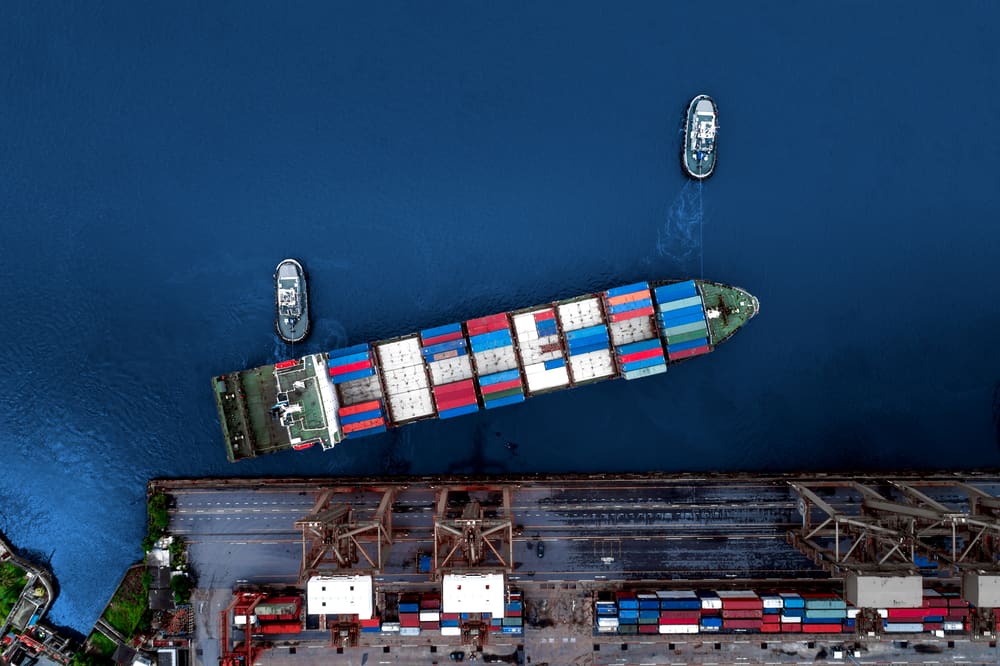
It was reported that China’s maritime development achievements have attracted global attention. The country boasts the world’s largest fleet of ocean-going vessels and has built the largest cluster of world-class ports. Its international shipping volume accounts for nearly one-third of the global total, and its marine economy continues to grow, injecting strong momentum into the stable development of global trade.
To comprehensively promote the green transformation of the shipping industry, the Ministry of Transport has deepened the optimization and adjustment of transportation structures, vigorously promoted the shift of medium- and long-distance bulk cargo transport from road to water, continued to advance containerized rail-water intermodal transport, actively developed water-to-water transshipment and river-sea direct transport, and promoted structural carbon reduction in integrated transportation. The ministry is accelerating the clean and low-carbon energy transition in shipping, actively advancing the research, development, and large-scale application of key technologies for new and clean energy, upgrading ship and port shore power facilities, expanding the use of shore power for berthed vessels, and exploring new models for integrated energy and transportation development. It is also vigorously developing green port and shipping infrastructure, embedding ecological protection and resource conservation principles throughout the planning, design, construction, operation, and maintenance of waterway projects, and striving to build green ports and beautiful waterways. Additionally, the ministry is establishing and improving pollution prevention systems for ships and ports, strictly enforcing ship air pollutant emission control zones, continuously strengthening emergency response capabilities for environmental incidents such as oil spills, and safeguarding clear waters and blue skies.
Thanks to the joint efforts of all stakeholders, China’s shipping industry has achieved remarkable results in its green and low-carbon transformation, further leveraging the advantages of water transport and solidifying the foundation for green development in the sector.
Data shows that in 2024, waterway freight volume reached 9.81 billion tons, 1.64 times that of a decade ago, while waterway cargo turnover reached 14 trillion ton-kilometers, an 8.8% year-on-year increase, accounting for 55.6% of total cargo turnover. The large-scale application of new and clean energy vessels has accelerated, with major ports such as Shanghai Port successfully launching ship refueling services for new and clean energy. The proportion of green trucks for internal operations at international container hub ports exceeded 60%. Shore power coverage for five key specialized berths at major ports nationwide surpassed 90%, with shore power usage by ships berthed in the Yangtze River Economic Belt increasing by 54% year-on-year. International trunk container ships and cruise ships have routinely used shore power while berthed. A total of 52 automated terminals have been built, with their scale and operational efficiency ranking among the world’s best. Electronic navigational charts now cover 9,950 kilometers, achieving near-complete “one-map” coverage of electronic waterways in the Yangtze River basin.
Moving forward, the Ministry of Transport will continue to build a new green shipping ecosystem, accelerate the improvement of green shipping policies, refine carbon emission monitoring and accounting standards, advance the development of new power technologies and equipment, enhance the green energy refueling supply chain, promote the large-scale application of new and clean energy vessels, and drive the construction of international green shipping corridors to reduce global shipping emissions. At the same time, the ministry will accelerate the cultivation and development of new productive forces in the shipping sector, actively expand application scenarios for new technologies such as artificial intelligence, the Internet of Things, 5G, and BeiDou, and coordinate the development of smart ports, smart waterways, and intelligent ships, emphasizing data interconnectivity and business collaboration to enhance the digitalization of all elements and links in shipping. (End)