Shipping industry news from the network, Japanese shipowner Mitsui O.S.K. Lines (MOL) Executive Officer Hideyuki Irisawa recently publicly stated that the company regards Southeast Asia as the core key market for the expansion of its Floating Storage and Regasification Unit (FSRU) business. He also serves as Deputy Head of MOL’s Southeast Asia and Oceania Region (Business) and Deputy Managing Director of MOL (Asia Pacific) Private Limited.
FSRU: Core Component of LNG Infrastructure Strategy
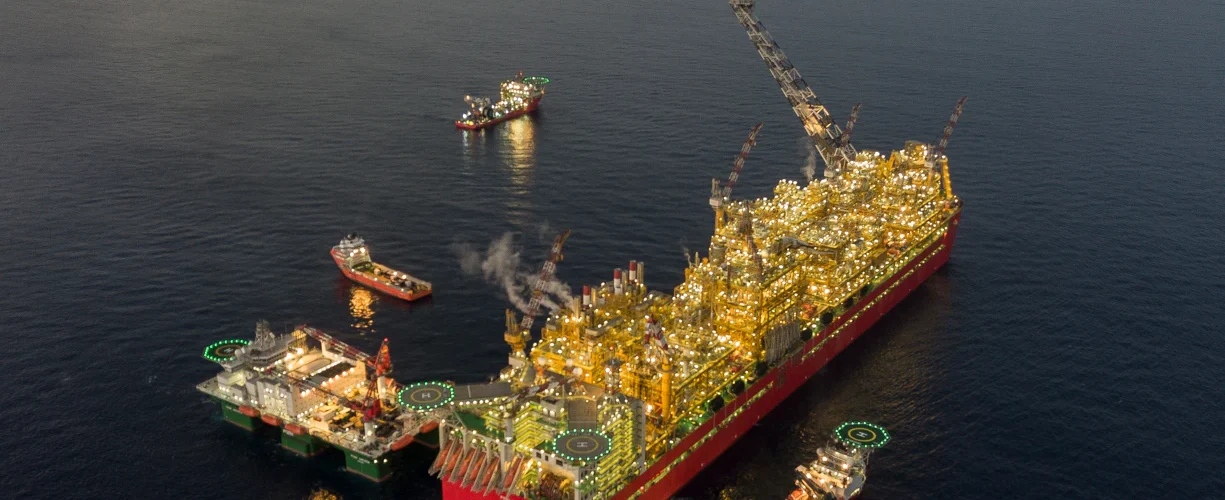
Hideyuki Irisawa pointed out that the FSRU business is a core layout component of MOL’s overall LNG infrastructure strategy. Southeast Asia is a key potential market the company has locked onto, with Malaysia and Vietnam performing particularly prominently. Demand for flexible LNG import solutions in these two countries continues to rise, creating a favorable market foundation for the implementation of the FSRU business.
He further noted, “MOL has a unique advantage in the shipping industry because the company itself holds FSRU assets. Through the deployment and management of multiple FSRUs, MOL has accumulated rich operational experience. This track record is our core strength, distinguishing us from those shipping companies that lack practical operational experience in the full LNG value chain.”
In terms of implementation, MOL has achieved substantial progress on multiple projects in Southeast Asia. According to company announcements, MOL commenced commercial operations of the Jawa Satu FSRU in Indonesia in March 2024, serving the Jawa 1 LNG gas-fired power plant. In October 2024, it announced the signing of a long-term time charter contract for a newbuilding FSRU with a Singapore LNG company, planned to commence operations in 2029.
From a corporate business strategy perspective, traditional shipping sectors such as dry bulk and tankers are highly susceptible to market volatility fluctuations. MOL plans to combine these businesses with relatively stable project-based businesses like FSRU, aiming to enhance the overall portfolio’s risk resistance and earnings stability.
Source: MOL
LNG: A Transitional Solution for Marine Fuel
In its planning for vessel decarbonization fuel pathways, MOL regards LNG as a transitional solution, not a long-term ultimate emission reduction solution.
Hideyuki Irisawa believes that at the current stage, LNG can only serve as a transitional option for marine fuel and cannot achieve the ultimate decarbonization goals of the shipping industry. In the long term, zero-carbon and near-zero low-carbon fuels such as ammonia fuel are expected to become mainstream energy options for shipping, with their adoption pace depending on fuel supply capacity, the uniformity of global shipping regulations, and supply chain maturity.
Driven by policies such as the EU Emissions Trading System and maritime fuel regulations, the global demand for shipping emission reduction is increasing, and the market for LNG bunkering continues to expand. However, MOL does not treat marine LNG bunkering as a standalone business. “We aim to participate in the broader value chain, covering fuel procurement, logistics, and infrastructure, to simultaneously support operational reliability and long-term decarbonization goals.”
Bio-LNG: A Prudently Watched New Opportunity
Although MOL views LNG bunkering as a temporary solution, bio-LNG is one of the opportunity areas the company is closely monitoring.
“With the continuous development of regional supply chains, we see significant potential in bio-related energy (including bio-LNG) in Malaysia and other parts of Asia,” said Hideyuki Irisawa. “If bio-LNG and other forms of bioenergy can achieve stable, large-scale supply at competitively market prices, the company plans to use regional deployment as an entry point to procure a certain volume of bio-LNG to fuel its fleet. Besides obtaining cleaner energy, we also see this as an opportunity to gradually adjust and strengthen our fleet to align with evolving customer and regulatory requirements.”
Source: MOL
LNG Carrier Market Outlook
There is a general industry expectation that the delivery volume of LNG carriers may decline in 2029 and 2030. However, even after 2029, LNG demand is projected to continue growing. According to shipping industry sources, there are concerns that the supply of LNG vessels may tighten.
Hideyuki Irisawa analyzed that the supply of LNG carrier capacity is directly affected by the pace of newbuilding orders. Considering that it typically takes several years from order placement to delivery and commissioning for LNG vessels, changes in order activity could lead to periodic tightening of the market.