MSC’s Gianluigi Aponte with Hengli Heavy Industry chief Chen Jianhua. Photo: Hengli Heavy Industry
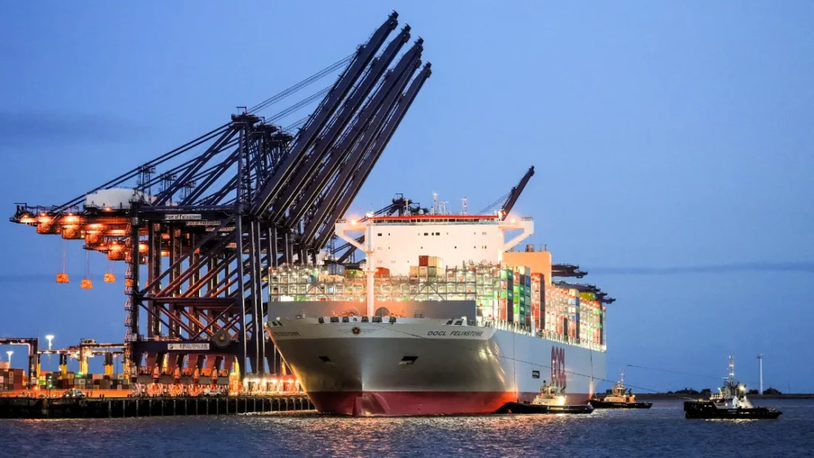
MSC continues to consolidate its pole position in the carrier rankings, with orders for six more 22,000 teu ships (four at Shanghai Waigaoqiao Shipbuilding and two at Hengli Heavy Industries) disclosed this week.
It has also upsized orders for six 19,000 teu ships at Waigaoqiao to 22,000 teu.
MSC already has six LNG dual-fuelled 22,000-teu boxships under construction at Hengli, the latest two are converted options – plus, the carrier still has options for two more vessels. The newbuildings are said to cost around $210m each and will be delivered between 2028 and 2029.
Clarksons shows MSC now has 54 ‘megamax’ (20,000 teu and above) containerships under construction, taking its orderbook way past 6m teu.
Meanwhile, Yang Ming is making good on its plan to acquire seven 15,000 teu ships by yesterday commissioning them from South Korea’s Hanwha Ocean.
While MSC is disregarding the US Trade Representative’s port fees on Chinese-built ships, Taiwan’s Yang Ming is opting for non-Chinese shipbuilders, due to the tensions between them.
In March, Yang Ming announced plans to commission seven 15,000 teu and six 8,000 teu vessels. Three of the latter have already been ordered from Imabari Shipbuilding.
Yang Ming said the newbuildings would replace aging vessels and “ensure stable service on east-west routes while achieving a 20% reduction in GHG emissions compared with traditional fuel”.
Under chairman Tsai Feng-ming, appointed last year, Yang Ming has become more active in shipbuilding; previous relative disinterest saw it drop a level in the liner rankings, to 10th.
Meanwhile, Greek tonnage provider Chartworld has reportedly signed a letter of intent with New Dayang Shipbuilding for up to four (two firm and two optioned) 3,100 teu ships, ending its four-year hiatus in newbuild orders. The vessels, targeted at regional operators, are reportedly priced at $42m, suggesting they will be conventionally fuelled.