/Agencia Reuters
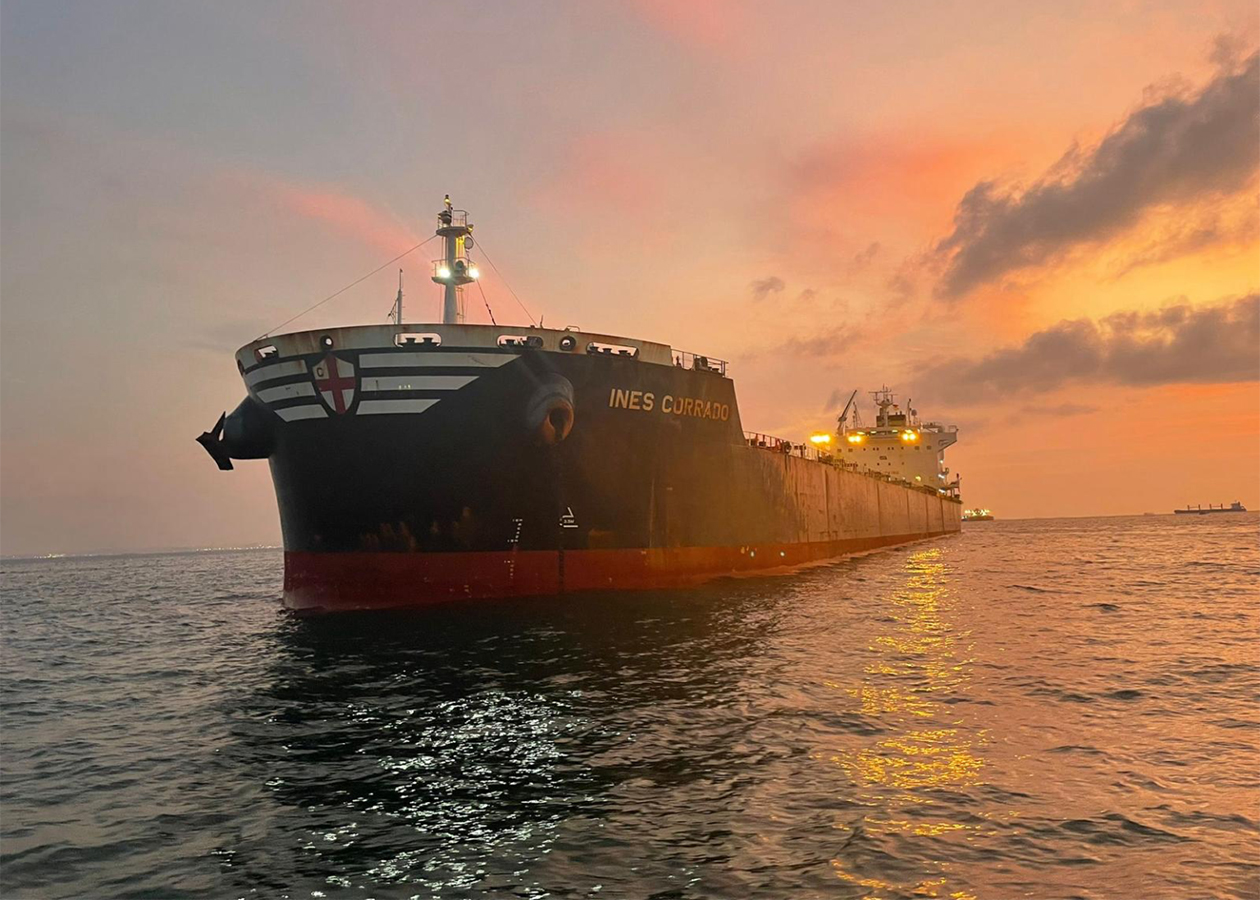
Two Very Large Crude Carriers (VLCC) that were stranded crossed the Strait of Hormuz on Tuesday, June 23, while seven empty LNG carriers linked to Qatar entered in recent weeks, in what represents a preliminary sign that maritime gas transport in the Persian Gulf could be resuming, according to vessel tracking data.
Tankers linked to Iran also continued transiting this vital waterway, the data showed, with a spike in traffic on Monday, June 22, as talks between the United States and the Islamic Republic progressed.
Flows had weakened before the negotiations, amid threats from US President Donald Trump to resume the war and Tehran’s announcement that it had closed the strait once again.
The first round of talks, which began on Sunday, June 21, concluded a day later with both parties agreeing on a roadmap toward a permanent pact within 60 days.
The United States also announced a sanctions waiver until August 21, which alleviated concerns about global oil and liquefied natural gas (LNG) supply and triggered a drop in prices.
Analysts expect that more crude cargoes stranded in the Persian Gulf since the start of the war will now begin to depart, while a growing number of sanctioned tankers have been navigating the strait to load and export Iranian crude after the US temporarily suspended sanctions.
The VLCC Dubai Energy, chartered by Taiwanese state-owned energy company CPC and carrying 2 million barrels of crude from Abu Dhabi and Saudi Arabia, exited the strait overnight and is now sailing toward Kaohsiung (Taiwan), according to LSEG and Kpler data.
Another VLCC-class supertanker, the Universal Glory, chartered by South Korean refiner GS Caltex, exited the strait on Tuesday with 2 million barrels of Saudi crude on board, the data showed.
Two sanctioned Suezmax tankers — the Sobar and the Sarak — are heading toward the strait this Tuesday, according to the data. Each has a capacity to carry 1 million barrels of oil.
Seven LNG carriers in ballast controlled by QatarEnergy moved westward into the Persian Gulf to reload between June 11 and 22, according to vessel tracking data from Vortexa and Kpler; these constitute the first such voyages since the United States and Israel launched airstrikes against Iran on February 28.
The first three LNG carriers to make the inbound transits — the Al Hamla, the Al Areesh, and the Al Khuwair — did so with their automatic tracking system turned off, according to the Vortexa report.
According to Kpler data, these three LNG carriers were last seen outside the strait in mid-June and reappeared in maritime tracking data between June 19 and 23.
The other four — the Wadi Al Sail, the Mekaines, the Al Sadd, and the Mesaimeer — entered the strait on Monday via the Iranian route.
“This also marks the largest volume of empty LNG ships transiting the strait since the war began,” said Vivek Dhar, analyst at Commonwealth Bank of Australia.
“Other empty LNG carriers are also on their way to Qatar.
Los datos de seguimiento de buques refuerzan las expectativas de que QatarEnergy cumplirá con su cronograma de aumento de producción de GNL”, afirmó.
El lunes 22 se registró una explosión en una instalación de procesamiento de gas dentro del complejo industrial de Ras Laffan; sin embargo, el ministro de Energía aseguró que las instalaciones de GNL de Qatar no se vieron afectadas.
En cuanto a los metaneros controlados por QatarEnergy que salen del estrecho, el Al Ghashamiya fue visto por última vez en el interior el 9 de junio, transportando un cargamento de Ras Laffan que había sido cargado el 1 de marzo, según mostraron los datos de Kpler. Posteriormente, reapareció fuera del estrecho el 22 de junio.
Aún está por verse un movimiento generalizado de buques en lastre cataríes y de Abu Dhabi National Oil Company (Adnoc) hacia el Golfo Pérsico, lo que refleja una estrategia de reinicio cautelosa y gradual, señaló Ayush Agarwal, analista de S&P Global Energy.
El riesgo clave es si el paso seguro y sostenido, la confianza de las aseguradoras y la implementación de un memorando de entendimiento firmado entre EE. UU. e Irán pueden respaldar un aumento duradero de las exportaciones de GNL del Golfo, indicó S&P Global Energy.