Image Source: Navigator Gas
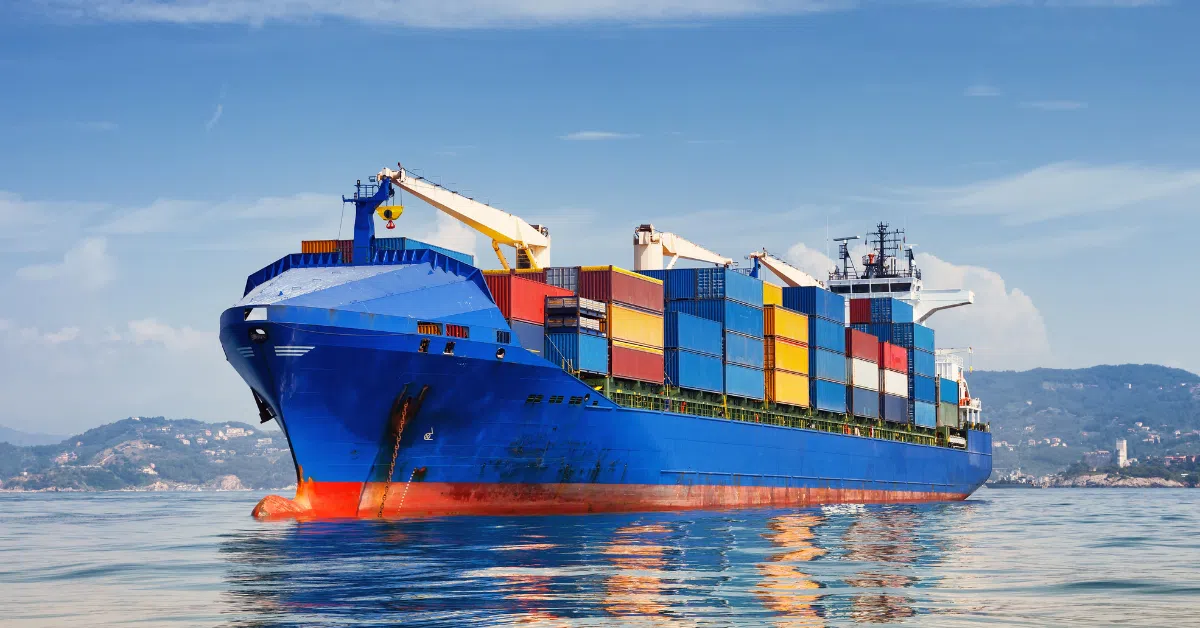
Shipping news, Navigator Gas, one of the world’s largest handysize liquefied gas shipowners, announced that it has ordered two ammonia-dual-fuel liquefied ammonia carriers through its joint venture in China. This move marks a strategic shift for the company from being a cargo carrier to a fuel user, taking a substantial step towards its ambitious goal of “net-zero operations by 2050”.
Specifically, Navigator Gas, through its newly established 80%-owned joint venture Navigator Amon Shipping, signed a contract with China’s Nantong CIMC Sinopacific Offshore & Engineering Co., Ltd. for two 51,530 cubic meter ammonia-dual-fuel liquefied /liquefied petroleum gas (LPG) carriers. The cost per newbuild is approximately $84 million, with a total investment of $168 million. This project received a grant of 180 million Norwegian Kroner (approximately $18 million) from the Norwegian government agency Enova, which has long been committed to supporting cutting-edge clean energy research and development projects.
The company’s CEO, Mads Peter Zacho, stated: “We have 25 years of experience transporting ammonia, but using it as a marine fuel is a first for us.” This order signifies “a crucial step in our preparation for the future” and “is a continuation of our commitment to achieving net-zero operations by 2050.”
The newbuilds are scheduled for delivery in June and October 2028, respectively, and will become the largest vessels in the company’s fleet upon delivery. These vessels have secured a 5-year charter and will transport ammonia for a “benchmark enterprise”. Mads Peter Zacho anticipates that although the ships are dual-fuel designed, they will primarily use ammonia directly as the main fuel for most of the time during the first five years of operation.
When discussing why they are betting on ammonia fuel, Mads Peter Zacho publicly stated: “We firmly believe that clean ammonia will become a successful marine fuel.” He further stated that the EU and the International Maritime Organization (IMO) have made clear commitments to achieve net-zero emissions for the shipping industry by 2050, which will lead to gradually increasing penalties for CO2 emissions. From 2030 onwards, the competitiveness of all types of clean fuels will significantly increase.
It is reported that the global orderbook for ammonia-fueled newbuilds has now increased to about 50 vessels. Meanwhile, major marine engine manufacturers like MAN and WinGD have made continuous progress in the research and development of zero-carbon ammonia fuel propulsion technology.
Mads Peter Zacho concluded, “Although it is still in the early stages, we are already seeing the newbuilding orderbook climbing rapidly. We expect this technology to achieve rapid experience accumulation. The industry is determined to make clean ammonia a successful marine fuel, and we believe it will occupy an important position in future alternative fuel consumption.”