In recent years, shipping companies active in container maritime transport have multiplied their economic efforts to achieve the goal of net zero emissions by 2050.
Recent data provided by Alphaliner shows how alternatively propelled container ships represent 50.6% of the global fleet in terms of capacity: 17.03 million out of a total of 33.13 million TEU.
The total capacity offered by LNG-fueled container ships reaches 2.6 million TEU, 7.6% of the total green fleet. While methanol-fueled ships are capable of expressing a total capacity of 0.4 million TEU (1.3%). The lion’s share in the segment of green units is taken by those that have installed so-called scrubbers, modern flue gas cleaning systems; they represent 49.4% of low-impact ships in terms of capacity.
The French consultancy firm therefore records the overtaking of green ships over those powered by traditional fuel. Which, however, in numerical terms, still represent the majority.
Overall, the container ship fleet is in fact composed of 7,417 active units. Of these, as many as 4850 run on traditional fuel and represent 73.6% of the total in numerical terms. Sustainable ships, on the other hand, number 2567, of which 208 are LNG-powered (3.2%), 38 (0.6%) methanol-powered, and 1492 equipped with scrubbers (22.7%).
The alternative propulsion segment is, however, destined to expand: the current orderbook in fact includes more than 720 vessels powered by alternative fuels: they represent 75% of the total orderbook, for a total of 9.3 million TEU, 93% in terms of capacity.
Alphaliner’s analysis undeniably highlights how shipping companies have already charted the green course, investing massively in tonnage powered by alternative fuels. And all this regardless of the outcome of the Net Zero Framework (NZF), the new package of measures presented in April by the Marine Environment Protection Committee (MEPC) of the IMO, which introduces a global carbon pricing system.
The new regulatory framework, which is to be formally adopted next week in the special session of the Committee, includes both obligations for the reduction of the greenhouse gas intensity of fuels, and economic measures to incentivize carriers to comply with these obligations. Incentives are planned for the most efficient ships, as well as taxation linked to the emission balance.
Ships that do not meet the GFI (Greenhouse Gas Fuel Intensity) reduction targets will pay “remedial units” calculated based on excess emissions and a fixed price.
The new framework had the merit of bringing the IMO back to the forefront of efforts for rapid decarbonization but it also ignited a fierce debate that saw the USA take a position of open hostility, so much so that it pushed the White House to threaten commercial retaliation against countries that support the package of measures.
Just a few days after the International Maritime Organization’s extraordinary session on the NZF, a deep fracture in the maritime transport sector has in fact emerged.
If in September it was the Getting to Zero Coalition – which brings together over 180 shipping companies – that urged member countries to support the new package of measures, in recent days seven other important shipowners’ associations – from Japan, Norway, Denmark, the United Kingdom, Belgium, the Netherlands, and Singapore – have launched a similar appeal, warning of the risk of a serious setback for the green transition in case of the rejection of the Net Zero Framework.
The opposition front, however, is no less numerous and has recently seen its ranks swell. The specialized periodical Splash247 reports, for example, that a powerful bloc of major shipowners – including John Fredriksen’s Frontline, George Economou’s TMS Group, Evangelos Marinakis’s Capital Maritime, the Angelicoussis Group and the Saudi flag carrier Bahri – has spoken out against the agreement in its current form.
According to the newspaper, the no-NZF bloc also includes Dynacom, GasLog, Seapeak and Stolt Tankers. Together, they represent a significant share of the world’s tanker and gas carrier fleet.
In short, these contrasts fuel the risk of prolonged uncertainty which, according to many analysts, could have devastating effects on the maneuvers to approach NET-ZERO. The comforting news is that the decarbonization machine has already been started and it will be difficult to turn it off.
The first to be aware of this are the shipping companies specialized in the container sector, which do not want to be caught unprepared for the 2050 deadline, also due to the sensitivity of their clientele, which has demanded increasingly high environmental performance along the supply chains.
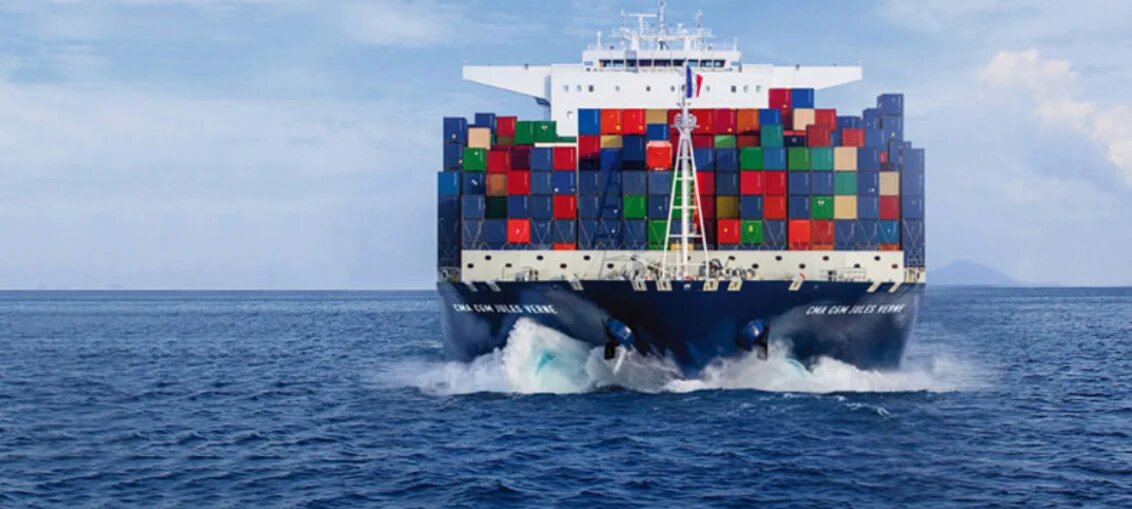
Lloyd’s List emphasizes, for example, how European operators are at the forefront of adopting an integrated approach to environmental sustainability, starting with CMA CGM, the first company to deploy a dual-fuel LNG container ship on the Asia-Europe route in 2020.
By 2028, the French liner will have 176 container ships in service capable of using alternative fuels, including 34 equipped with dual-fuel methanol engines. Other carriers have also made their moves on the chessboard, although not to the same extent as CMA CGM.
Maersk, for example, ordered its first dual-fuel LNG ship in 2024, and recently signed agreements with three shipyards in China and South Korea for the construction of 20 dual-fuel newbuildings powered by liquefied natural gas.
MSC recently signed contracts for the construction of up to 12 dual-fuel LNG container ships. Four of these have a capacity of 22,000 TEU and were commissioned from the Shanghai Waigaoqiao shipyard.
The carrier then exercised options for the construction of two 22,000 TEU dual-fuel container ships at Hengli Heavy Industries, while the remaining 6 LNG-powered 21,000 TEU units (according to the 3 + another 3 optioned formula) were ordered from the China Merchants Heavy Industry (CMHI) Haimen shipyards.
Among Asian operators, COSCO appears to be the most active. New energy-powered ships represent 70% of the company’s new construction orders for the world’s fourth-largest fleet. The carrier, which in April 2024 launched its first large methanol-fueled container ship, has also recently taken delivery of the first of four container ships sent to the COSCO Shipping Heavy Industry shipyard for a retrofit operation involving a conversion of the propulsion system to methanol.